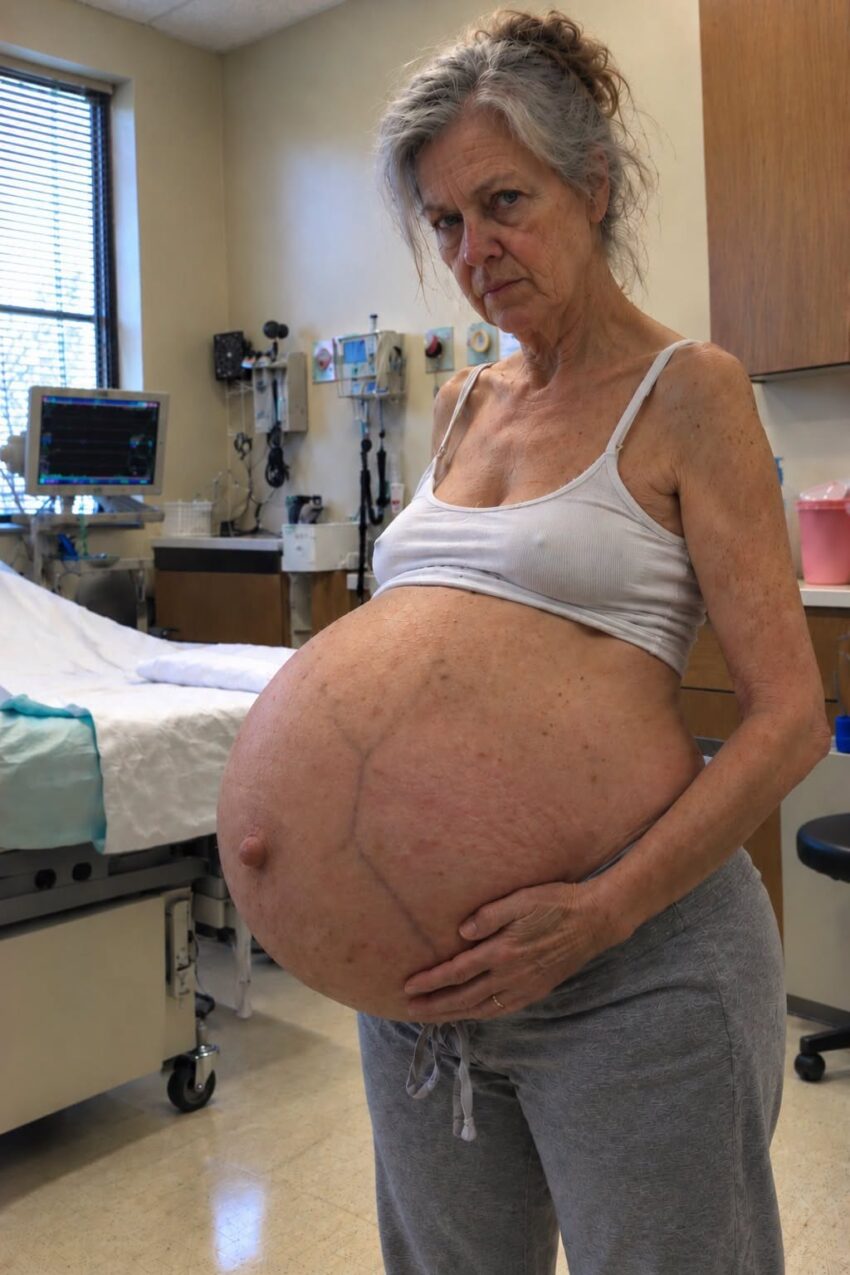
When I first saw the two pink lines on the pregnancy test, I stared at them for so long that my hands began to shake.
I was 61 years old.
At first, I thought the test was defective.
Then I took another one.
And another.
All three were positive.
My husband, Daniel, was sitting at the kitchen table drinking his morning coffee when I walked toward him holding the tests.
“Daniel,” I whispered.
He looked up at me.
I didn’t have to say anything.
He saw the expression on my face.
“Are you…?”
I nodded.
For several seconds, neither of us spoke.
Then he stood up so quickly that his chair scraped against the floor.
“We need to call the doctor.”
I expected disbelief from everyone else.
Instead, the reaction was almost overwhelming.
Our adult children cried.
My sister called it a miracle.
Even people who barely knew us seemed fascinated by the news.
At 61, I was pregnant.
Everyone wanted to celebrate.
But I couldn’t stop thinking about one thing:
Why was this happening now?
The first few weeks felt unreal
My doctor ordered blood tests and an ultrasound.
Because of my age, the pregnancy was considered extremely high-risk, and I was referred to specialists who could monitor me more closely.
Every appointment seemed to involve another scan, another blood test, another conversation about possible complications.
But every time the doctor said the pregnancy was progressing, I felt relieved.
For the first time in years, I allowed myself to imagine holding a baby again.
We bought nothing at first.
We were too afraid to get our hopes up.
Then, after several reassuring appointments, I finally bought a tiny pair of white socks.
I hid them in the back of my dresser.
Daniel found them one evening.
He smiled.
“You really think we’re going to do this?”
I put my hand over my stomach.
“I don’t know,” I said.
“But I hope we do.”
Then came the appointment I will never forget
It was supposed to be completely routine.
I went into the examination room with Daniel.
The technician performed the ultrasound while we watched the screen.
At first, everything seemed normal.
Then the doctor came in.
She studied the images.
She asked the technician to take another measurement.
Then another.
The room became strangely quiet.
I looked at Daniel.
He looked back at me.
The doctor didn’t say anything.
She simply kept staring at the screen.
Finally, she turned toward us.
“I’m going to ask your husband to step outside for a few minutes.”
Daniel immediately looked concerned.
“Why?”
The doctor smiled faintly.
“I just need to discuss something privately with her.”
My heart began pounding.
Daniel squeezed my hand before leaving.
As the door closed behind him, I turned toward the doctor.
“What is wrong?”
She pulled a chair closer to me.
Then she said something I never expected to hear.
“There is something on the scan that we need to investigate further.”
My stomach dropped.
“Is the baby okay?”
She paused.
“That is what we’re trying to determine.”
The secret wasn’t about the baby
The doctor explained that she had noticed an abnormal finding that required additional testing.
It could have been something harmless.
It could have been related to my age.
Or it could have required immediate treatment.
She didn’t want to frighten me before the specialists had enough information.
But there was another reason she had asked Daniel to leave.
She wanted to make sure I understood everything before deciding what I wanted to do next.
I sat there frozen.
Only minutes earlier, I had been imagining a nursery.
Now I was being asked to think about possibilities I wasn’t prepared for.
The doctor gently explained that pregnancy at an advanced maternal age can involve increased medical risks, and that some findings require additional testing rather than assumptions.
She recommended further imaging and specialist consultation.
I nodded, but I barely heard her.
My mind was somewhere else.
I was thinking about the tiny white socks hidden in my dresser.
The next two weeks felt endless
Waiting was worse than hearing bad news.
Every phone call made my heart race.
Every unfamiliar number on my phone terrified me.
Daniel tried to remain positive.
“You don’t know that something is wrong,” he kept reminding me.
He was right.
We didn’t know.
But fear doesn’t always listen to logic.
When the specialist finally called us back, we returned to the hospital together.
This time, there were several people in the room.
The doctor reviewed the additional test results.
Then she looked directly at me.
“The finding we saw needs treatment,” she said.
I immediately thought about the baby.
“What about my pregnancy?”
She took a breath.
“The pregnancy is still progressing.”
I started crying.
Not because everything was suddenly perfect.
But because, for the first time in weeks, I had hope again.
The thing I learned at 61
People had called my pregnancy a miracle.
Some treated me like I was incredibly lucky.
Others quietly wondered whether I was too old.
But none of them knew what was happening behind closed doors.
They didn’t see the fear.
They didn’t hear the conversations with doctors.
They didn’t know how many times Daniel and I sat in the car afterward without saying a word.
And they certainly didn’t know how quickly joy and fear could exist in the same moment.
My pregnancy wasn’t simply a miracle story.
It was a reminder that life can become complicated without warning.
And sometimes, the most important thing a doctor can do isn’t give you an immediate answer.
Sometimes it’s to stop, investigate, explain the possibilities, and make sure you have a voice in what happens next.
I still had that little pair of white socks.
I kept them in my drawer throughout the pregnancy.
And every time I saw them, I remembered the appointment when my doctor’s face suddenly changed.
That was the day I realized something important:
A miracle doesn’t always mean that everything will be easy.
Sometimes, a miracle is simply being given another chance to face the unknown—with the truth, the right medical care, and someone beside you holding your hand.