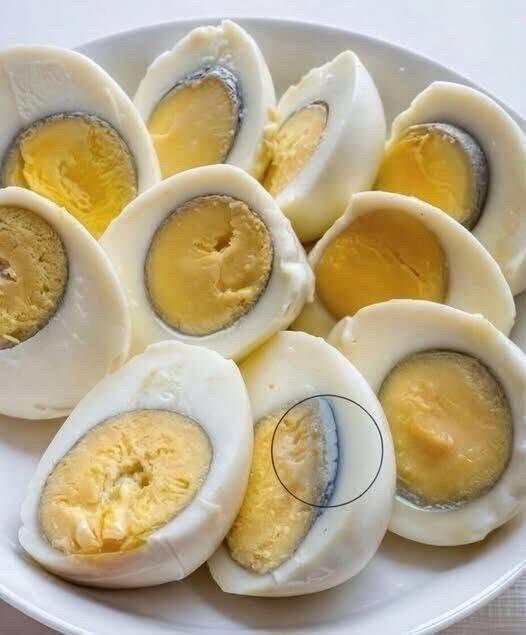
Seeing a green or gray-green ring around your hard-boiled egg yolk? Learn why it happens, whether the egg is safe to eat, and how to prevent the discoloration next time.
Have you ever boiled an egg, cut it open, and noticed a greenish or gray-green ring around the yolk? It may look strange, but in most cases, there is no reason to panic.
What Causes the Green Ring?
The ring usually develops when an egg is cooked for too long or at too high a temperature.
During cooking, sulfur compounds naturally present in the egg white react with iron in the yolk. This chemical reaction produces iron sulfide, which creates the familiar greenish-gray color around the yolk.
It doesn’t necessarily mean the egg has spoiled.
Is a Green-Ringed Egg Safe to Eat?
Generally, yes. If the egg was properly stored, cooked thoroughly, and doesn’t have an unusual odor or other signs of spoilage, the green ring itself isn’t considered dangerous.
The main issue is usually overcooking, which can also make the yolk dry and give it a slightly less pleasant texture.
How to Prevent the Green Ring
Try these simple steps:
- Place the eggs in a saucepan and cover them with water.
- Bring the water to a boil.
- Once boiling, reduce the heat or remove the pan from the heat depending on your preferred cooking method.
- Avoid cooking the eggs for unnecessarily long periods.
- Transfer the eggs to ice-cold water after cooking to stop the cooking process.
- Refrigerate cooked eggs promptly.
What If the Egg Smells Bad?
A green ring is very different from an egg that has an unpleasant sulfurous or rotten odor, unusual discoloration throughout the egg, or signs of spoilage.
When in doubt, it’s safest to discard an egg that appears or smells spoiled.
So, the next time you see a green ring around your hard-boiled egg yolk, don’t automatically assume the egg is bad. It’s usually simply a sign that the egg was cooked a little too long.