A magnitude 4.7 earthquake was recorded in the Tyrrhenian Sea off southern Italy on October 8, 2026. Here is what is known about the tremor, its depth, location, and reported effects.
A noticeable earthquake was recorded in southern Italy on Thursday, October 8, 2026, drawing attention after seismic monitoring stations registered a magnitude 4.7 tremor in the southern Tyrrhenian Sea.
According to Italy’s National Institute of Geophysics and Volcanology (INGV), the earthquake occurred at 03:42:50 UTC, with the preliminary location listed in the southern Tyrrhenian Sea. The recorded depth was approximately 372 kilometers, making it a very deep earthquake.
Where did the earthquake occur?
The seismic event was located offshore, in the Tyrrhenian Sea, with the nearest listed settlement being Ginostra, in the Aeolian Islands area of Sicily. Because the earthquake occurred at considerable depth, its effects at the surface are expected to be significantly different from those of a shallow earthquake of the same magnitude.
The earthquake was classified as magnitude 4.7 by INGV’s real-time monitoring system. The institute notes that the initial earthquake parameters can be revised as additional seismic data are analyzed.
Why can a deep earthquake still be felt?
Earthquake intensity at the surface depends on several factors, including magnitude, depth, distance from the epicenter and local ground conditions.
A deep earthquake can sometimes be felt across a broad area even though it may produce less severe localized shaking than a similarly sized shallow earthquake. Preliminary monitoring information for this event indicates that people indoors near the affected region could potentially notice movement such as rattling doors, windows or dishes.
Italy remains a seismically active country
Earthquakes are not unusual in Italy because the country lies in a geologically active part of the Mediterranean region. Southern Italy and the areas around Sicily, Calabria, Campania and the Tyrrhenian Sea experience regular seismic activity.
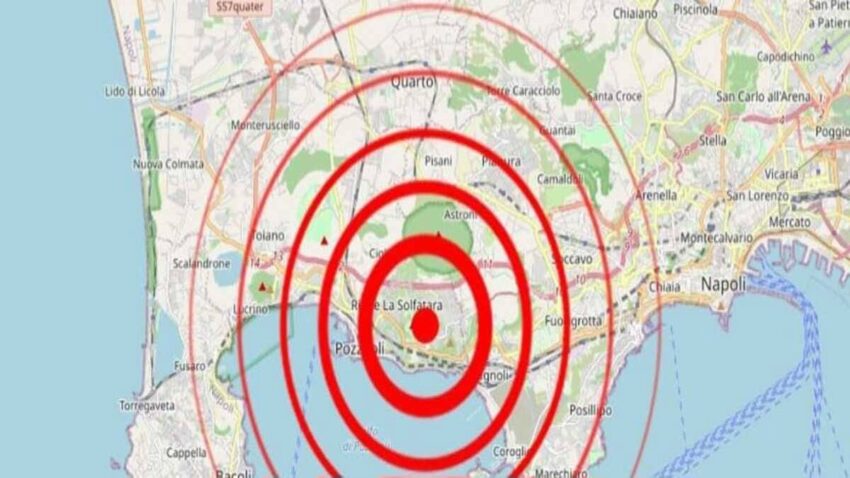
The Campi Flegrei area near Naples, for example, has experienced significant seismic activity in recent years. In July 2026, a magnitude 4.7 earthquake struck the Campi Flegrei area, causing residents to rush outside and prompting precautionary interruptions to some transport services.
What should residents do after an earthquake?
Authorities generally advise people to remain calm after an earthquake and check their surroundings for hazards. People should stay away from damaged buildings, fallen electrical wires and unstable structures.
If additional tremors occur, residents should follow instructions from local emergency authorities and avoid returning to visibly damaged buildings until they have been checked.
At present, the October 8 earthquake recorded by INGV is a deep offshore event, and the available seismic information does not by itself indicate that a major disaster has occurred. The situation can change as authorities continue reviewing the event and checking for possible effects.
Important: Viral social-media posts may describe an earthquake as “very strong” or suggest widespread panic before official information is available. For accurate updates, earthquake magnitude, depth and location should be checked against official seismic monitoring data rather than relying only on videos or posts circulating online.