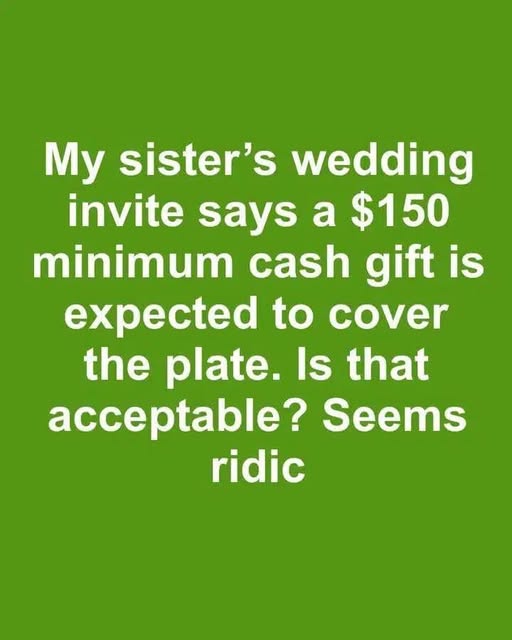
Is it rude to ask wedding guests for a minimum cash gift? Learn the etiquette behind cash wedding gifts, why minimum amounts can make guests uncomfortable, and more thoughtful ways to communicate your preferences.
Weddings come with plenty of traditions, expectations, and unwritten rules. One question that continues to spark debate is whether couples should ask their guests to give a minimum amount of cash as a wedding gift.
With weddings becoming increasingly expensive, it’s understandable that some couples may prefer cash instead of traditional gifts. Cash can help newlyweds pay for their honeymoon, contribute toward a home, cover wedding expenses, or simply start married life with fewer financial pressures.
But there is an important difference between letting guests know that cash is appreciated and telling them exactly how much they are expected to give.
So, is asking for a minimum cash gift rude?
In most situations, yes, it can come across as impolite or uncomfortable, even when the couple has good intentions.
Why Couples Prefer Cash Gifts
There are perfectly reasonable reasons for requesting money rather than physical gifts.
A couple may already live together and have everything they need. They may be saving for a house, planning a honeymoon, paying off expenses, or simply prefer having the flexibility that cash provides.
Some couples also use wedding registries that allow guests to contribute toward specific experiences or financial goals.
There is nothing inherently wrong with communicating that cash gifts are welcome.
The issue usually begins when a specific minimum amount is imposed.
Why a Minimum Can Make Guests Uncomfortable
A wedding invitation is traditionally an invitation to celebrate—not an invoice.
When guests are told that they must give at least a certain amount, they may feel as though attendance comes with a required price.
Not every guest has the same financial circumstances.
A close family member may be able to comfortably give $200, while a young friend, student, single parent, or someone dealing with financial difficulties may only be able to give $25 or $50.
A minimum requirement can unintentionally make those guests feel embarrassed or excluded.
And that is especially unfortunate because the value of someone’s presence shouldn’t depend on the size of their gift.
What If the Couple Is Paying for an Expensive Wedding?
This is one of the most common arguments for minimum gifts.
A couple may spend thousands of dollars on a wedding and think:
“We’re paying $150 per person for dinner, so guests should at least give enough to cover their portion.”
But traditional etiquette doesn’t generally work that way.
Guests aren’t expected to reimburse the couple for the cost of their meal, venue, decorations, photographer, or entertainment.
A wedding is a celebration that the couple chooses to host.
Guests are invited because the couple wants them there—not because they have agreed to purchase a certain amount of food and drinks.
“Covering Your Plate” Isn’t a Rule
Some families follow the idea that a wedding guest should give enough money to “cover their plate.”
This may be a common custom in certain cultures and communities, but it isn’t a universal etiquette rule.
Gift-giving traditions vary considerably depending on family, culture, religion, location, and personal circumstances.
What feels normal in one community may feel completely inappropriate in another.
For that reason, couples should be careful about assuming that everyone shares the same expectations.
A Better Way to Ask for Cash
If cash is genuinely preferred, there are much more gracious ways to communicate that preference.
Instead of saying:
“Minimum cash gift: $100 per person.”
A couple could say something like:
“Your presence at our wedding is the greatest gift. If you’d like to give something, we would be grateful for a contribution toward our future together.”
This communicates the preference without creating pressure.
Another option is to use a wedding website or registry where guests can choose whether they want to contribute toward a honeymoon, home, savings, or another goal.
What Should Guests Give?
There is no universal amount that every wedding guest should give.
The appropriate gift depends on several factors:
- Your relationship with the couple
- Your personal financial situation
- Local and cultural customs
- Whether you’re attending alone or as a couple
- Whether you’ve already spent significantly on travel or accommodation
- Whether you’re part of the wedding party
The most important principle is simple:
Give what you can comfortably afford.
A wedding gift should never force someone into debt.
What If You Can’t Afford the Suggested Amount?
If a couple announces a minimum amount and you genuinely cannot afford it, you shouldn’t feel ashamed.
Your financial circumstances are your own.
You can attend the wedding, celebrate the couple, and give an amount that fits your budget.
If even a cash gift isn’t possible, a thoughtful card, heartfelt congratulations, or another meaningful gesture can still express your love and support.
What Couples Should Remember
When planning a wedding, it’s easy to become focused on recovering costs.
But guests are people—not sources of wedding revenue.
Some guests may already be spending money on transportation, hotels, clothing, childcare, meals, and time away from work just to attend.
A minimum gift requirement can overlook those expenses.
The most gracious approach is to make guests feel welcomed rather than financially obligated.
The Bottom Line
There’s nothing wrong with preferring cash gifts.
There’s also nothing wrong with telling guests that cash would be appreciated.
But requiring a minimum amount can easily cross the line from sharing a preference into making guests feel obligated.
The best wedding etiquette leaves room for generosity without demanding it.
After all, the most meaningful part of a wedding isn’t how much money guests put into an envelope.
It’s the people who show up to celebrate the couple’s new chapter.
Would you feel comfortable attending a wedding where guests were told there was a minimum cash gift? Or do you think couples should simply accept whatever guests can afford?