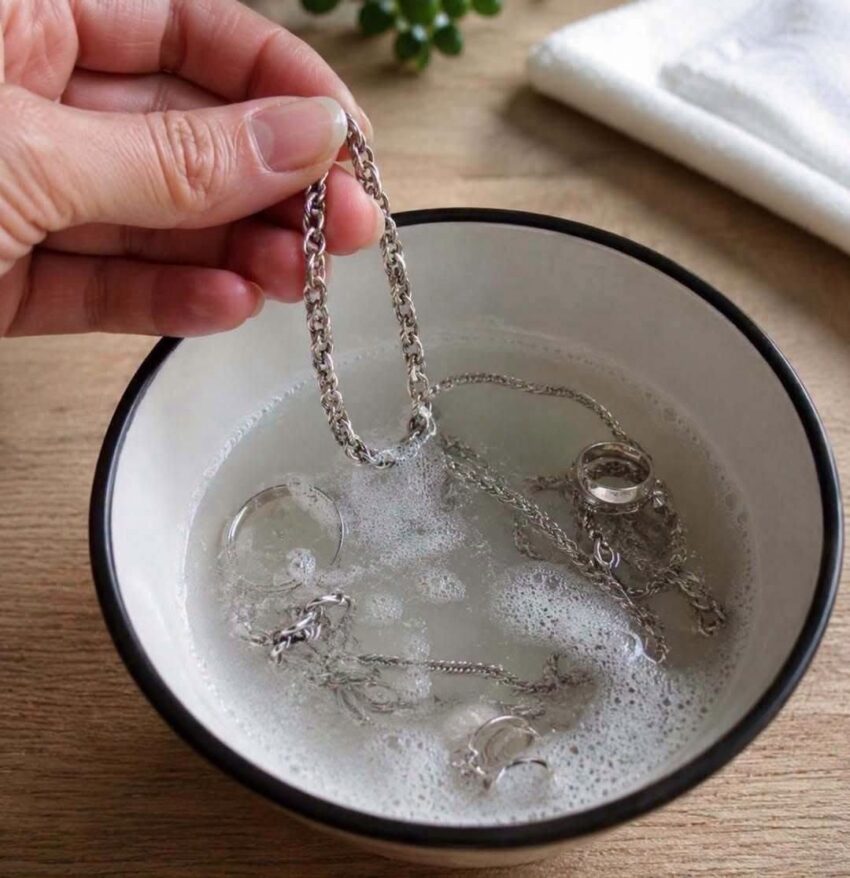
Silver jewelry, cutlery, serving pieces, and decorative items can lose their bright appearance over time. Instead of looking shiny and polished, they may develop a dull gray, brown, or even almost-black coating.
This is called tarnish, and it is a common problem with silver.
Fortunately, you don’t always need an expensive commercial silver polish. One simple household method can help loosen tarnish and restore much of the silver’s shine.
Why Does Silver Turn Black or Dull?
Pure silver is relatively resistant to corrosion, but most everyday silver items are not made from 100% pure silver. Sterling silver, for example, contains a small amount of other metals, commonly copper.
Over time, silver can react with sulfur-containing compounds in the air and form silver sulfide on its surface.
That chemical reaction is what creates the familiar dark tarnished appearance.
Humidity, air pollution, cosmetics, perfumes, household chemicals, and even certain materials used for storage can contribute to tarnishing.
The Simple Baking Soda and Aluminum Foil Method
One popular home-cleaning method uses:
- Aluminum foil
- Baking soda
- Hot water
- A bowl or container
- The tarnished silver item
The aluminum foil and baking soda work together in a chemical reaction that can help transfer sulfur compounds away from the silver surface.
What You’ll Need
For a small batch, you can start with:
Ingredients:
- 1 sheet of aluminum foil
- 1–2 tablespoons of baking soda
- Hot water
- A heat-safe bowl
The amount can be adjusted depending on how much silver you are cleaning.
Step-by-Step Instructions
Step 1: Line the Bowl
Place a sheet of aluminum foil inside a bowl.
Try to position the foil so that it covers much of the bottom of the container.
The foil is an important part of this method because it participates in the chemical reaction.
Step 2: Add the Silver
Place the tarnished silver item into the bowl.
Ideally, the silver should make contact with the aluminum foil.
If you are cleaning several pieces, avoid overcrowding the bowl.
Step 3: Add Baking Soda
Sprinkle approximately 1–2 tablespoons of baking soda over the silver.
For larger quantities, you can increase the amount proportionally.
Step 4: Pour in Hot Water
Carefully pour hot water into the bowl until the silver is covered.
You may notice fizzing or a slight sulfur-like smell as the reaction takes place.
Use caution when handling hot water.
Step 5: Let It Sit
Allow the silver to remain in the solution for several minutes.
For light tarnish, a short soaking period may be enough. More heavily tarnished pieces may require additional time.
Some people leave the silver for around 10–30 minutes, checking the item periodically.
There is no need to leave every piece for exactly 30 minutes.
Step 6: Rinse Thoroughly
Once the tarnish has loosened, carefully remove the silver.
Rinse it thoroughly with clean water to remove remaining baking soda and residue.
Step 7: Dry and Polish
Use a clean, soft microfiber or cotton cloth to dry the item.
Gently polish the surface until the silver looks brighter.
Avoid rubbing aggressively, especially on delicate or engraved pieces.
Will It Really Make Silver Shine “Instantly”?
It can produce a surprisingly noticeable improvement, particularly when the item has ordinary surface tarnish.
However, the result depends on:
- How heavily tarnished the silver is
- Whether the item is solid silver or plated
- How long it has been tarnished
- Whether the surface has scratches or damage
- Whether the discoloration is actually tarnish
Therefore, it is better to think of this as a quick tarnish-removal method, rather than a guaranteed instant transformation.
Important: Don’t Use This Method on Every Silver Item
Although the baking-soda-and-aluminum method is popular, it isn’t appropriate for every piece.
Be particularly careful with:
Silver-Plated Items
If an item has a very thin silver coating, aggressive cleaning can potentially damage the plating.
Antique Silver
Antique pieces may have intentional darkening in engraved or decorative areas. Removing that patina can change the appearance and potentially reduce the item’s character or value.
Jewelry With Stones
Jewelry containing gemstones, pearls, glued components, or delicate settings should be treated carefully.
Some stones and materials can be damaged by hot water, chemicals, or prolonged soaking.
Delicate or Valuable Pieces
If the item is valuable, sentimental, antique, or collectible, a professional silver-cleaning approach may be safer.
What About Toothpaste?
Toothpaste is often recommended online as a silver cleaner, but it isn’t always the best choice.
Many toothpastes contain mildly abrasive ingredients. These can leave tiny scratches on silver, especially when the item is polished frequently.
For valuable or highly polished silver, a product specifically designed for silver cleaning is generally a better option.
How Can You Keep Silver From Tarnishing?
Cleaning silver is easier when you prevent heavy tarnish from developing.
Store Silver Properly
Keep silver in a dry place and limit its exposure to air and humidity.
Anti-tarnish storage bags or cloths can also help.
Keep Perfume Away From Jewelry
Perfume, hairspray, lotions, and cosmetics can contribute to discoloration.
When possible, put jewelry on after applying these products.
Remove Silver Before Certain Activities
Take silver jewelry off before:
- Swimming
- Showering
- Cleaning with household chemicals
- Exercising heavily
- Using products containing chlorine
This can help reduce exposure to substances that may damage or discolor the metal.
A Quick Reminder Before You Start
Before cleaning any valuable silver item, determine whether it is:
- Sterling silver
- Solid silver
- Silver-plated
- Antique silver
- A piece containing gemstones or other delicate materials
The safest cleaning method depends on the item.
Final Thoughts
Tarnished silver does not necessarily mean that your favorite jewelry or silverware is permanently damaged. In many cases, the dark layer is simply surface tarnish that can be reduced with appropriate cleaning.
A simple combination of aluminum foil, baking soda, and hot water can help remove tarnish from suitable silver pieces and restore a much brighter appearance.
Just remember that not every silver object should be soaked, especially antiques, plated pieces, valuable jewelry, and items containing delicate stones.
When in doubt, use a gentle silver-cleaning cloth or consult a professional rather than risking damage to a valuable piece.
Meta Description
Is your silver tarnished and dull? Learn how aluminum foil, baking soda, and hot water can help remove silver tarnish and restore its shine, plus important tips to avoid damaging delicate pieces.