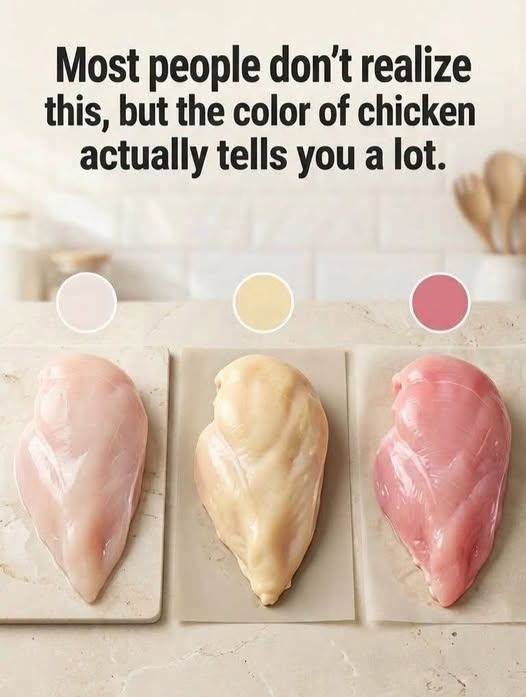
Does the color of raw chicken really tell you whether it is fresh or high quality? Learn what pink, white, yellow, and darker chicken meat can—and cannot—tell you about freshness and safety.
Many people assume that the color of chicken tells them everything they need to know about its quality.
They may see pale chicken and assume it is fresher, while darker or slightly yellow chicken may look suspicious. But color alone is not a reliable way to determine whether chicken is safe to eat or whether it is high quality.
In fact, chicken can naturally vary considerably in color.
Why Does Raw Chicken Have Different Colors?
The color of chicken meat is influenced by several factors, including the bird’s age, muscle activity, diet, breed, processing, packaging, and exposure to oxygen.
Fresh raw chicken can range from pale pink to deeper pink, while skin can vary from creamy white to yellow.
These differences don’t automatically indicate that one piece is better or worse than another.
What Does Pink Chicken Mean?
Pink raw chicken is generally normal.
Fresh poultry often has a pinkish appearance because of naturally occurring pigments in muscle tissue.
The important point is that raw chicken should not be judged by color alone.
When cooking chicken, however, appearance isn’t a reliable way to determine whether it is fully cooked. Chicken should reach a safe internal temperature measured with a food thermometer rather than relying solely on whether the meat “looks done.”
What About Yellow Chicken?
Yellowish skin doesn’t necessarily mean poor-quality chicken.
The color of poultry skin can be affected by the bird’s diet and genetics. Some chickens naturally have more yellow pigmentation than others.
Therefore, yellow skin isn’t automatically a sign that the chicken is old, spoiled, or unhealthy.
Why Can Chicken Look Darker?
Some muscles naturally contain more pigment than others.
Chicken that has been more heavily used—for example, certain leg muscles—can appear darker than breast meat.
This doesn’t automatically mean the meat has spoiled.
Different cuts can naturally have different colors.
When Should You Be Concerned?
Instead of relying on color alone, pay attention to several signs.
Chicken that has spoiled may develop an unpleasant or abnormal odor, become unusually sticky or slimy, or show other obvious signs of deterioration.
Also check the packaging and storage conditions.
If the chicken has been stored improperly or left at unsafe temperatures, don’t assume that normal-looking color makes it safe.
Don’t Wash Raw Chicken to “Improve” Its Quality
One common mistake is washing raw chicken in the sink.
Washing poultry doesn’t make it safer and can spread bacteria through splashing water onto nearby surfaces.
The safer approach is to handle raw chicken carefully, prevent cross-contamination, wash your hands and utensils properly, and cook the chicken thoroughly.
The Best Way to Judge Chicken Quality
When buying chicken, consider more than its color.
Look at:
- Use-by or sell-by information
- Packaging condition
- Storage temperature
- Texture
- Odor
- Whether the package is leaking or damaged
- How long the chicken has been stored
And when cooking, use a food thermometer to verify that the meat has reached a safe internal temperature.
The Bottom Line
Chicken color can tell you something about the meat, but it cannot tell you everything.
Pink, pale, yellowish, or darker meat can all occur naturally.
So don’t automatically throw chicken away because it isn’t the exact color you expected—and don’t assume chicken is safe simply because it looks normal.
Proper storage, careful handling, and thorough cooking are much more important indicators of food safety than color alone.