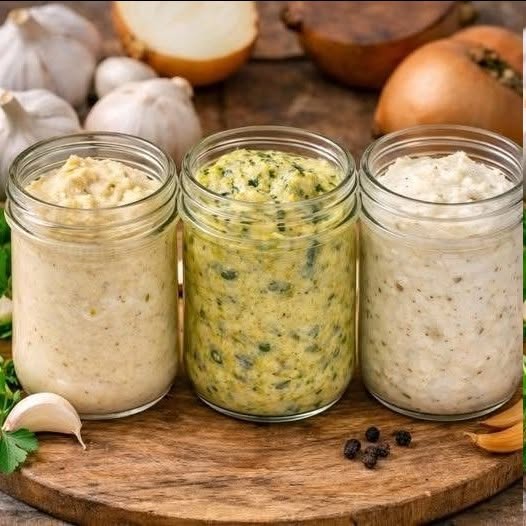
There are some kitchen tasks that seem small but become surprisingly annoying when you do them every day. Chopping onions, peeling garlic, washing cutting boards, and cleaning sticky knives can easily turn a quick meal into a much longer cooking session.
That is why I started keeping homemade cooking pastes in my refrigerator.
Instead of chopping garlic and onions every time I cook, I prepare a few basic pastes in advance. They make everyday cooking faster while still giving meals that freshly prepared flavor.
These are the three pastes I always try to have ready.
1. Homemade Garlic Paste
Garlic paste is probably the most useful preparation in my refrigerator.
Ingredients
- 2 cups peeled garlic cloves
- 2–3 tablespoons neutral cooking oil
- ½ teaspoon salt
How to Make It
Add the peeled garlic cloves to a clean blender or food processor. Add the oil and salt, then blend until you get a smooth or slightly coarse paste, depending on your preference.
Transfer the paste into a clean, airtight container.
For convenience, you can also freeze it in small portions using an ice-cube tray. Once frozen, transfer the portions to a freezer-safe bag or container.
How I Use It
Garlic paste can go straight into:
- Curries
- Lentils
- Chicken marinades
- Stir-fries
- Soups
- Rice dishes
- Sauces
- Vegetable dishes
Instead of stopping to peel and chop garlic, I can simply scoop out the amount I need.
Storage Tip
For food safety, homemade garlic-in-oil mixtures require special care because garlic stored in oil can support the growth of Clostridium botulinum under certain conditions.
For that reason, don’t keep homemade garlic-in-oil paste sitting at room temperature. Refrigerate it promptly and use it within a short period, or freeze it for longer storage.
2. Onion Paste
Onion paste is another huge time-saver, especially when making gravies.
Ingredients
- 4–5 medium onions
- 1–2 tablespoons cooking oil
- A pinch of salt, optional
How to Make It
Peel and roughly chop the onions.
Add them to a food processor or blender and process until smooth.
For a paste that keeps better and tastes less raw, you can lightly cook the onions first. Allow them to cool before blending.
Transfer the prepared paste to a clean airtight container and refrigerate or freeze it in convenient portions.
How I Use It
Onion paste works beautifully in:
- Chicken curry
- Beef or mutton gravy
- Korma
- Keema
- Lentils
- Vegetable curry
- Creamy sauces
- Marinades
The biggest advantage is consistency. Instead of chopping onions differently every time, you already have a ready-to-use base.
3. Ginger-Garlic Paste
If I could keep only one all-purpose paste, ginger-garlic paste would probably be it.
It combines two ingredients that appear together in countless savory recipes.
Ingredients
- 1 cup peeled garlic cloves
- ½ cup peeled fresh ginger
- 2–3 tablespoons neutral cooking oil
- ½ teaspoon salt
How to Make It
Wash and peel the ginger and garlic.
Cut the ginger into smaller pieces so it blends easily. Add both ingredients to a blender or food processor.
Add the oil and salt and blend until you reach your preferred consistency.
Transfer the paste into a clean airtight container and refrigerate promptly, or freeze it in small portions.
How I Use It
A spoonful can immediately become the starting point for:
- Chicken curry
- Biryani
- Pulao
- Kebabs
- Tikka marinade
- Fried rice
- Noodles
- Soups
- Stir-fried vegetables
- Meat marinades
It is especially useful on busy days when dinner needs to come together quickly.
My Favorite Meal-Prep Trick: Freeze Small Portions
One of the biggest mistakes with homemade pastes is storing one huge container in the freezer.
Instead, divide the paste into small portions before freezing.
An ice-cube tray works particularly well. Once the cubes are solid, transfer them to a labeled freezer bag.
Then, when you’re cooking, you can take out exactly what you need.
One cube might be enough for a small dish, while two or three can be used for a larger family meal.
A Few Tips for Better Homemade Pastes
Start With Completely Dry Ingredients
Excess water can make homemade pastes spoil more quickly and can affect their texture.
After washing fresh ingredients, allow them to dry properly before processing.
Use Clean Containers
Always use clean, dry, airtight containers for prepared food.
Avoid repeatedly dipping a wet or dirty spoon into the container.
Label Everything
Write the name and preparation date on each container.
This simple habit makes it much easier to keep track of what is in the refrigerator or freezer.
Don’t Make Huge Batches
If you cook for a small family, there is no need to prepare several months’ worth of paste.
Making smaller batches more frequently can help maintain better flavor and reduce food waste.
Can You Mix All Three Together?
You can, but I prefer keeping them separate.
Garlic paste, onion paste, and ginger-garlic paste have different uses. Keeping them separately allows you to control the flavor of each dish.
For example, one recipe might need more onion but very little garlic, while another might require a generous amount of ginger and garlic.
Separate containers give you much more flexibility.
Why These Pastes Make Cooking Easier
The biggest benefit isn’t that they magically make food taste better. It’s that they remove repetitive preparation work.
When the garlic is already peeled and blended, the onions are already processed, and the ginger-garlic mixture is ready to use, cooking becomes much less tiring.
Instead of spending the first 10 minutes of every meal chopping ingredients, you can move almost immediately to the actual cooking.
That can be especially helpful on busy weekdays.
The Simple Three-Paste System
If you want to simplify your kitchen routine, start with these three:
Garlic paste — for recipes where garlic is the main aromatic.
Onion paste — for gravies, sauces, and dishes that need a smooth onion base.
Ginger-garlic paste — for everyday curries, marinades, rice dishes, and stir-fries.
Prepare them in small batches, store them safely, and freeze portions you won’t use quickly.
Once these three containers become a regular part of your refrigerator, you may wonder why you spent so much time chopping garlic and onions every single day.