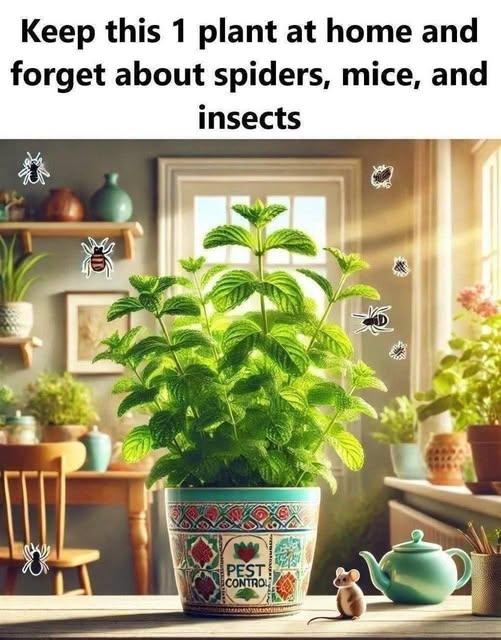
Discover how certain fragrant plants may help discourage insects around your home, plus simple ways to grow and use them for a fresher, more pleasant indoor and outdoor space.
If you are looking for a natural way to make your home less attractive to unwanted pests, you may have heard that keeping certain plants around the house can help. One of the most popular choices is mint, thanks to its strong, refreshing aroma.
Mint is easy to grow, smells pleasant to most people, and can be useful in the kitchen as well. While it should not be considered a guaranteed pest-control solution, its strong scent may help discourage some insects when the plant is grown around areas where pests commonly appear.
Why Mint Is Popular for Natural Pest Control
Mint contains aromatic compounds that give the plant its distinctive smell. The strong fragrance can be unpleasant to some insects, which is why mint and mint-derived oils are commonly used in various household products.
Keeping a healthy mint plant near doors, windows, balconies, or outdoor seating areas can be a simple addition to your overall pest-prevention routine.
However, it’s important to understand that a potted mint plant will not create an invisible barrier that keeps every spider, mouse, or insect away. Pests are attracted to food, water, warmth, shelter, and other environmental conditions.
How to Grow Mint at Home
Mint is generally easy to grow and doesn’t require complicated care.
Choose a Suitable Pot
Mint spreads quickly, so growing it in a container can help keep it under control.
Choose a pot with drainage holes so excess water can escape.
Give It Light
Place the plant somewhere that receives suitable sunlight. Depending on your climate and the variety, mint can tolerate different light conditions, but it generally grows well with good light.
Keep the Soil Moist
Mint prefers consistently moist soil, but the roots shouldn’t remain waterlogged.
Check the soil regularly and water when the surface begins to dry.
Trim It Regularly
Regular trimming encourages fresh growth and prevents the plant from becoming excessively leggy.
You can also harvest the leaves for cooking, tea, or homemade drinks.
Where Should You Put Mint?
If your goal is to discourage pests, consider placing mint near areas where insects commonly enter or gather, such as:
- Near windows
- Around entry doors
- On balconies
- Near outdoor seating areas
- Around patios
- Near the kitchen, provided the location has suitable light
For indoor use, keep the plant in a well-ventilated area with appropriate light.
What About Spiders?
You may see online claims that mint will completely eliminate spiders from your home. That’s not something you should rely on.
Spiders often enter homes because there are other insects available for them to eat. Simply placing a mint plant in a room won’t necessarily prevent spiders from appearing.
A better strategy is to reduce the conditions that attract both spiders and their prey.
Regularly clean corners, remove webs, repair damaged window screens, and reduce insect entry points.
What About Mice?
Mint is sometimes promoted as a natural mouse repellent, but a potted mint plant should not be considered reliable mouse control.
If mice are entering your home, the most effective approach is to identify and seal potential entry points, store food securely, keep garbage contained, and remove accessible sources of food and water.
For a serious infestation, professional pest-control advice may be necessary.
Other Plants You Can Consider
Mint isn’t the only aromatic plant people grow around their homes.
Depending on your climate and growing conditions, you might also consider:
- Lavender
- Rosemary
- Basil
- Lemongrass
- Marigolds
Their usefulness varies by pest and situation, and simply having these plants around doesn’t guarantee pest elimination.
The Most Effective Pest Prevention Starts With Your Home
Plants can be a pleasant addition to a pest-prevention routine, but basic household maintenance is usually much more important.
Keep Food Covered
Store food in sealed containers and clean crumbs and spills promptly.
Don’t Leave Standing Water
Mosquitoes and other pests can benefit from stagnant water. Empty containers and check areas where water can collect.
Seal Cracks and Gaps
Inspect doors, windows, walls, and areas around pipes for potential entry points.
Keep the Kitchen Clean
Grease, food particles, and crumbs can attract unwanted visitors.
Reduce Clutter
Boxes, piles of paper, and other undisturbed materials can provide hiding places for pests.
Final Thoughts
A healthy mint plant can be a useful and attractive addition to your home. Its strong fragrance may discourage some insects, and it has the added benefit of being useful in cooking and drinks.
But don’t expect one plant to eliminate spiders, mice, and every type of insect. Think of mint as one small part of a broader pest-prevention strategy.
For the best results, combine plants with good sanitation, proper food storage, sealed entry points, and regular cleaning. If you have persistent mice or an insect infestation, addressing the underlying problem is much more effective than relying on a plant alone.