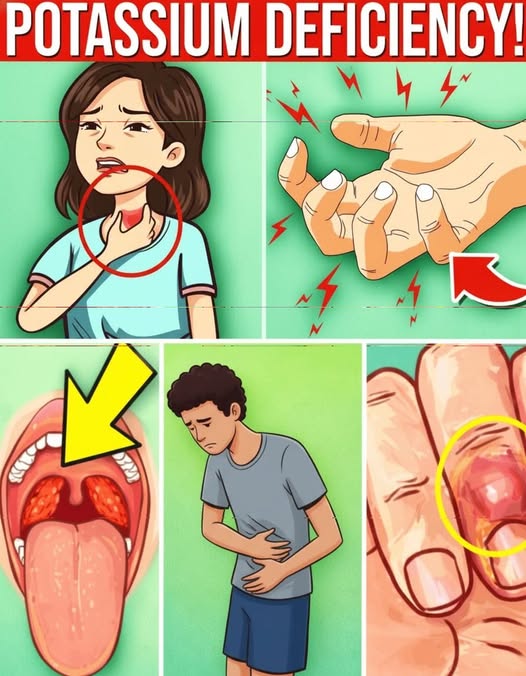
Low potassium, or hypokalemia, can affect muscles, nerves, and heart rhythm. Learn 11 possible warning signs, common causes, and when low potassium requires urgent medical attention.
11 Warning Signs You May Have Low Potassium
Potassium is an essential mineral that helps your muscles, nerves, and heart function properly. When blood potassium levels become too low, a condition called hypokalemia can develop.
Mild hypokalemia may cause few or no noticeable symptoms. More significant potassium deficiency can cause symptoms that shouldn’t be ignored.
1. Muscle Weakness
One of the more common symptoms is unusual muscle weakness. Everyday activities such as climbing stairs, standing up, or carrying objects may suddenly feel more difficult.
2. Muscle Cramps
Low potassium can interfere with normal muscle contraction and relaxation, potentially causing painful cramps or spasms.
However, cramps have many other causes, including dehydration, exercise, and certain medications.
3. Muscle Twitching
Small involuntary muscle movements or twitching can sometimes occur when electrolyte levels are abnormal.
4. Fatigue and Low Energy
Potassium plays a role in normal cellular and muscle function. Significant deficiency can contribute to tiredness or a feeling of reduced physical strength.
5. Constipation
Potassium helps muscles contract, including muscles involved in movement through the digestive tract. Significant hypokalemia can slow intestinal movement and contribute to constipation.
6. Heart Palpitations
Some people with low potassium may notice their heart beating unusually fast, forcefully, or irregularly.
This symptom deserves attention because potassium is important for the heart’s electrical activity.
7. Abnormal Heart Rhythm
More severe potassium deficiency can cause potentially dangerous heart rhythm abnormalities.
People with heart disease or those taking certain medications may be particularly vulnerable.
8. Tingling or Numbness
Abnormal potassium levels can affect nerve and muscle function and may sometimes be associated with unusual sensations such as tingling or numbness.
These symptoms, however, are nonspecific and can have many causes.
9. Increased Urination or Thirst
Potassium abnormalities can affect how the kidneys handle fluids. Some people with significant potassium depletion may experience increased urination and thirst.
These symptoms can also occur with conditions such as diabetes, so they should not automatically be blamed on potassium deficiency.
10. Breathing Difficulty
Severe hypokalemia can cause substantial muscle weakness, potentially affecting muscles involved in breathing.
New or severe difficulty breathing is an emergency and requires immediate medical attention.
11. Paralysis or Extreme Weakness
In severe cases, hypokalemia can cause profound muscle weakness or temporary paralysis. This is a medical emergency.
What Causes Low Potassium?
Low potassium isn’t usually caused simply by failing to eat enough potassium-rich foods. Common causes include:
- Prolonged vomiting or diarrhea
- Heavy sweating in certain circumstances
- Use of some diuretics (“water pills”)
- Certain kidney disorders
- Some hormonal conditions
- Excessive laxative use
- Certain medications
- Significant fluid or electrolyte losses
Your healthcare professional may need blood tests to determine the cause.
Foods That Contain Potassium
For people who don’t have a medical reason to restrict potassium, good dietary sources include:
- Potatoes
- Beans and lentils
- Bananas
- Tomatoes
- Spinach and other leafy greens
- Avocados
- Yogurt
- Oranges
- Fish
Eating potassium-rich foods is generally preferable to taking potassium supplements without medical advice.
Don’t Take Potassium Supplements Without Guidance
Potassium can be dangerous when taken inappropriately. Both low and excessively high potassium levels can affect the heart.
If you suspect hypokalemia, a blood test is a much safer way to determine whether your potassium is actually low than trying to diagnose yourself from symptoms.
When to Seek Urgent Care
Seek urgent medical attention if you experience severe weakness, fainting, chest discomfort, severe palpitations, difficulty breathing, or a known significant potassium abnormality.
Bottom Line
Low potassium can cause muscle weakness, cramps, fatigue, constipation, palpitations, and—in severe cases—dangerous heart rhythm problems. But these symptoms aren’t specific to hypokalemia.
The only reliable way to confirm low potassium is appropriate medical testing. If you’re experiencing persistent or concerning symptoms, speak with a healthcare professional rather than starting potassium supplements on your own.