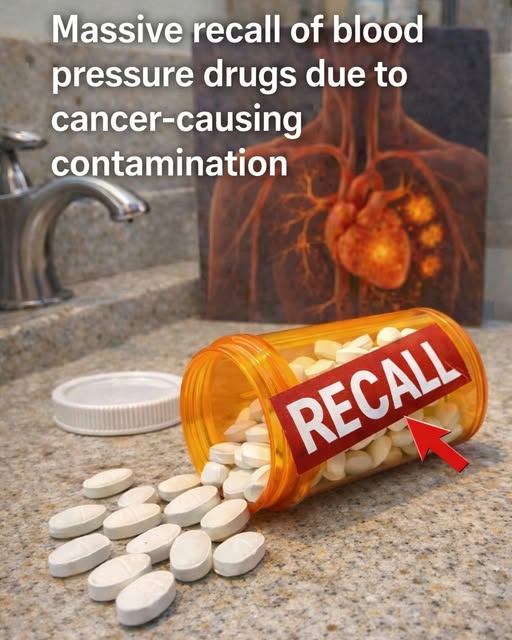
Certain blood pressure medicines have been recalled because of nitrosamine impurities. Learn which drugs were affected and what patients should know.
News about a blood pressure medication recall can understandably cause concern, especially for people who take these medicines every day.
In recent years, regulators have recalled certain batches of some blood pressure medicines after detecting nitrosamine impurities, including NDMA and NDEA. These substances are classified as probable human carcinogens, meaning long-term exposure above established safety limits may increase cancer risk.
However, an important distinction is often lost in headlines: the recalls have involved specific medicines, manufacturers, and batches—not every blood pressure medication.
Why Were Some Blood Pressure Medicines Recalled?
The issue became widely known after regulators discovered unexpected nitrosamine impurities in certain medicines in the angiotensin II receptor blocker (ARB) family.
These medicines include:
- Valsartan
- Losartan
- Irbesartan
ARBs are commonly prescribed to treat high blood pressure and, depending on the medicine, heart failure and other cardiovascular conditions.
The FDA reported that certain generic versions contained nitrosamine impurities above acceptable safety limits. This resulted in recalls of affected products and batches.
What Are Nitrosamines?
Nitrosamines are chemical compounds that can occur in the environment and can also be found in certain foods, drinking water, and industrial processes.
Some nitrosamines, including NDMA (N-nitrosodimethylamine) and NDEA (N-nitrosodiethylamine), are classified as probable human carcinogens.
The concern is primarily related to repeated exposure over long periods at levels above established acceptable limits. The FDA states that people taking medicines containing nitrosamines at or below its acceptable daily intake limits every day for 70 years are not expected to have an increased cancer risk from those impurities.
Does This Mean Blood Pressure Medicine Is Dangerous?
No.
A recall does not mean that all medicines in a particular drug class are unsafe.
For example, the FDA specifically notes that not all valsartan, losartan, or irbesartan products contain these impurities or are subject to recall. Affected products are identified by factors such as manufacturer, product, strength, lot or batch number, and expiration information.
This distinction is extremely important because stopping blood pressure medication suddenly can itself create health risks.
Why Was Valsartan One of the Main Medicines Involved?
Valsartan was among the first widely reported ARBs affected by the nitrosamine issue.
In 2018, FDA announced recalls of several valsartan-containing products after NDMA was detected in certain products. The agency explained that the contamination was unexpected and appeared to be associated with changes in the manufacturing process for the active pharmaceutical ingredient.
Additional recalls followed as regulators identified nitrosamines in particular products and batches.
The FDA later investigated other ARBs, including losartan and irbesartan, for similar impurities.
What About Cancer Risk?
It is important not to interpret the word “carcinogen” as meaning that everyone who took a recalled medicine will develop cancer.
A carcinogen is a substance capable of increasing cancer risk under certain exposure conditions. Actual risk depends on factors such as:
- The specific impurity
- The amount present
- How frequently the medicine was taken
- How long exposure occurred
- The individual’s overall circumstances
The FDA performed risk estimates for certain recalled valsartan products. For example, its analysis estimated that if 8,000 people took the highest dose of valsartan containing NDMA every day for four years, there could be one additional cancer case over their lifetimes. The agency emphasized that many patients took lower doses and that the actual risk for most consumers was expected to be lower than this estimate.
These estimates apply to particular recalled products and exposure assumptions; they should not be interpreted as the risk associated with every valsartan product or every blood pressure medicine.
Should You Stop Taking Your Blood Pressure Medicine?
Do not stop a prescribed blood pressure medicine on your own simply because you have seen a recall headline.
For recalled ARB products, FDA guidance has emphasized that patients should continue their medication until a pharmacist or doctor provides a replacement or alternative treatment, because suddenly stopping treatment can create a greater immediate health risk.
If you are concerned about your medication:
- Check the exact name of the medicine.
- Check the strength.
- Find the manufacturer.
- Look for the lot or batch number.
- Check the expiration date.
- Contact your pharmacist or doctor.
- Ask whether your specific product is affected by a recall.
Do not throw away an important blood pressure medicine without first arranging an appropriate replacement.
How Can Patients Check Whether Their Medicine Is Affected?
A medication recall usually applies to particular products or lots rather than an entire medication category.
Your pharmacist can compare the information printed on your medication packaging with current recall information.
This is particularly important because different manufacturers can produce the same active ingredient, and one manufacturer’s product may be affected while another manufacturer’s product is not.
The FDA maintains information about recalls involving ARB medicines and continues to update its information as new findings become available.
What Should You Do If You Already Took a Recalled Medicine?
If you previously used a recalled medication, try not to panic.
A recall means regulators or manufacturers identified a quality or safety concern with particular products. It does not mean that everyone exposed to the product will experience an adverse effect.
If you are worried about previous exposure, discuss your concerns with your doctor or pharmacist. They can consider your medication history and determine whether any follow-up is appropriate.
There is generally no reason to assume that you have cancer simply because you previously took a medication that was later recalled.
Why Are Medication Recalls Important?
Medication recalls are an important part of pharmaceutical safety monitoring.
Regulators and manufacturers test medicines and investigate manufacturing processes to identify unexpected impurities. When contamination exceeds established safety standards, affected products may be removed from the market.
The FDA explains that nitrosamines can enter medicines for different reasons, including manufacturing processes, the chemical structure of the drug, or storage and packaging conditions.
The Bottom Line
Certain blood pressure medicines have been recalled because some batches contained nitrosamine impurities such as NDMA or NDEA at levels that did not meet safety standards.
But this does not mean that all blood pressure medicines are contaminated, nor does it mean that every product containing valsartan, losartan, or irbesartan has been recalled.
If you take one of these medicines, check the exact product and batch information rather than relying on a general headline. Most importantly, do not stop your blood pressure medication without speaking with a healthcare professional, because uncontrolled blood pressure can also be dangerous.
When a recall affects a particular product, your pharmacist or doctor can help you switch safely to an unaffected product or an appropriate alternative.