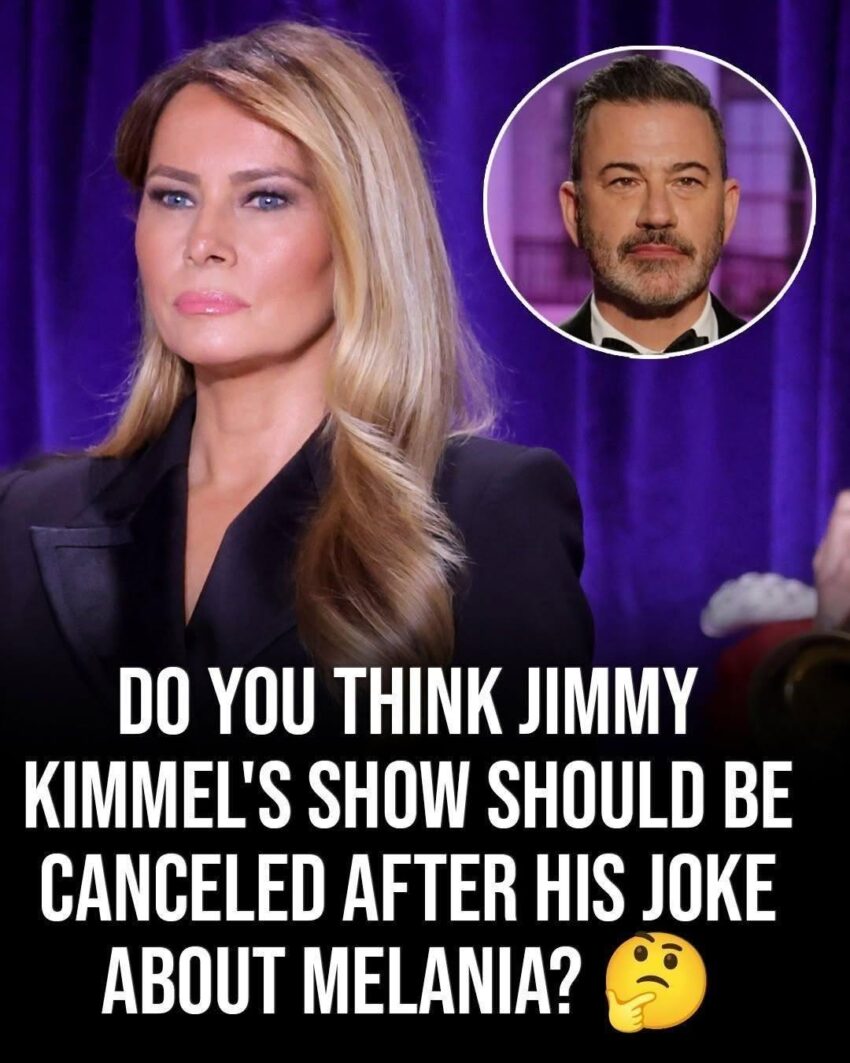
Melania Trump sharply criticized Jimmy Kimmel over a controversial joke, calling his rhetoric hateful and urging ABC leaders to take action. Here’s what sparked the dispute and how Kimmel responded.
A sharp political and television controversy erupted in April 2026 when First Lady Melania Trump publicly criticized late-night host Jimmy Kimmel and called on ABC executivMelania Trump sharply criticized Jimmy Kimmel over a controversial joke, calling his rhetoric hateful and urging ABC leaders to take action. Here’s what sparked the dispute and how Kimmel responded.es to take action against him.
Melania’s unusually direct statement accused Kimmel of using what she described as “hateful and violent rhetoric” and said his comments were intended to divide Americans. She also characterized the comedian as a “coward” and challenged ABC leadership to take a stand.
The dispute centered on a joke Kimmel made during an episode of Jimmy Kimmel Live! several days before the White House Correspondents’ Dinner shooting.
What Did Jimmy Kimmel Say?
During his comedy routine, Kimmel was pretending to host the upcoming White House Correspondents’ Dinner when he made a joke about Melania Trump.
He referred to the first lady as having the appearance of an “expectant widow.” The joke was presented as political and celebrity satire, but it quickly became controversial following the shooting at the Correspondents’ Dinner.
Melania and President Donald Trump argued that the remark crossed a line, particularly because of its reference to widowhood and death.
Kimmel, however, defended the joke and emphasized that it had been made before the shooting, arguing that it should not be interpreted as encouraging violence.
Melania Trump Calls Kimmel a “Coward”
Melania responded publicly on social media, accusing Kimmel of using rhetoric that she considered hateful and violent.
She urged ABC to “take a stand” and questioned why the network would continue giving Kimmel a platform if his comments were considered divisive.
The first lady’s intervention was notable because she generally makes fewer public political statements than her husband. Her criticism therefore attracted substantial attention across American media.
Donald Trump Also Demanded Action
Melania’s criticism came alongside President Donald Trump’s own attacks on Kimmel.
Trump called for Kimmel to be fired and argued that ABC should no longer employ the comedian. The controversy therefore quickly moved beyond a celebrity feud and became part of a larger political dispute over the limits of political comedy and television commentary.
ABC Became Part of the Controversy
The dispute also placed ABC executives under pressure.
The controversy was especially significant because ABC’s parent company, Disney, later became involved in a broader conflict with the Federal Communications Commission over the network’s broadcast licenses.
In April, the FCC ordered an accelerated review of eight Disney-owned ABC station licenses. ABC and Disney later argued that the regulatory pressure was politically motivated and amounted to intimidation over the network’s programming and coverage.
That fight continued well beyond the original Kimmel controversy.
In August 2026, Disney sued the FCC, arguing that the government’s actions represented an unconstitutional campaign of retaliation against ABC. The FCC disputed that characterization and defended its review.
The Bigger Debate: Comedy or Dangerous Rhetoric?
At the heart of the controversy is a familiar but increasingly heated question:
Where should the line be drawn between political comedy and rhetoric that can be considered harmful?
Supporters of Kimmel argue that late-night comedians routinely use exaggeration, satire and provocative jokes when discussing political figures. From this perspective, offensive political humor is part of the tradition of American political comedy.
Critics argue that comedians with major television platforms have a responsibility to consider how their words may be interpreted, particularly when political tensions are already extremely high.
The disagreement over Kimmel’s joke therefore became much larger than the joke itself.
Kimmel Stands by His Position
Kimmel responded to the criticism rather than simply accepting the demand for his removal.
He defended the context of the joke and rejected the suggestion that it was intended to encourage violence. His position was that the joke was made as part of a comedy routine and should be evaluated in that context.
The dispute subsequently became another chapter in Kimmel’s long-running conflict with Donald Trump.
Why the Story Continues to Matter
The Melania Trump–Jimmy Kimmel dispute illustrates how closely entertainment, politics and media regulation have become connected in the United States.
What began as a late-night joke eventually became part of a much broader argument involving:
- Political satire
- Free speech
- Media responsibility
- Presidential criticism of television networks
- ABC and Disney
- FCC oversight
- The limits of political pressure on broadcasters
For Melania Trump, the issue was about rhetoric she considered unacceptable. For Kimmel and his supporters, it became a question of whether political leaders should be able to pressure a television network into removing a comedian.
And for ABC and Disney, the dispute became part of a much larger battle over the independence of a major American broadcaster.
The Bottom Line
Melania Trump’s criticism of Jimmy Kimmel was not simply another celebrity disagreement. Her call for ABC to “take a stand” came amid an increasingly intense political fight over Kimmel’s comedy, ABC’s editorial independence and the government’s relationship with major broadcasters.
Kimmel defended his joke and rejected the idea that it represented a call for violence, while Melania and Donald Trump continued to argue that ABC should take disciplinary action.
The controversy ultimately raised a much broader question that remains highly contentious:
How far can political comedy go before criticism becomes something more serious—and who should get to decide where that line is?