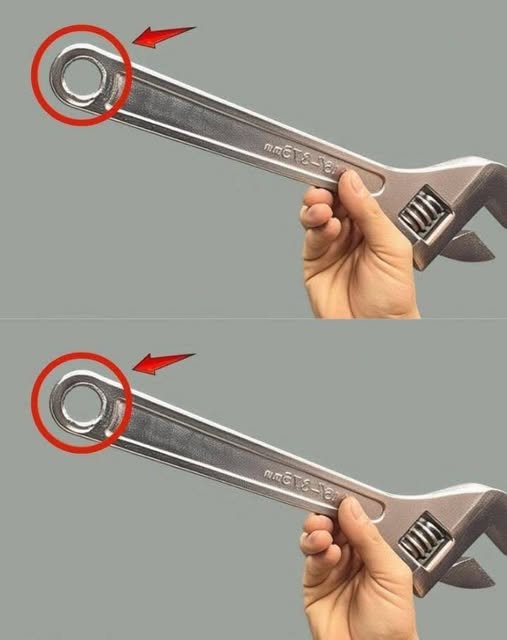
That ordinary household tool may have a clever feature most people overlook. Discover how hidden details and simple functions can make everyday tools more useful.We use certain household tools so often that we stop noticing the little details built into them.A handle, a notch, a hole, a groove, or an unusual-shaped edge can look completely ordinary—but sometimes that small feature was designed for a very specific purpose.That’s why people are often surprised when they discover that a familiar tool has a function they never knew existed.
check this item on amazon
Look Closely at the Tool
The next time you pick up an everyday tool, don’t just focus on its main purpose.
Look at the entire design.
Ask yourself:
- Why is that small hole there?
- What is the notch supposed to do?
- Why does the handle have that particular shape?
- Is the edge designed for something besides its obvious use?
- Does the tool have a feature that could make a common task easier?
Manufacturers often incorporate several functions into a single object because it makes the tool more practical without making it significantly larger or more expensive.
The “Hidden Feature” May Be the Most Useful Part
Many tools are designed around efficiency.
A small groove might help hold an object securely. A hole could provide a place to hang the tool. A notch might be intended for gripping or positioning something.
Sometimes a feature that looks decorative actually has a practical purpose.
And because people learn how to use tools from family members, coworkers, or simple habit, they may never discover every function themselves.
Why Do So Many People Miss It?
There are a few simple reasons.
First, we’re creatures of habit. Once we learn one way to use an object, we rarely question whether there’s another way.
Second, manufacturers don’t always make secondary functions obvious.
Finally, modern tools can have surprisingly thoughtful designs packed into very small details.
That means a tool can sit in someone’s kitchen, garage, workshop, or bathroom for years without them ever realizing what one particular part was designed to do.
A Good Habit: Inspect Before You Replace
Before buying a new tool to solve a small household problem, take a closer look at the tools you already own.
You may discover that something you already have can perform the task.
This can save money, reduce clutter, and make everyday jobs easier.
Of course, don’t force a tool to perform a function it wasn’t designed for. Using an object incorrectly can damage it or cause an injury.
The Real Secret
The biggest secret isn’t necessarily one particular feature.
It’s the idea that ordinary objects are often more thoughtfully designed than they appear.
A tool that seems simple may have been engineered around dozens of small practical decisions.
So the next time someone tells you, “I’ve been using this for years and never knew it could do that,” don’t be surprised.
There may be a useful feature hiding in plain sight.
What everyday tool do you think most people are using incorrectly?