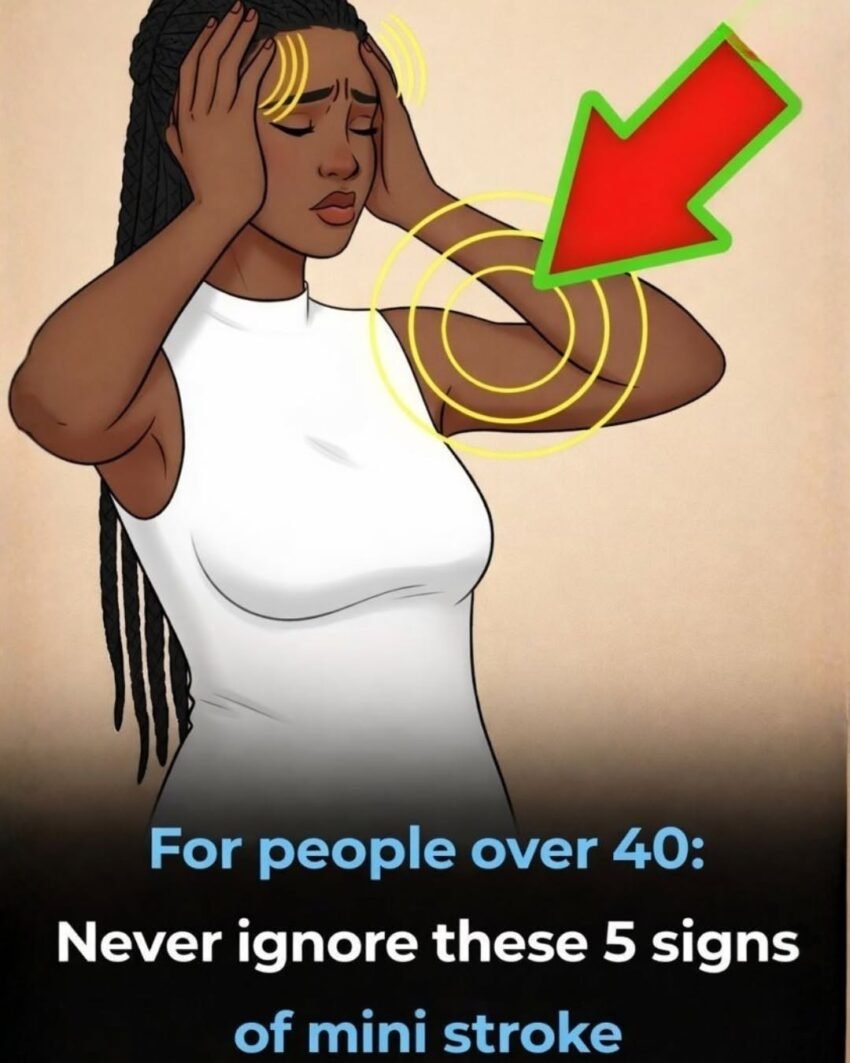
A mini-stroke, medically known as a transient ischemic attack (TIA), may last only a few minutes or hours, and its symptoms can disappear completely. That temporary improvement can be misleading. A TIA is often a warning that a more serious stroke could happen soon, so symptoms should never be ignored.
For people over 40, understanding the warning signs and acting quickly can make an important difference.
What Is a Mini-Stroke?
A TIA happens when blood flow to part of the brain is temporarily interrupted. Unlike many strokes, the blockage does not cause permanent brain injury because blood flow is restored before lasting damage occurs.
However, a TIA should still be treated as a medical emergency.
You cannot reliably tell at home whether symptoms are caused by a TIA or an ongoing stroke. If sudden neurological symptoms appear, seek emergency medical care even if they disappear.
1. Sudden Numbness or Weakness
One of the classic warning signs is sudden weakness or numbness, particularly on one side of the body.
You might notice:
- A weak arm or leg
- Numbness in the face
- Difficulty lifting one arm
- One side of the face appearing uneven
- A sudden feeling that one side of the body is not responding normally
The symptoms may improve after several minutes, but that does not make them harmless.
2. A Drooping Face
Ask the person to smile if they suddenly feel unusual facial weakness.
A TIA or stroke can cause one side of the face to droop or feel numb. The smile may appear uneven, or one corner of the mouth may not move normally.
Because facial drooping can have other causes, it is important to consider it alongside other sudden neurological symptoms.
3. Trouble Speaking or Understanding
Sudden problems with language are another important warning sign.
Someone experiencing a TIA may:
- Slur their speech
- Have difficulty finding words
- Say words that do not make sense
- Struggle to understand what others are saying
- Suddenly become unable to communicate normally
If speech suddenly changes, don’t wait to see whether it gets better.
4. Sudden Vision Problems
A TIA can affect vision in one or both eyes.
Possible symptoms include:
- Sudden blurred vision
- Double vision
- Loss of vision in one eye
- A dark or curtain-like area across the visual field
- Difficulty seeing objects clearly
Sudden vision loss deserves urgent medical assessment, even if normal vision returns.
5. Sudden Dizziness or Loss of Balance
A person may suddenly feel extremely dizzy, unsteady, or unable to walk normally.
They may have:
- Trouble maintaining balance
- Difficulty coordinating movements
- Sudden problems walking
- A sensation that the room is moving
- Unexplained loss of coordination
Dizziness by itself has many possible causes, but sudden dizziness combined with weakness, speech problems, vision changes, or severe coordination problems is particularly concerning.
6. A Sudden, Unusual Headache
Some strokes can cause a sudden and severe headache, especially when it occurs without an obvious explanation.
A sudden, extremely severe headache—particularly when accompanied by neurological symptoms, vomiting, confusion, fainting, or neck stiffness—requires emergency evaluation.
Do not assume that a severe new headache is simply a migraine, especially if it is different from previous headaches.
Remember FAST
A simple way to recognize major stroke warning signs is FAST:
F — Face: Is one side of the face drooping?
A — Arms: Is one arm weak or numb? Can the person raise both arms normally?
S — Speech: Is speech slurred, confused, or unusual?
T — Time: Call emergency medical services immediately if these symptoms appear.
Some organizations also emphasize additional symptoms such as sudden balance problems and vision changes, because not every stroke presents with the classic FAST pattern.
Why Symptoms Disappearing Is Not Reassuring
One of the biggest dangers of a TIA is that the person may feel completely normal afterward.
Someone might think:
“It only lasted ten minutes, so it can’t have been serious.”
Unfortunately, that is not a safe assumption.
A TIA can be a warning that the brain’s blood supply is vulnerable. The underlying problem may still be present even after the symptoms disappear.
That is why a person who experiences sudden stroke-like symptoms should receive urgent medical evaluation, even if they are feeling better by the time they reach the hospital.
Why Risk Can Increase After 40
Age is one of several factors associated with stroke and TIA risk. As people get older, the likelihood of conditions that affect blood vessels can increase.
Important risk factors include:
- High blood pressure
- High cholesterol
- Diabetes
- Smoking
- Obesity
- Physical inactivity
- Atrial fibrillation and other heart conditions
- Previous TIA or stroke
- Certain blood-vessel diseases
- Excessive alcohol consumption
- Family history of stroke
Being over 40 does not mean that a TIA is inevitable. Many risk factors can be managed through medical care and lifestyle changes.
What Should You Do If Symptoms Occur?
If you or someone else suddenly develops symptoms that could indicate a TIA or stroke, treat it as an emergency.
Do not:
- Wait several hours to see if symptoms return
- Drive yourself to the hospital if emergency transportation is available
- Take medication on your own in an attempt to treat the episode
- Assume the problem is harmless because symptoms disappeared
Note the time the symptoms started or the last time the person was known to be normal. This information can be extremely important to healthcare professionals.
How Doctors Evaluate a Possible TIA
Medical professionals may perform several tests to determine what happened and identify the cause.
Depending on the situation, evaluation may include:
- Neurological examination
- Blood pressure measurement
- Blood tests
- Brain imaging such as CT or MRI
- Examination of the blood vessels supplying the brain
- Heart rhythm monitoring
- Electrocardiogram
- Additional heart testing when appropriate
The goal is not only to determine whether a TIA occurred but also to find the underlying cause and reduce the risk of a future stroke.
Prevention Matters
After a TIA, doctors may recommend steps to lower future stroke risk. Treatment depends on the individual’s cause and medical history.
Possible strategies include managing:
Blood pressure: High blood pressure is one of the most important modifiable stroke risk factors.
Cholesterol: High LDL cholesterol can contribute to plaque buildup in arteries.
Diabetes: Keeping blood glucose within the recommended range can help protect blood vessels.
Smoking: Quitting smoking can significantly reduce cardiovascular and stroke risk.
Physical activity: Regular activity can support healthy blood pressure, weight, cholesterol, and blood sugar levels.
Heart rhythm problems: Conditions such as atrial fibrillation may require specific treatment to reduce the risk of blood clots.
When to Seek Immediate Help
Call your local emergency medical service immediately if someone develops sudden facial drooping, arm or leg weakness, speech difficulty, sudden vision loss, severe balance problems, confusion, or another unexplained neurological change.
Even if the symptoms disappear after a few minutes, they still require urgent assessment.
Final Takeaway
A mini-stroke is temporary, but the warning it provides can be extremely important. Symptoms that disappear are not necessarily a sign that the danger has passed.
If sudden stroke-like symptoms occur, remember FAST: Face, Arms, Speech, Time. Getting emergency medical attention quickly gives doctors the best opportunity to determine what happened, identify risk factors, and help prevent a potentially disabling stroke.
Important: This article is for general education and does not replace medical care. Sudden neurological symptoms should be treated as an emergency, even when they improve or disappear.