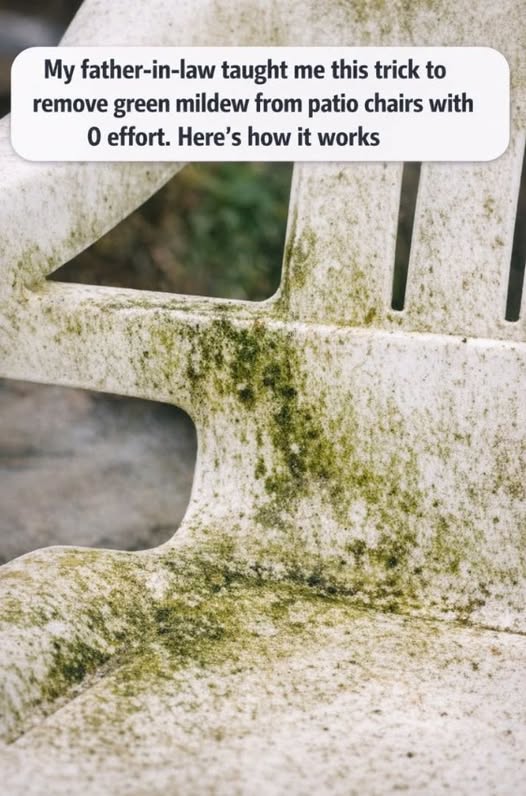
Learn a simple way to clean green mildew from outdoor patio chairs using common household supplies, plus tips to prevent it from coming back.
If your patio chairs have spent months outside in damp or humid weather, you may have noticed green patches appearing on the surface.
It can make perfectly good outdoor furniture look old, dirty, and neglected.
I used to think the only solution was aggressive scrubbing, a stiff brush, and a lot of elbow grease.
Then my father-in-law showed me a much simpler approach.
The trick isn’t really about scrubbing harder. It’s about letting the cleaning solution do most of the work first.
What Causes Green Mildew on Patio Chairs?
Outdoor furniture is constantly exposed to moisture, humidity, rain, shade, and airborne dirt.
When a chair stays damp for long periods—especially in a poorly ventilated or shaded area—mildew and algae can grow on the surface.
Plastic and resin chairs are particularly prone to developing green or dark discoloration.
The good news is that surface growth can often be removed without hours of scrubbing.
The Simple Cleaning Method
Before starting, move the chairs to an open, well-ventilated area.
You’ll need:
- A bucket of warm water
- A small amount of dishwashing liquid
- A soft or medium-bristle brush
- A garden hose or clean water
- Household gloves
Step 1: Remove Loose Dirt
Rinse the chair thoroughly with water.
This removes loose dust, leaves, and dirt before you begin treating the mildew.
Don’t skip this step. Cleaning becomes much easier when you’re not trying to scrub mud and mildew at the same time.
Step 2: Make a Mild Cleaning Solution
Mix warm water with a small amount of dish soap.
The goal is to create a solution that loosens grime and surface buildup without unnecessarily damaging the chair.
You don’t need a huge amount of soap.
Step 3: Let It Sit
Apply the solution generously to the affected areas.
Instead of immediately scrubbing, give it several minutes to loosen the buildup.
This is the part my father-in-law emphasized.
If the surface starts drying while you’re waiting, apply a little more solution.
Step 4: Give the Chair a Gentle Scrub
Now use your brush to work over the green areas.
You’ll often find that the buildup comes away much more easily after soaking than it did when you attacked it dry.
For textured plastic, a soft toothbrush can help reach grooves and corners.
Step 5: Rinse Thoroughly
Rinse the entire chair with clean water.
Make sure no soap or loosened debris remains, especially around seams, joints, and textured surfaces.
Then leave the chair somewhere sunny and well ventilated to dry completely.
What About Stubborn Green Stains?
Sometimes the green appearance isn’t simply loose mildew.
It can be a combination of algae, dirt, weathering, and staining that has become embedded in the surface.
For stubborn areas, you can repeat the cleaning process rather than immediately reaching for an aggressive chemical.
If you decide to use a commercial outdoor-furniture or mildew cleaner, read the manufacturer’s instructions and check that it is suitable for your particular chair material.
Always test a cleaning product on a small inconspicuous area first.
A Very Important Safety Warning
Never mix household cleaning chemicals together.
In particular, never combine bleach with ammonia, acids, vinegar, or other cleaners. Dangerous gases can be produced.
If you’re using a commercial mildew remover, use it exactly as directed and provide adequate ventilation.
Wear appropriate gloves and eye protection when the product label recommends them.
How to Keep Mildew From Coming Back
Cleaning the chairs is only half the job.
The easiest way to reduce future buildup is to make the environment less friendly to mildew and algae.
Keep Chairs Dry
After rain, allow outdoor furniture to dry completely whenever possible.
Improve Airflow
Avoid keeping chairs tightly packed together in a damp corner.
Good airflow helps moisture evaporate faster.
Don’t Leave Them Under Constant Shade
If practical, place furniture somewhere it receives some sunlight during the day.
Clean Regularly
Don’t wait until the green buildup becomes thick.
A quick rinse and occasional soap cleaning can make future deep cleaning much easier.
Store Furniture During Long Periods of Bad Weather
If you won’t be using the chairs for weeks, consider storing them in a dry, ventilated area or using suitable furniture covers.
If using covers, choose breathable covers rather than trapping moisture underneath them.
The “0 Effort” Part Is Actually Preparation
There isn’t a safe household trick that magically makes heavy mildew disappear without any work at all.
But there is a way to make the job dramatically easier:
loosen the buildup first, then scrub.
That’s the lesson my father-in-law taught me.
Instead of attacking green mildew with a dry brush and exhausting yourself, give the cleaning solution time to work, then rinse and gently scrub what remains.
Sometimes the simplest cleaning tricks aren’t about working harder.
They’re about letting the cleaner do the hard part for you.