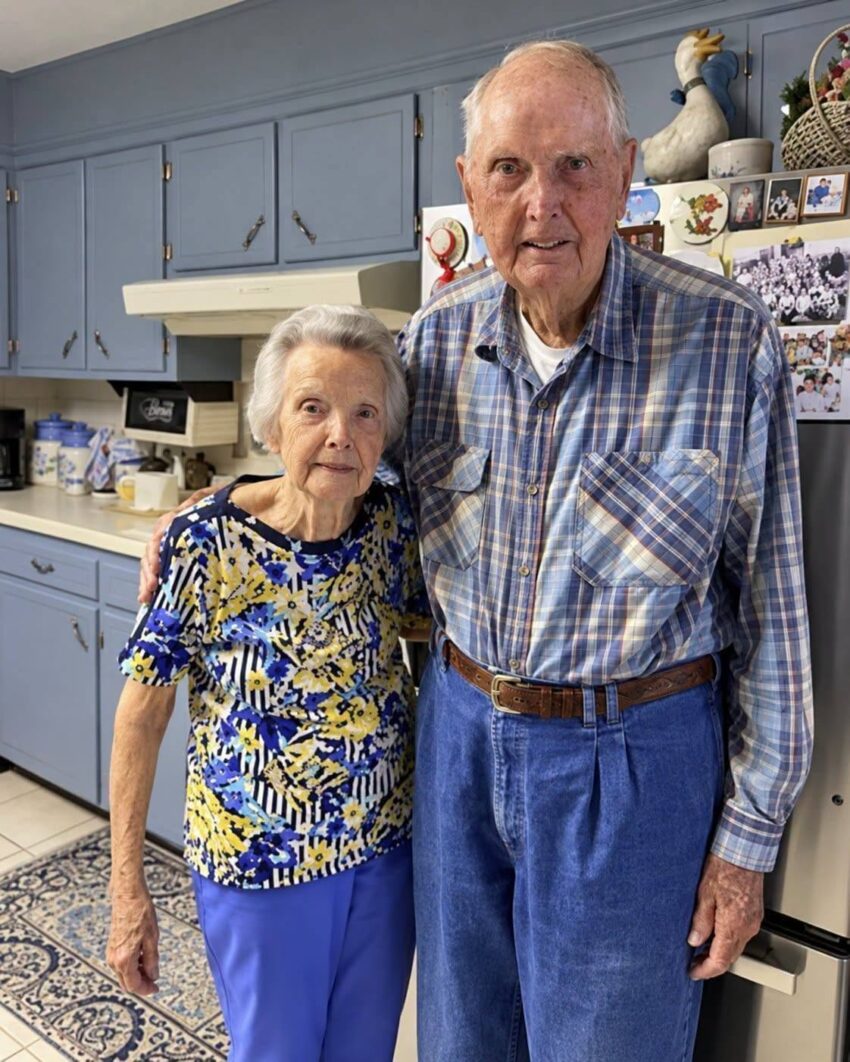
For 40 years, Margaret’s husband insisted that she drink the same vodka with him every night. When she finally refused, his anger frightened her enough to save the remaining drink and have it tested. The next morning, a doctor’s reaction revealed a disturbing possibility that changed everything she thought she knew about her marriage.
My Husband Made Me Drink the Same Vodka With Him Every Night for 40 Years. One Night, I Refused—and He Became Furious
For forty years, I believed sharing a glass of vodka with my husband every night was simply part of marriage.
It was our ritual.
At exactly eight o’clock, Robert would take two glasses from the cabinet, pour the vodka, and place one in front of me. He always insisted that we drink together. If I was tired, he said it would help me relax. If I was upset, he said it would calm my nerves. And if I told him I didn’t want any, he would smile in that peculiar way of his and say, “Come on, Margaret. Don’t ruin our little tradition.”
I rarely argued.
After four decades together, I had learned which disagreements were worth having and which ones would only make the evening unpleasant.
But on a cold Thursday night in November, something changed.
I was sitting at the kitchen table when Robert placed my glass in front of me.
“Drink up,” he said.
I looked at the clear liquid.
For reasons I couldn’t explain, I suddenly felt uneasy.
“No, thank you,” I replied. “I don’t feel like drinking tonight.”
Robert froze.
It was such a small refusal that I expected him to laugh or shrug. Instead, he slowly put his own glass down.
“What did you say?”
“I said I don’t want any tonight.”
His expression hardened.
“After everything we’ve been through together, you’re going to start acting like this?”
I stared at him in disbelief.
“It’s just a drink, Robert.”
He leaned across the table.
“Then why are you making such a fuss about it?”
I had never seen him look at me quite that way before.
For a moment, I considered apologizing simply to restore the peace. That was what I had done for years whenever he became difficult.
But something inside me told me not to touch the glass.
So I left it exactly where it was.
And that was when my husband lost his temper.
The First Time I Was Afraid of My Own Husband
Robert pushed his chair backward so forcefully that it scraped against the kitchen floor.
“You have been drinking with me every night for forty years,” he snapped. “And suddenly, you’re too good for it?”
“I never said that.”
“Then drink it.”
His voice was sharp enough to make me flinch.
I looked at the glass again.
I couldn’t explain why I was reluctant to drink from it. There was no strange smell, no unusual color, and nothing visibly different about the vodka.
Yet I felt an overwhelming need to leave it untouched.
“I’m going upstairs,” I said.
Robert stood immediately.
“You are not walking away from me while I’m talking to you.”
I had heard him raise his voice before. Every marriage has disagreements, I used to tell myself. But that evening felt different. His anger seemed disproportionate to the situation, as though my refusal had threatened something far more important than a household habit.
I stepped away from the table.
He stared at me for several seconds, then turned and walked out of the kitchen.
I waited until I heard his footsteps on the stairs before returning to the table.
My glass was still there.
I didn’t pour it down the sink. I didn’t drink it, either.
Instead, I covered it and put it aside.
I couldn’t have explained my decision to anyone. I had no proof that anything was wrong, and I didn’t want to accuse my husband of something I couldn’t substantiate.
But I had spent forty years learning to recognize the difference between Robert’s ordinary irritation and the anger that appeared when he believed he wasn’t getting his way.
That night, I couldn’t sleep.
I kept thinking about one question.
Why did my husband care so much whether I drank that particular glass of vodka?
Forty Years of the Same Evening
Robert and I married when I was twenty-four.
He was charming, ambitious, and attentive. In those early years, he made me feel as though I was the most important person in the world.
We bought a small house, raised two children, and built a life that looked perfectly ordinary from the outside.
Our nightly drink began shortly after our tenth wedding anniversary.
Robert said it was something his father had done with his mother. A small ritual for couples who wanted to stay connected despite the pressures of everyday life.
At first, I enjoyed it.
We would sit together after dinner and discuss our day. Sometimes we laughed about the children. Sometimes we talked about our plans for the future.
But gradually, the vodka became more important than the conversation.
Robert insisted on choosing the bottle. He poured both glasses himself. He became irritated if I suggested having tea instead, and he always seemed to know whether I had finished my drink.
I never considered these things particularly alarming.
He told me he was being romantic. He said sharing the same drink made us partners.
When I became older and began experiencing occasional headaches, he blamed stress. When I felt unusually tired in the mornings, he said I wasn’t sleeping enough.
I accepted his explanations because I trusted him.
Looking back, I realized how little attention I had paid to my own instincts.
I had mistaken routine for security.
I had mistaken his insistence for affection.
And I had never asked why a loving ritual needed to be compulsory.
The Decision I Made Before Sunrise
The following morning, I woke before Robert.
He was still asleep upstairs when I went into the kitchen.
The glass remained where I had left it, covered and untouched.
I stood over it for several minutes.
I knew that taking the drink to a laboratory might seem unreasonable. I also knew that I couldn’t continue pretending everything was normal simply because I had no explanation for my husband’s behavior.
I didn’t know whether the vodka contained anything unusual.
I didn’t know whether my suspicions were justified.
But I knew I needed help determining what to do next.
I contacted a trusted friend, Helen, and told her what had happened.
She listened without interrupting.
When I finished, she asked, “Margaret, do you feel safe at home?”
I hesitated.
“I don’t know.”
“Then don’t confront him alone. Let’s find out what your options are.”
Helen helped me contact an appropriate laboratory and ask about safe handling and testing procedures. We also contacted a healthcare professional because I had questions about my long-term health and whether the drink could have contained anything harmful.
I followed their instructions rather than trying to test the liquid myself.
The sample was submitted for analysis.
Then came the hardest part: waiting.
For the first time in forty years, I was afraid of what I might discover about the man sleeping in the bedroom upstairs.
The Doctor’s Call
The call came the next afternoon.
I was sitting at Helen’s kitchen table when my phone rang.
The number belonged to the medical office that had helped coordinate my evaluation.
“Mrs. Carter?” the doctor asked.
“Yes.”
“We’ve received preliminary information about the sample. I’d like you to come in so we can discuss the findings and arrange any appropriate follow-up.”
My stomach tightened.
“Does it show something dangerous?”
There was a pause.
“The information needs to be interpreted in context. We shouldn’t jump to conclusions, but I do want to speak with you directly.”
When I arrived, the doctor invited me into a private room.
He reviewed the available information, asked about the sample’s handling, and explained what the testing could and could not establish.
Then he looked at me.
“Margaret, I understand that this is frightening. But I want you to know that we are not going to assume who put anything in the drink or why. We need reliable evidence before making that determination.”
I nodded, although my hands were shaking.
He explained that certain substances can be harmful when consumed, and some may not be reliably identified by smell, taste, or appearance. However, an unusual laboratory result alone would not automatically prove deliberate poisoning. The substance, concentration, reliability of the sample, and possible sources of contamination all mattered.
“What happens now?” I asked.
“We’ll discuss whether further testing is needed and whether you should have medical assessments based on your symptoms and history. If there is a credible concern that someone has intentionally exposed you to a harmful substance, we can also help you contact the appropriate authorities.”
I stared at him.
For forty years, I had believed that whatever happened in our kitchen was simply part of our private life.
Now I understood that my safety had to come first.
What I Discovered About My Own Health
The laboratory findings did not give me an instant explanation for every headache, every morning of exhaustion, or every argument with my husband.
The doctor made that clear.
He explained that long-term alcohol consumption can contribute to a variety of health problems, including liver disease, high blood pressure, sleep disturbances, and increased risks for certain cancers. The risks depend on the amount consumed, the person’s overall health, and other factors.
He recommended a medical assessment, including appropriate blood tests and a review of my drinking history.
I was embarrassed to admit how much I had consumed over the years.
Sometimes I had drunk only a small amount. Other nights, Robert had encouraged me to finish a larger glass. I had never kept track because I had never thought of the ritual as something I could question.
The doctor listened without judgment.
“You don’t need to blame yourself for trusting someone you loved,” he told me. “What matters now is making informed decisions about your health and safety.”
He also explained that if I had developed alcohol dependence, suddenly stopping after years of regular heavy drinking could be dangerous. Anyone who drinks heavily or experiences withdrawal symptoms should seek medical guidance before attempting to stop abruptly.
For the first time in years, I felt that someone was taking my concerns seriously without telling me I was imagining things.
But one question remained.
What had my husband been doing all those years?
The Conversation I Wasn’t Ready to Have
Helen insisted that I stay with her while I considered my next steps.
I agreed.
I didn’t tell Robert where I was going, and I didn’t confront him about the sample. I wanted professional advice before making any decisions that might place me at risk.
Over the next few days, I reviewed my finances, spoke with a family lawyer about my options, and arranged to have my medical records evaluated.
My children were shocked when I finally told them that I was worried about their father’s behavior.
My daughter, Laura, was the first to respond.
“Mom, why didn’t you tell us you were frightened?”
I looked down.
“Because I wasn’t sure I had a reason to be.”
She took my hand.
“You don’t have to prove that something terrible happened before you deserve to feel safe.”
Her words stayed with me.
I had spent so much of my life trying to avoid conflict that I had begun treating my own discomfort as an inconvenience.
I had learned to minimize things that frightened me, explain away behavior that hurt me, and apologize whenever someone else’s anger made a room feel unbearable.
I wasn’t ready to decide what my marriage would become.
But I was ready to stop ignoring myself.
What the Test Could—and Could Not—Tell Me
As the days passed, I learned an important lesson about the difference between suspicion and evidence.
A laboratory can sometimes identify an unexpected substance in a sample. But determining how it got there, when it was introduced, and whether someone deliberately added it requires further investigation.
Even a concerning result must be interpreted carefully.
A responsible doctor cannot identify a culprit simply by looking at a test report. Nor can a single test automatically explain years of symptoms.
I had to resist the temptation to turn my fear into certainty before I knew the facts.
At the same time, I didn’t need a complete explanation to take reasonable precautions.
I could avoid drinking anything prepared by someone I feared.
I could stay somewhere safe.
I could seek medical advice.
I could ask the appropriate authorities to investigate if evidence supported a concern about intentional harm.
And I could make decisions about my future without first obtaining my husband’s permission.
That realization changed me more than any dramatic revelation could have.
The Life I Chose After Forty Years
I did not return home immediately.
Instead, I spent several weeks with Helen while I worked through the medical, legal, and personal questions surrounding the situation.
I learned that I could seek help without making an immediate decision about divorce. I learned that I could establish boundaries even if other people disagreed with them. And I learned that loving someone did not require me to ignore behavior that made me feel unsafe.
Eventually, I arranged a meeting with Robert in a setting where I felt protected and supported.
I didn’t begin by accusing him of poisoning me.
I began by telling him the truth.
“For forty years, I drank with you because I believed it was something we shared. But when I said no, you became furious. That frightened me, and it changed the way I see our marriage.”
Robert stared at me.
“You’re making a big deal out of nothing,” he said.
Perhaps that was the answer I had been expecting.
But this time, I didn’t apologize.
“I’m taking my health seriously,” I replied. “And I will not drink because you demand it.”
He tried to argue.
I repeated myself.
For the first time in our marriage, I did not allow the conversation to become a debate about whether my refusal was reasonable.
My decision was enough.
What happened next was not a simple ending. There were difficult discussions, professional advice, and decisions that took time. I focused on obtaining reliable information and protecting my health rather than trying to solve everything in a single confrontation.
I also accepted that I might never receive a completely satisfying explanation for every event in our past.
But I no longer believed I needed one before I could move forward.
The Lesson I Wish I Had Learned Earlier
For much of my life, I believed that being a good wife meant being patient, keeping the peace, and trusting the person I had married.
Those qualities can be valuable in a healthy relationship.
But patience should never require someone to surrender control over their own body. Trust should never be used as a reason to dismiss fear. And a shared tradition should never become an obligation enforced through intimidation.
If someone insists that you consume a drink, medication, supplement, or other substance against your wishes, you have every right to refuse.
If you suspect that a drink has been tampered with, do not consume it. Seek professional advice about safe handling and appropriate testing rather than attempting to investigate it yourself. If you believe you are in immediate danger, move to a safe place and contact local emergency services or a trusted person.
If you have already consumed something you believe may be harmful, seek urgent medical advice, particularly if you develop confusion, unusual drowsiness, difficulty breathing, seizures, or other severe symptoms. Do not wait for laboratory results before seeking emergency care.
And if you have been drinking heavily for years, speak with a healthcare professional before stopping suddenly, because withdrawal can sometimes be life-threatening.
I spent forty years believing that the most important thing was keeping my marriage intact.
Now I understand that my health, dignity, and safety matter, too.
The glass on my kitchen table did not answer every question about my husband or our marriage.
But the night I finally refused it, I began asking questions I should have felt free to ask all along.
And that was the beginning of a different life.
Sometimes, the most important turning point isn’t discovering a shocking secret. It’s realizing that you have the right to say no—and that your refusal deserves to be respected.
Editorial note: This is a fictionalized story based on the supplied headline. No real laboratory findings, poisoning, or medical diagnosis have been verified.