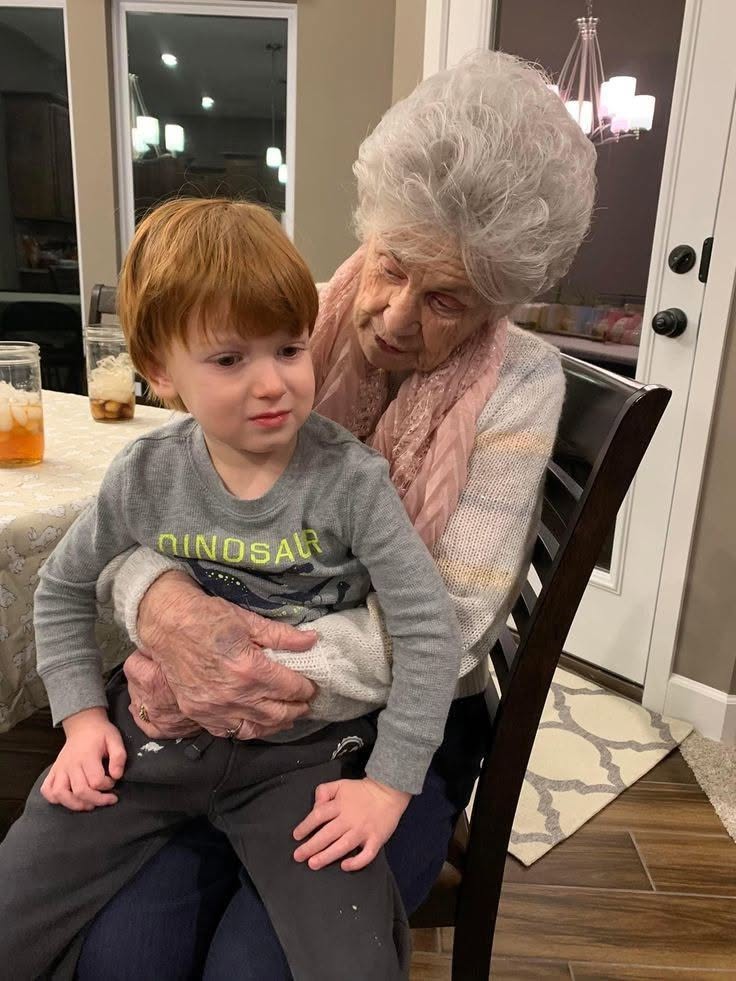
My 4-year-old son always cried and begged me not to leave him alone with his grandmother. I thought it was simply a childhood fear—until I came home early one morning and discovered why he had been trying to warn me.
My Mother-in-Law Would Babysit My 4-Year-Old Son, but He Always Begged Me Not to Leave Him Alone With Her
The first time my four-year-old son asked me not to leave him alone with his grandmother, I didn’t think much of it.
He was standing beside me, holding tightly onto my hand.
“Mom, please don’t leave me alone with her.”
His voice was shaky.
I looked at my mother-in-law, who was standing in the doorway with a smile on her face.
She had always been eager to spend time with her grandson. She loved babysitting him, and as a mother, I appreciated having someone in the family I could trust.
So I knelt down beside my son and tried to reassure him.
“Grandma loves you. I’ll be back soon.”
But he didn’t seem convinced.
He wrapped his arms around my waist.
“Please, Mom.”
I thought it was simply a phase.
Four-year-olds can develop sudden fears about people, places, separation, or unfamiliar situations. Sometimes they become attached to one parent and don’t want that parent to leave.
At least, that’s what I told myself.
It Happened Again
A few weeks later, I needed to leave the house for a short appointment.
My mother-in-law offered to watch him.
As soon as my son realized I was getting ready to leave, his expression changed.
“Mom, please don’t go.”
I told him I’d only be gone for a little while.
He shook his head.
“Don’t leave me with Grandma.”
My mother-in-law immediately became defensive.
“He’s just being dramatic,” she said.
I didn’t want to create unnecessary tension.
After all, she was his grandmother.
So I hugged my son, promised him I’d return soon, and left.
When I came back, he was sitting quietly in the living room.
I asked him how everything went.
He didn’t answer.
Instead, he ran toward me and hugged me tightly.
I remember thinking that perhaps he simply missed me.
I didn’t realize how important those moments were.
I Started Noticing Other Things
After that, I began paying closer attention.
Whenever my mother-in-law announced that she was coming over, my son became unusually quiet.
He didn’t want to sit beside her.
He sometimes stayed close to me.
If I walked into another room, he’d follow.
And whenever I mentioned leaving him with her, he became anxious.
Still, I couldn’t understand why.
I asked him several times what was wrong.
“Grandma scares me.”
That was all he’d say.
I asked him what she had done.
He would either become silent or change the subject.
Because he was only four, I wasn’t sure how much of what he was saying he could explain.
I didn’t want to put words into his mouth.
But something about his behavior bothered me.
My Mother-in-Law Had an Explanation
Whenever I mentioned his fear, my mother-in-law had an explanation.
“He’s spoiled.”
“He’s too attached to you.”
“He doesn’t like being told no.”
“He’ll grow out of it.”
And perhaps she was right.
I wanted to believe she was right.
I also didn’t want a small childhood fear to turn into a major family conflict.
So I tried to reassure myself.
Until one morning changed everything.
The Morning I Came Home Early
One morning, I had to leave the house.
My mother-in-law was there to babysit my son.
Everything seemed normal.
I kissed my son goodbye.
He held onto me for a few extra seconds.
“Mom…”
I looked at him.
“Please don’t leave me.”
My heart sank, but I still thought it was separation anxiety.
“I’ll be back soon,” I told him.
I left.
But something didn’t feel right.
I can’t explain exactly what it was.
Maybe it was his expression.
Maybe it was the way he had looked at me.
Or maybe I was finally beginning to understand that he had been trying to communicate something he didn’t have the words to explain.
Instead of continuing with my plans, I turned around and came home earlier than expected.
When I opened the door, I heard my son’s voice.
He sounded frightened.
I immediately walked toward the room.
And that’s when I realized that his repeated warnings hadn’t been meaningless.
He hadn’t simply been throwing a tantrum.
He had been trying to tell me that something about being left alone with his grandmother made him feel unsafe.
Everything Suddenly Made Sense
I won’t describe the private details of what I discovered, but what I saw was enough to make me understand why my son had been so frightened.
He wasn’t simply being stubborn.
He wasn’t trying to manipulate me.
And he wasn’t inventing a fear for attention.
He had been attempting, in the only way a four-year-old knew how, to make sure I didn’t leave him alone with someone he didn’t feel safe around.
I immediately took him with me.
Later, when I calmly asked him questions in a safe environment, I finally understood more of what had been happening.
The details were heartbreaking.
I felt sick thinking about all the times he had begged me not to leave.
All the times I had told him, “Grandma loves you.”
All the times I had assumed he was simply being difficult.
I Wish I Had Listened Sooner
The hardest part wasn’t only what I discovered.
It was realizing that my son had been trying to communicate with me repeatedly.
He didn’t have the vocabulary of an adult.
He couldn’t explain complicated emotions.
He couldn’t give me a perfectly organized account of what made him uncomfortable.
He simply kept saying:
“Mom, please don’t leave me alone with her.”
Those words had been his warning.
And I had misunderstood them.
What Parents Can Learn From This
Children don’t always know how to explain uncomfortable experiences.
A young child may not have the vocabulary to describe exactly what happened, especially when they’re frightened or confused.
That doesn’t mean every expression of fear automatically proves that someone has harmed a child.
But persistent fear of a particular person deserves calm attention.
Parents can:
- Listen without immediately dismissing the child.
- Avoid leading questions or suggesting answers.
- Ask open-ended questions such as, “Can you tell me more?”
- Pay attention to changes in behavior.
- Take repeated expressions of fear seriously.
- Avoid forcing physical affection.
- Make sure children know they can always tell a trusted adult when something feels wrong.
- Seek professional help when there are genuine concerns about a child’s safety.
Most importantly, children should know that they will be believed, supported, and protected when they come to an adult with a concern.
Sometimes Children Say More Than We Realize
Looking back, I keep thinking about that little boy standing beside me, holding my hand.
He didn’t know how to explain everything.
He didn’t know the right words.
He only knew that he didn’t want to be left alone.
And perhaps that was all the information I needed.
Children may communicate fear through crying, avoiding someone, becoming unusually quiet, clinging to a parent, having sudden behavioral changes, or repeatedly saying they don’t want to be around a particular person.
Those signals should not automatically be interpreted as proof of wrongdoing—but they should never be mocked or ignored either.
Sometimes a child isn’t being difficult.
Sometimes they’re asking an adult to stop, listen, and pay attention.
And when a child says, “Please don’t leave me alone,” the safest response is to listen carefully and make sure they feel safe.