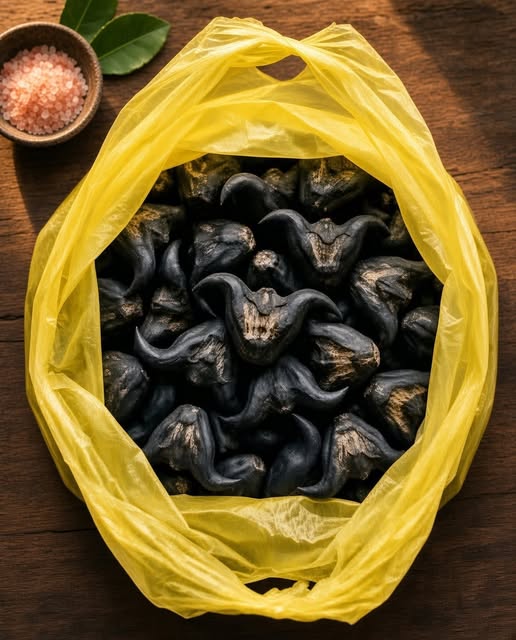
Wondering what those strange black, horn-shaped fruits from your neighbor are? Learn how to identify water caltrops (singhara), how to clean, boil, peel, and eat them safely, plus easy serving ideas.
If your neighbor gave you a bag of black, hard, horn-shaped fruits, there is a good chance they are water caltrops, commonly known as singhara or singhada in Pakistan and India. The plant is an aquatic fruit that grows in ponds, lakes, and other freshwater environments. The fruit has a tough dark shell with pointed projections, while the edible part inside is pale, starchy, and mildly sweet. Pakistan’s University of Veterinary & Animal Sciences lists Trapa bispinosa as Indian water chestnut and gives Singhara as its Urdu and Punjabi name.
What Is Singhara?
Singhara is not the same thing as the round Chinese water chestnuts commonly used in Asian stir-fries. The two are different plants, although both are sometimes called “water chestnut.” Water caltrop belongs to the Trapa group.
The fresh fruit usually has:
A dark brown or black outer shell
Two or more pointed, horn-like projections
A hard outer covering
A white or cream-colored edible kernel inside
A mildly sweet, starchy flavor
A texture somewhat similar to a chestnut
In Pakistan, it is traditionally eaten as a seasonal food and is also dried and ground into singhara flour.
How Do You Eat Fresh Singhara?
The easiest method is to cook it first and then peel it.
Step 1: Wash Them Thoroughly
Put the singharas in a large bowl and wash them several times under running water.
Because they grow in freshwater, dirt and other material can remain attached to the outside. Give the shells a good scrub.
If any pieces have:
Mold
A rotten smell
Very soft or slimy areas
Obvious spoilage
discard those pieces.
Step 2: Boil Them
Place the cleaned singharas in a large pot.
Add enough water to completely cover them.
You can add a little salt if you like.
Bring the water to a boil and then cook them for approximately 25–30 minutes, depending on their size and freshness. Some traditional preparations cook them for around 20–25 minutes, while other sources recommend 25–40 minutes.
Because the dark shell doesn’t change dramatically during cooking, don’t rely on the appearance of the outside to decide whether they’re done.
Step 3: Let Them Cool
Drain the water and allow the fruits to cool enough to handle safely.
The shells can be extremely hard and the points can be sharp.
Step 4: Crack the Shell
Use a nutcracker or sturdy kitchen tool to crack the shell.
Don’t try to bite through the shell with your teeth. The sharp projections can hurt your mouth or gums.
Once opened, you should see a white or cream-colored kernel inside.
Step 5: Remove the White Kernel
Take the edible portion out of the shell.
You can eat the cooked kernel as it is, or season it.
The flavor is generally mild and slightly sweet, with a starchy texture that can remind some people of chestnuts.
An Easy Way to Serve Them
After boiling and peeling, put the white pieces in a bowl and add:
A little salt
Black pepper
Roasted cumin powder
A small squeeze of lemon
Mix everything together and eat them warm.
You can also lightly sauté the peeled pieces with a little oil or ghee and your favorite spices.
A traditional masala preparation uses salt, black pepper, roasted cumin, chaat masala and lemon.
Can You Eat Singhara Raw?
Technically, water caltrop fruits can be eaten raw or cooked.
However, cooking is the safer choice when you don’t know where they came from. Aquatic produce can become contaminated depending on the water and handling conditions. Medical guidance also recommends washing and cooking water caltrop when the source is uncertain.
So if your neighbor simply handed you a bag and you don’t know exactly where they harvested or purchased them, I’d recommend washing and thoroughly cooking them rather than eating them raw.
What Else Can You Make With Them?
Once cooked and peeled, singhara can be used in several ways:
1. Simple Snack
Boil → peel → add salt, pepper and lemon.
2. Singhara Chaat
Mix boiled pieces with:
Chaat masala
Lemon juice
Roasted cumin
Black salt
A little chopped coriander
3. Stir-Fry
Cut the cooked kernels into pieces and stir-fry with vegetables, spices and a little oil.
4. Curry
Cooked singhara can also be incorporated into vegetable dishes and curries.
5. Singhara Flour
The dried fruit can be ground into singhara atta, which is traditionally used for breads and other dishes. It is naturally gluten-free.
What Does Singhara Contain?
Water caltrop is primarily a starchy food, providing carbohydrates and some protein, fiber and minerals. It should be thought of as a nutritious food rather than a medicine. Claims that singhara can cure numerous diseases are not supported by strong clinical evidence.
If you have diabetes or need to control carbohydrate intake, remember that singhara is still a carbohydrate-rich food, so portion size matters. People with kidney disease who have been instructed to restrict potassium should also discuss appropriate portions with their healthcare professional.
One Important Warning
Please don’t eat them based solely on this description if you’re not sure they are singhara. There are different wild aquatic plants and fruits that can look unusual, and identification from a written description alone isn’t enough.
If you send me a clear photo of the actual bag/fruits, especially one showing the whole fruit and one cut/open, I can help you identify what your neighbor gave you before you eat it.
Bottom line: If they are indeed black, horn-shaped singharas, wash them well, boil them thoroughly, let them cool, crack the hard shell carefully, remove the white kernel, and eat the inside.