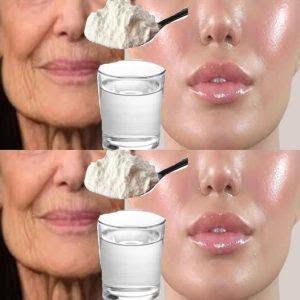
Can baking soda and water really reduce wrinkles? Learn what the science says, the risks to your skin, and safer ways to support smoother-looking skin naturally.
Wrinkles are a normal part of aging, but the search for simple, inexpensive ways to make skin look smoother has made homemade baking soda treatments surprisingly popular.
One commonly shared beauty tip suggests mixing baking soda with water to create a paste and applying it to the face as a natural “lift.” The claim sounds appealing: baking soda is inexpensive, readily available, and can temporarily make skin feel cleaner and smoother.
But there is an important distinction between temporarily improving the feel of the skin and actually reversing wrinkles.
Does Baking Soda Remove Wrinkles?
There is no good clinical evidence that baking soda and water can erase wrinkles or produce a true face-lifting effect.
Baking soda, also known as sodium bicarbonate, is alkaline, while healthy facial skin normally has a mildly acidic surface environment. Applying alkaline substances repeatedly may disrupt the skin barrier.
A smoother appearance after using a baking soda paste may sometimes result from temporary removal of surface oils or dead skin cells. That is not the same as rebuilding collagen or reversing the structural changes responsible for wrinkles.
Why Can Skin Look Smoother Afterward?
Baking soda has a fine, powdery texture and can act as a physical cleansing or exfoliating ingredient.
When mixed with water and rubbed against the skin, it may remove some surface debris. This can temporarily make the skin feel softer or smoother.
However, aggressive exfoliation can have the opposite effect when repeated too often.
Damage to the skin barrier may lead to:
- Dryness
- Tightness
- Burning or stinging
- Redness
- Increased sensitivity
- Flaking
- Irritation
For mature or sensitive skin, these effects can make fine lines appear more noticeable, not less.
The Problem With the “Natural Face Lift” Claim
A true facelift works by physically repositioning tissues beneath the skin.
A topical mixture of baking soda and water cannot perform that function.
Wrinkles develop through several processes, including gradual loss of collagen and elastin, changes in skin thickness, repeated facial movement, and cumulative ultraviolet radiation.
A homemade baking soda treatment cannot reverse these underlying structural changes.
That doesn’t mean you cannot improve the appearance of aging skin naturally. It simply means that the goal should be realistic: supporting healthy skin and reducing premature skin damage rather than expecting a homemade paste to erase wrinkles.
Is Baking Soda Safe for Facial Skin?
“Natural” does not automatically mean “gentle.”
The skin has a protective barrier that helps regulate moisture and protects against environmental irritants. Products designed for facial skin are generally formulated to work with this barrier.
Baking soda has a much higher pH than normal skin. Frequent application may interfere with the skin’s natural acidic environment and contribute to irritation.
People with sensitive skin, eczema-prone skin, rosacea, or an already damaged skin barrier may be particularly vulnerable to irritation.
What About Baking Soda for Dark Spots?
You may also see claims that baking soda can lighten dark spots.
There is insufficient evidence that applying baking soda to the face safely fades pigmentation.
In fact, irritation can sometimes make pigmentation problems worse, particularly in people prone to post-inflammatory hyperpigmentation.
If dark spots are a concern, sun protection and proven dermatological ingredients are generally much better options.
Safer Ways to Support Smoother-Looking Skin
You don’t need an elaborate routine to care for aging skin.
1. Use Sunscreen Every Day
Sun exposure is one of the biggest contributors to premature skin aging.
A broad-spectrum sunscreen of SPF 30 or higher can help protect against ultraviolet radiation that contributes to wrinkles, uneven pigmentation, and loss of skin elasticity.
Daily sunscreen is arguably more important for long-term anti-aging than most kitchen-based beauty remedies.
2. Keep the Skin Moisturized
A good moisturizer can temporarily plump the outer layer of the skin, making fine lines appear less prominent.
Look for products containing ingredients such as:
- Ceramides
- Glycerin
- Hyaluronic acid
- Petrolatum
- Squalane
The best choice depends on your skin type and whether you are prone to acne or sensitivity.
3. Consider Retinoids
Retinoids are among the best-studied topical ingredients for photoaging.
Retinol is available in many over-the-counter skincare products, while stronger retinoids may require professional guidance depending on where you live.
They can improve the appearance of fine lines over time by encouraging changes in skin cell turnover and supporting collagen-related processes.
Start slowly because irritation is possible.
Important: If you are pregnant or trying to become pregnant, ask your healthcare professional before using retinoid products, as topical retinoids are generally avoided during pregnancy.
4. Don’t Over-Exfoliate
More exfoliation does not necessarily mean younger-looking skin.
Harsh scrubs and frequent use of irritating substances can weaken the skin barrier and cause inflammation.
If exfoliation is appropriate for your skin, a gentle, properly formulated facial product is generally preferable to rubbing baking soda directly onto the face.
If You Still Want to Try Baking Soda
Because baking soda has not been shown to remove wrinkles and can irritate facial skin, using it as a wrinkle treatment is not recommended.
If you have already applied it and experience burning, persistent redness, swelling, or significant irritation, rinse the area gently with lukewarm water and stop using the product.
Avoid combining baking soda with other potentially irritating ingredients such as lemon juice, strong acids, or abrasive scrubs.
The Bottom Line
Baking soda and water may temporarily make skin feel clean or smooth, but there is no scientific evidence that this mixture can banish wrinkles or create a natural facelift.
For healthier, smoother-looking aging skin, focus on the basics: daily sun protection, gentle cleansing, regular moisturizing, avoiding smoking, adequate nutrition, and evidence-based skincare.
Sometimes the simplest skincare routine is also the safest one.