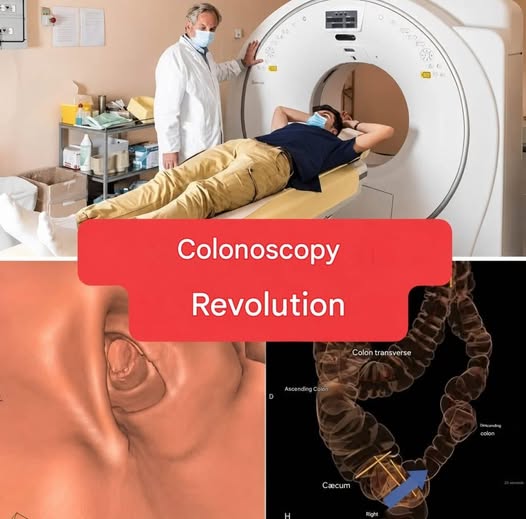
A new approach to colonoscopy aims to make colorectal examination more comfortable and less invasive. Learn what the technology involves, how it differs from traditional colonoscopy, and whether it could eventually change screening.
New Method: Colonoscopy May Become Less Invasive
Colonoscopy is one of the most effective tests for detecting colorectal cancer, polyps, inflammation, and other abnormalities in the large intestine. However, many people hesitate to undergo the procedure because traditional colonoscopy involves inserting a flexible camera through the rectum and usually requires bowel preparation and, in many cases, sedation.
Researchers and clinicians have been exploring newer technologies that could make colorectal examinations more comfortable and less invasive.
What Is Changing?
One promising direction is the development of non-invasive or minimally invasive imaging methods that can examine the colon without requiring a conventional endoscope to travel through the entire large intestine.
Depending on the technology, these approaches may use advanced imaging, specialized capsules, CT-based imaging, or other techniques to look for abnormalities.
A particularly interesting option is capsule endoscopy, in which a patient swallows a small camera-containing capsule. As the capsule travels through the digestive tract, it captures images that can later be reviewed by medical professionals.
Could It Replace Traditional Colonoscopy?
Not necessarily—at least not yet.
Traditional colonoscopy has an important advantage: if doctors find a suspicious polyp during the examination, they can often remove it immediately or take a biopsy for further testing.
Many alternative screening methods can detect abnormalities but cannot perform these treatments during the same examination. A positive result may therefore still require a conventional colonoscopy.
Why Would a Less-Invasive Method Be Useful?
A less-invasive examination could potentially make colorectal screening more acceptable to people who are reluctant to undergo traditional colonoscopy.
Possible advantages may include:
- Greater comfort for some patients
- Less need for sedation with certain approaches
- Easier examination procedures
- Improved willingness to participate in screening
- Additional options for people who cannot undergo conventional colonoscopy
However, the benefits depend on the specific technology and the patient’s medical circumstances.
Screening Still Matters
Colorectal cancer can develop from polyps that may cause no symptoms in their early stages. Screening can identify abnormalities before they become more serious.
People should therefore discuss appropriate screening options with their healthcare provider rather than avoiding screening altogether because of concerns about colonoscopy.
The Bottom Line
The future of colorectal screening may involve technologies that are more comfortable and less invasive than traditional colonoscopy. But a new method does not automatically mean that conventional colonoscopy is obsolete. For now, the appropriate screening test depends on the individual’s age, risk factors, symptoms, medical history, and the technology available.
If a screening test detects a suspicious abnormality, a conventional colonoscopy may still be necessary for biopsy or removal.