If you always sleep on your right side, learn how this sleeping position may affect digestion, breathing, shoulder comfort, snoring, and sleep quality, plus simple tips for making side sleeping more comfortable.
Sleeping position is something many people rarely think about. Once we find a comfortable position, we often stay there throughout the night.
If you naturally sleep on your right side, there’s generally no reason to worry. Side sleeping can be a comfortable and healthy position for many people. However, it can affect different people differently depending on their health, body structure, and other sleep habits.
1. It May Affect Heartburn and Reflux
For people who experience acid reflux, sleeping position can make a noticeable difference.
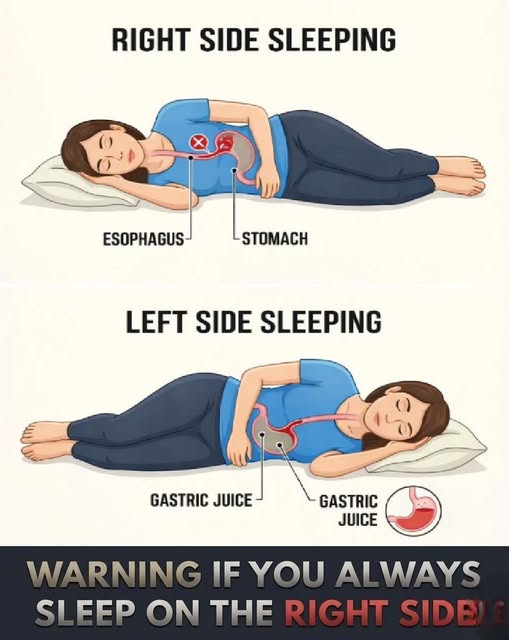
Research suggests that left-side sleeping may reduce nighttime acid reflux compared with right-side sleeping for some people. Lying on the right side can allow stomach contents to move toward the esophagus more easily in certain circumstances.
If you frequently wake with:
- Heartburn
- A sour taste
- Burning in the chest or throat
- Regurgitation
- Nighttime coughing
experimenting with your sleeping position may be worthwhile.
2. Your Right Shoulder May Feel Stiff
If you spend many hours sleeping on the same shoulder every night, pressure can build up around that shoulder and the surrounding muscles.
You may notice:
- Shoulder soreness
- Arm numbness
- Neck stiffness
- Upper-back discomfort
A pillow that properly supports your head and neck can help keep your spine in a more neutral position.
3. Side Sleeping Can Be Helpful for Snoring
Sleeping on your side is often preferable to sleeping flat on your back for people who snore.
Back sleeping can allow the tongue and soft tissues in the throat to move backward and partially obstruct the airway. Side sleeping may help keep the airway more open.
However, persistent loud snoring—especially when accompanied by pauses in breathing, gasping, or significant daytime sleepiness—can be a sign of sleep apnea and deserves medical evaluation.
4. Your Spine Still Needs Support
The most important issue isn’t necessarily whether you sleep on the right or left side. Alignment matters.
Your head should be supported so that your neck remains reasonably straight rather than bending upward or downward.
A pillow between your knees can also help some side sleepers maintain a more comfortable hip and spinal position.
5. What About Your Heart?
A common claim online is that sleeping on the right side is dangerous because of the heart.
For most healthy people, there is no general rule that sleeping on the right side is harmful to the heart.
People with certain heart or lung conditions may have individual preferences or recommendations based on their symptoms. If a particular position causes chest discomfort, shortness of breath, palpitations, or other concerning symptoms, it should not simply be ignored.
6. Could Your Sleeping Position Affect Your Sleep Quality?
Absolutely.
The best sleeping position is often the one that allows you to sleep comfortably and consistently without pain, reflux, breathing problems, or repeated awakenings.
If sleeping on your right side feels comfortable and you’re sleeping well, there is generally no need to force yourself into another position simply because of an internet claim.
Simple Tips for Better Side Sleeping
Try these adjustments:
- Choose a pillow that keeps your neck aligned.
- Place a pillow between your knees if it improves comfort.
- Avoid putting excessive pressure directly on a painful shoulder.
- Keep your mattress supportive but comfortable.
- If reflux bothers you, experiment with left-side sleeping.
- Address persistent snoring or nighttime breathing problems with a healthcare professional.
The Bottom Line
If you always sleep on your right side, you don’t automatically need to change your habit. Right-side sleeping is comfortable and appropriate for many people.
However, if you experience nighttime reflux, shoulder pain, frequent numbness, loud snoring, or breathing interruptions, your sleeping position may be worth reconsidering.
Rather than believing that one sleeping position is universally “good” or “bad,” pay attention to how your body responds and discuss persistent symptoms with a healthcare professional.
This article is for general educational purposes and does not replace individualized medical advice.