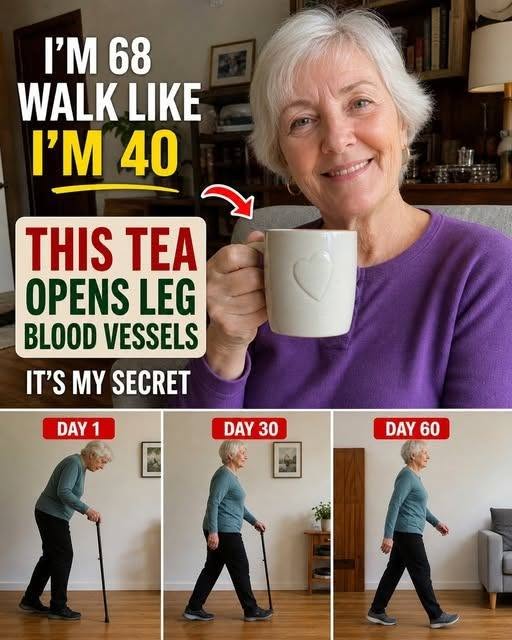
Over 60 and worried about muscle loss or weaker legs? Learn about 3 teas that may complement healthy aging, plus the exercise, protein, and lifestyle habits that matter most for maintaining strength and mobility.
As we get older, maintaining muscle becomes increasingly important. After 60, gradual age-related muscle loss can contribute to weaker legs, slower walking, difficulty climbing stairs, and trouble getting up from a chair.
But there is an important distinction: no tea can rebuild muscle by itself. Tea can be part of a healthy routine, but the strongest evidence for maintaining or improving strength comes from resistance exercise, adequate nutrition, and sufficient protein.
Research consistently supports resistance training as an effective way to improve muscle strength and physical performance in older adults. A 2026 meta-analysis of 25 randomized controlled trials involving more than 1,300 people with sarcopenia found significant improvements in muscle strength, lean mass, walking ability, grip strength, and muscle quality with resistance training.
So where do teas fit in?
1. Green Tea
Green tea is the most interesting choice when it comes to research on muscle health.
It contains natural compounds called catechins, particularly epigallocatechin gallate (EGCG). Researchers have been investigating whether these compounds may support muscle function and recovery, especially when combined with physical activity.
A 2026 randomized controlled trial included 78 adults aged 60 and older who experienced perceived weakness or slowness. Participants performed exercise and consumed either catechin-enriched green tea or a placebo for 24 weeks. The researchers did not find significant differences in overall muscle mass or physical-performance tests, but they did find a significant difference in the change in knee-extension strength.
That is promising—but it does not mean ordinary green tea can magically rebuild muscle.
A practical approach is to enjoy unsweetened green tea as part of a balanced diet while focusing on regular strength exercises.
How to drink it
Try one cup earlier in the day if you tolerate caffeine well. If caffeine interferes with sleep, choose decaffeinated green tea.
Avoid turning it into a sugary drink, because excessive added sugar can work against overall healthy eating goals.
2. Ginger Tea
Ginger tea is another simple option, particularly for people who prefer a caffeine-free beverage.
Fresh ginger steeped in hot water makes a naturally flavorful drink without needing sugar. It can be a useful replacement for sugary beverages and can fit into a healthy daily routine.
However, it is important not to overstate the evidence.
Ginger tea has not been proven to rebuild age-related muscle loss or reverse sarcopenia. Its role is better viewed as a supportive part of an overall healthy lifestyle rather than a muscle-building treatment.
For a simple preparation, slice fresh ginger and steep it in hot water for several minutes. Lemon can be added for flavor.
People taking medications or those with medical conditions should check with their healthcare professional before consuming large amounts of concentrated ginger regularly.
3. Black Tea
Black tea contains naturally occurring polyphenols and can also be enjoyed without adding sugar.
Like green tea, it can be a healthier alternative to sweetened beverages. However, there is currently much stronger evidence for exercise and appropriate nutrition than for black tea specifically as a treatment for muscle loss.
Therefore, black tea should be considered a healthy beverage choice, not a replacement for resistance training or protein-rich foods.
If you enjoy it, choose unsweetened black tea and pay attention to caffeine if you are sensitive to it.
The Real Secret to Stronger Legs After 60
The biggest mistake is focusing on the tea while ignoring the activities that actually challenge the muscles.
Muscles become stronger when they are given an appropriate training stimulus.
Resistance exercises can include:
- Sit-to-stand exercises from a sturdy chair
- Wall push-ups
- Resistance-band exercises
- Light dumbbell exercises
- Heel raises
- Step-ups when appropriate
- Supported squats
- Leg-strengthening exercises recommended by a physical therapist
Resistance exercise has been shown to improve strength and physical performance in older adults with sarcopenia.
Don’t Underestimate Protein
Protein is another major part of maintaining muscle.
A systematic review and meta-analysis of older adults with sarcopenia found that combining protein supplementation with resistance exercise significantly improved muscle mass and muscle strength compared with control approaches.
Good food sources include:
- Eggs
- Fish
- Chicken
- Milk
- Yogurt
- Cottage cheese
- Lentils
- Beans
- Chickpeas
- Tofu
- Other protein-rich foods
Rather than relying on a single large protein-heavy meal, many older adults may benefit from including a good protein source throughout the day.
People with kidney disease or other conditions affecting protein intake should ask their healthcare professional how much protein is appropriate for them.
Add Balance Training Too
Strong muscles are important, but strength is only part of staying mobile.
Balance exercises can help older adults practice stability and movement control. Research examining exercise and nutrition strategies for sarcopenia suggests that combining resistance and balance training with appropriate nutrition can be particularly useful for strength and physical function.
Simple balance practice might include standing behind a sturdy chair and briefly shifting weight from one leg to the other.
Never perform challenging balance exercises near stairs or on slippery surfaces, and use support when necessary.
A Simple Daily Routine
Instead of expecting one drink to solve muscle loss, consider building a routine around several habits.
Morning:
Have a protein-rich breakfast and, if desired, a cup of unsweetened green tea.
During the day:
Stay physically active with walking and normal daily movement.
Several times per week:
Perform safe resistance exercises appropriate for your fitness level.
Throughout the day:
Include protein-rich foods in your meals.
Later in the day:
A caffeine-free drink such as ginger tea can be an alternative to sugary beverages.
Regularly:
Practice safe balance and mobility exercises.
When Weakness Should Not Be Ignored
Not every change in walking ability is simply a normal part of aging.
Talk to a healthcare professional if weakness is new, rapidly worsening, or interfering with everyday activities.
Particular attention is warranted if you have:
- Repeated falls
- Difficulty getting out of a chair
- New problems climbing stairs
- Unexplained weight loss
- Persistent fatigue
- Significant muscle weakness
- New difficulty walking
- Numbness or loss of sensation
- Sudden weakness on one side of the body
Sudden weakness, facial drooping, speech difficulty, severe dizziness, or sudden trouble walking can be signs of a medical emergency and require immediate medical attention.
The Bottom Line
Green tea, ginger tea, and black tea can all fit into a healthy lifestyle, but they should not be presented as miracle drinks that rebuild muscle.
Among the three, green tea has the most interesting emerging research because of its catechin content. A recent trial found a possible benefit for lower-limb strength when catechin-enriched green tea was combined with exercise, but it did not demonstrate a broad improvement in muscle mass or physical performance.
The bigger lesson is much more encouraging:
You can continue working on strength and mobility after 60.
Resistance exercise, adequate protein, balance training, good nutrition, sleep, and regular movement have substantially stronger evidence behind them than any individual tea. Recent evidence syntheses continue to support exercise—particularly resistance-based exercise—as a first-line strategy for improving muscle strength and physical function in older adults.
So enjoy your tea—but make the real priority moving your muscles and nourishing them properly.