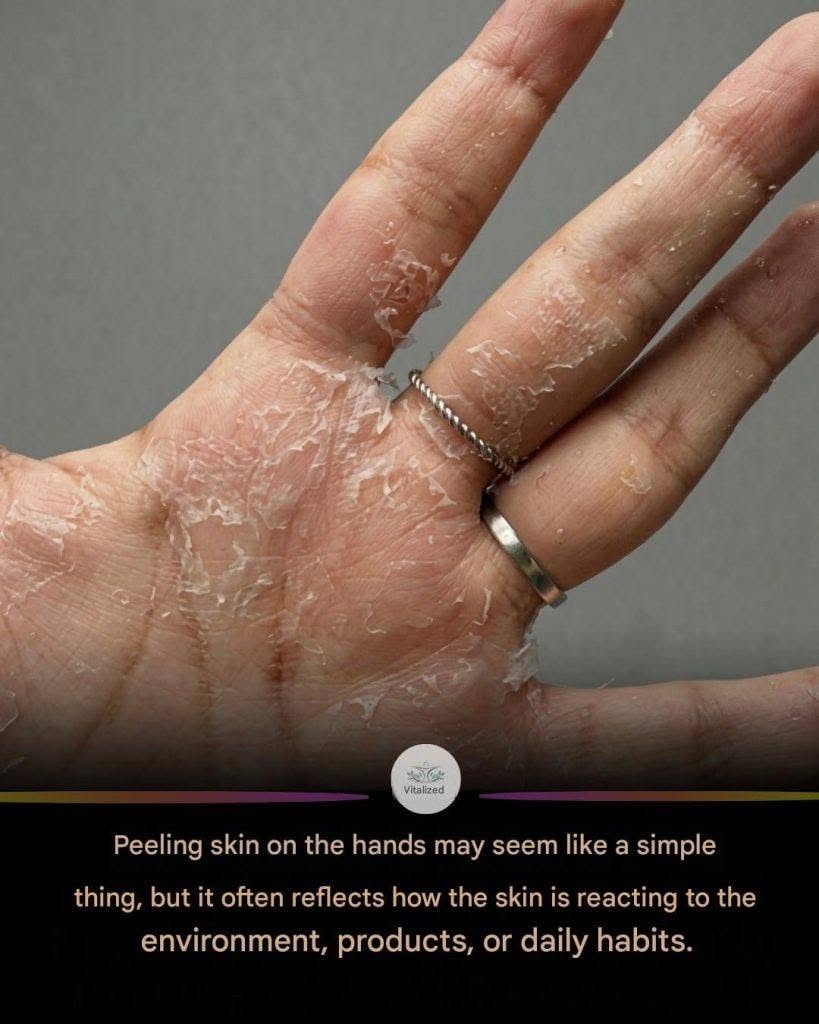
Peeling skin on your hands can be caused by dryness, frequent washing, irritation, allergies, or hand eczema. Learn what may be behind it and how to repair and protect your skin barrier.
Have you noticed the skin on your hands becoming dry, flaky, or peeling? It can be tempting to simply pull away the loose skin, but peeling hands are often a sign that your skin barrier needs some extra care.
Your hands are exposed to water, soaps, sanitizers, cleaning products, weather changes, and countless other irritants every day. Frequent exposure can remove some of the skin’s protective oils, leaving the outer layer dry, irritated, and more vulnerable to further damage.
The good news is that mild peeling caused by dryness or irritation can often improve with consistent, gentle skincare. But persistent or painful peeling may point to a condition such as hand eczema or contact dermatitis.
What Does Peeling Skin on Your Hands Mean?
Peeling occurs when the outermost layer of skin sheds more noticeably than usual. Excessive dryness can cause the skin to become flaky and eventually peel. Frequent exposure to water and products such as soaps, detergents, and sanitizers can contribute to this process.
Sometimes, however, peeling is not simply “dry skin.” If your hands are also itchy, inflamed, burning, cracked, blistered, or painful, hand eczema or contact dermatitis may be involved.
Common Reasons Your Hands May Be Peeling
1. Frequent Handwashing
Washing your hands is important for hygiene, but repeated exposure to water and cleansers can contribute to dryness and irritation.
If you wash your hands many times a day, try to use a gentle cleanser and moisturize afterward. Dermatologists recommend applying a fragrance-free hand cream after washing to help support the skin barrier.
2. Hand Sanitizer
Alcohol-based hand sanitizers can be drying, particularly when used frequently. This doesn’t mean you should stop using sanitizer when appropriate, but moisturizing afterward can help reduce dryness and irritation.
3. Soaps and Cleaning Products
Dishwashing liquid, household cleaners, detergents, and other chemicals can irritate the hands. Some people develop irritant contact dermatitis when their skin repeatedly comes into contact with these substances.
If peeling started after introducing a new soap, detergent, cosmetic, or cleaning product, consider whether that product could be contributing to the problem.
4. Cold or Dry Weather
Changes in temperature and humidity can make already-sensitive skin drier. Cold weather combined with indoor heating may leave the hands chapped, rough, scaly, or cracked.
5. Hand Eczema
Hand eczema can look similar to ordinary dry skin, but it tends to involve more noticeable irritation. Symptoms can include redness or discoloration, scaling, itching, burning, blisters, deep cracks, and sometimes bleeding or oozing.
If moisturizer isn’t improving extremely dry or painful hands, hand eczema is worth considering.
6. Contact Dermatitis
Contact dermatitis happens when the skin reacts to an irritant or allergen. Hands are one of the most commonly affected areas.
Soaps, detergents, solvents, frequent water exposure, cosmetics, and certain metals can all trigger contact dermatitis in susceptible people.
How to Care for a Damaged Skin Barrier
The goal isn’t simply to make peeling disappear. You want to reduce irritation and give the skin barrier a chance to recover.
Moisturize After Every Handwash
Keep a hand cream near your sink so you can apply it immediately after washing.
Dermatologists recommend fragrance-free creams or ointments for dry, irritated skin. Ingredients such as ceramides, glycerin, hyaluronic acid, mineral oil, and petrolatum can help hydrate the skin and reduce moisture loss.
If your hands are very dry, an ointment can be particularly useful because it creates a protective layer over the skin.
Don’t Peel the Loose Skin
It may be satisfying to pull off flakes, but doing so can create tiny breaks in the skin and make irritation worse.
Instead, let loose skin shed naturally while focusing on moisturizing and protecting the area.
Be Gentle With Cleansing
Use lukewarm rather than very hot water and choose a gentle, fragrance-free cleanser when possible.
Avoid unnecessary scrubbing, harsh exfoliants, and rough brushes while your hands are healing.
Protect Your Hands During Cleaning
If you regularly use detergents or cleaning chemicals, protective gloves can reduce direct contact with irritants. If gloves themselves cause irritation, the type of glove and how long they’re worn may need to be reconsidered.
Don’t Forget Sunscreen
Your hands are exposed to ultraviolet radiation just like other exposed areas of skin. Daily sunscreen on uncovered hands can help protect against sun-related discoloration, roughness, and premature skin aging.
A Simple Hand-Care Routine
Try keeping your routine uncomplicated:
Morning:
Wash gently → pat dry → apply fragrance-free hand cream → apply sunscreen to exposed hands.
During the day:
Moisturize after washing → wear appropriate protective gloves when handling irritating substances.
Before bed:
Apply a thicker cream or ointment to particularly dry areas.
Consistency matters more than having a large collection of skincare products.
When Should You See a Dermatologist?
Peeling caused by mild dryness may improve with better moisturizing and reduced exposure to irritants. But you shouldn’t ignore symptoms that persist or become severe.
Consider seeing a healthcare professional if you have:
- Persistent or recurrent peeling
- Significant itching or burning
- Deep or painful cracks
- Blisters
- Bleeding or oozing
- Pus or yellow crusting
- Increasing pain, swelling, or redness
- Symptoms that don’t improve with regular moisturizing
These signs can occur with hand eczema, contact dermatitis, or infection and may require specific treatment.
Final Thoughts
Peeling skin on your hands isn’t always a reason to worry, but it is a reason to pay attention. Frequent washing, sanitizers, cleaning products, dry weather, and other irritants can weaken the skin’s protective barrier and lead to dryness and peeling.
Start with the basics: gentle cleansing, frequent fragrance-free moisturizing, protection from irritating substances, and avoiding unnecessary picking or scrubbing.