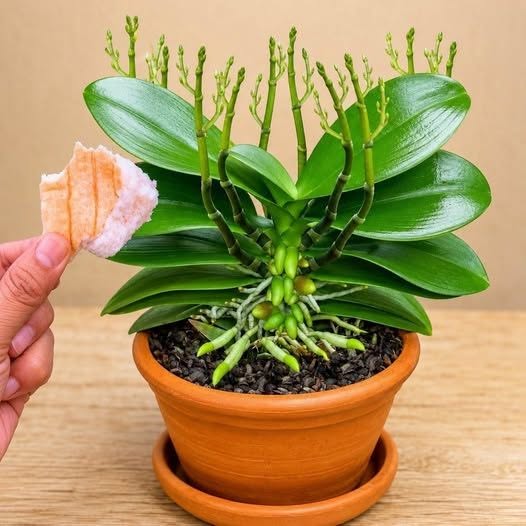
Discover the truth behind popular orchid-growing hacks, what orchids actually need for healthy roots, new growth, and beautiful blooms.
Place a Piece of It Under an Orchid: Can It Really Make 100 New Shoots?
Orchids are beautiful, but getting them to produce new growth and bloom again can sometimes be challenging. That’s why gardeners are always looking for simple tricks that promise faster growth, stronger roots, and flowers throughout the year.
One popular claim suggests that placing a particular household ingredient or natural material underneath an orchid can produce dozens—or even hundreds—of new shoots and keep the plant blooming continuously.
It sounds amazing, but is there really a secret ingredient that can transform an orchid overnight?
The truth is much more practical.
Orchids Need the Right Growing Conditions
Before trying any homemade fertilizer or gardening hack, it’s important to understand what orchids actually need.
Most commonly grown orchids, particularly Phalaenopsis orchids, prefer bright but indirect light, good air circulation, appropriate humidity, and a well-draining growing medium.
Their roots need oxygen as well as moisture. Keeping the roots constantly wet can cause them to deteriorate and may eventually lead to root rot.
Can One Ingredient Really Produce 100 New Shoots?
There is no reliable gardening evidence that placing one piece of a household ingredient under an orchid will cause an orchid to suddenly produce 100 new shoots.
Orchid growth depends on several factors, including:
- Light exposure
- Temperature
- Watering
- Root health
- Nutrient availability
- Humidity
- The orchid’s age and condition
- Its natural growth cycle
A healthy orchid can produce new leaves, roots, flower spikes, or sometimes additional plants, but this doesn’t happen simply because one ingredient has been placed underneath it.
Be Careful With Homemade Fertilizers
Natural materials can contain nutrients, but that doesn’t mean they are automatically safe for orchids.
Adding concentrated kitchen scraps, powders, or homemade mixtures directly to an orchid pot can alter the growing medium, encourage mold, attract insects, or damage delicate roots.
Orchids generally benefit from a balanced orchid fertilizer used according to its instructions, rather than large quantities of untested homemade ingredients.
How to Encourage New Orchid Growth
If your goal is to encourage healthy new shoots and flowers, focus on the basics.
Provide Bright, Indirect Light
Orchids need sufficient light to grow and flower, but intense direct sunlight through a window can scorch their leaves.
A bright location with filtered light is often a good choice.
Don’t Overwater
One of the most common orchid-care mistakes is watering too frequently.
Allow the growing medium to dry appropriately between waterings rather than keeping it constantly saturated.
The exact watering schedule depends on the pot, growing medium, temperature, humidity, and environment.
Check the Roots
Healthy orchid roots are an important sign that the plant is receiving appropriate care.
If roots are mushy, dark, or have an unpleasant smell, the plant may be suffering from excessive moisture or poor drainage.
A pot with adequate drainage can help prevent water from remaining around the roots.
Feed Carefully
During active growth, orchids can benefit from appropriate fertilizer.
Use a product formulated for orchids and follow the manufacturer’s directions. More fertilizer isn’t necessarily better.
Over-fertilizing can damage roots and create additional problems.
What About Blooming All Year?
Orchids can bloom for extended periods, and some healthy plants may produce flowers more than once a year.
However, continuous flowering throughout the entire year isn’t guaranteed.
After flowering, the plant may naturally enter a period of rest or focus its energy on producing new leaves and roots.
That’s normal.
Instead of forcing constant blooms, concentrate on keeping the plant healthy. A healthy orchid is much more likely to flower again when the appropriate conditions return.
Don’t Ignore the Growing Medium
Orchids are often grown in bark-based or other chunky, well-aerated media rather than ordinary garden soil.
Over time, growing media can break down and retain too much moisture. Repotting may eventually become necessary.
When repotting, inspect the roots and remove genuinely dead or rotten material using clean tools.
The Simple Secret to Healthier Orchids
There isn’t a magic piece of food or household ingredient that can guarantee hundreds of new orchid shoots.
The real secret is consistent care.
Give your orchid suitable light, appropriate watering, good drainage, adequate air circulation, and properly diluted fertilizer when needed.
These basics may not sound as exciting as a miracle gardening hack, but they are far more dependable.
Final Thoughts
If you come across a gardening tip promising that one ingredient will make an orchid produce “100 new shoots” or bloom nonstop, approach the claim with caution.
Natural gardening experiments can be fun, but orchids have sensitive roots, and adding untested substances can sometimes do more harm than good.
Healthy roots, proper light, careful watering, and patience are the foundation of successful orchid care. With the right conditions, your orchid can reward you with new growth and beautiful flowers without relying on exaggerated miracle claims.