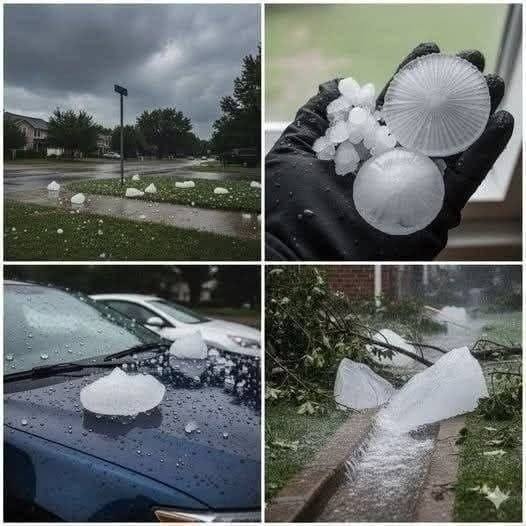
A powerful hailstorm has reportedly stunned residents as large hailstones fell suddenly. Here’s what happened, why hail can become dangerous, and what you should do during severe weather.
A sudden burst of severe weather can transform an ordinary day into a frightening experience within minutes. Strong thunderstorms accompanied by heavy hail have once again highlighted just how quickly weather conditions can change.
Reports circulating online claim that strong hail recently hit S-Town, leaving residents surprised by the sudden intensity of the storm. While the exact location and extent of the reported incident have not yet been independently confirmed, severe hailstorms are capable of causing significant damage to vehicles, roofs, windows, crops, and outdoor property.
Recent severe-weather events elsewhere have demonstrated the potential danger. In Karuizawa, Japan, hailstones measuring approximately 5–6 centimeters struck parts of the town and reportedly damaged cars, buildings, and crops.
🌨️ Why Large Hail Can Be Dangerous
Hail forms inside powerful thunderstorms when strong rising air currents carry water droplets high into the atmosphere, where they freeze. As the ice particles move through the storm, additional layers of water can freeze around them, causing the hailstones to grow.
The stronger the storm’s updraft, the larger the hail can become.
Large hail can:
- Crack or break windows
- Damage vehicle roofs and windshields
- Destroy gardens and crops
- Damage roofs and outdoor structures
- Knock down branches
- Create dangerous driving conditions
- Cause injuries to people and animals caught outside
That’s why a sudden hailstorm should never be treated as merely a little rain.
⚠️ What Residents Should Do During a Hailstorm
If strong hail begins falling, the safest option is generally to move indoors immediately.
Stay away from windows and glass doors, particularly if the hail is large or accompanied by strong winds. If you’re driving, avoid stopping underneath trees or unstable structures. If possible, move into a secure covered location.
People outdoors should avoid open areas until the storm has passed.
🚗 Check Your Vehicle After the Storm
Large hail can leave behind damage that isn’t immediately obvious.
After conditions become safe, check your vehicle for:
- Dents on the roof and hood
- Cracked or broken glass
- Damage to mirrors or lights
- Windshield chips or cracks
- Damage to nearby outdoor equipment
Photographing damage can also be useful if an insurance claim becomes necessary.
🌩️ Don’t Ignore the Warning Signs
Hail is often associated with powerful thunderstorms, which may also produce lightning, heavy rainfall, strong winds, and—in some situations—tornadoes.
Weather conditions can change rapidly, so residents should monitor reliable local weather authorities rather than relying solely on social-media posts.
If an official severe-weather warning is issued, follow the instructions provided by local emergency authorities.
📢 What Happens Next?
Residents in the affected area will likely be watching closely for additional weather alerts and reports of damage.
At this point, the claim that “strong hail just hit S-Town” should be treated as a developing report rather than fully confirmed news unless local authorities or reputable weather services verify the exact location and severity.
One thing is certain: when thunderstorms begin producing large hail, taking shelter early is far safer than waiting to see how severe the storm becomes.
Stay indoors, stay informed, and take severe-weather warnings seriously.