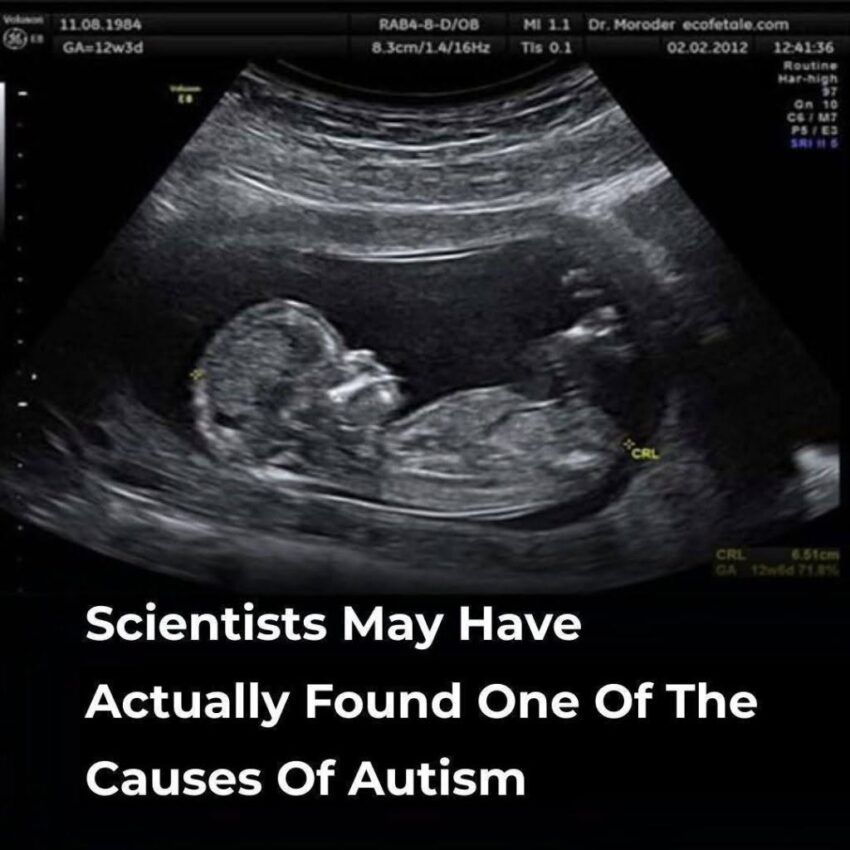
Scientists are investigating whether maternal gut health and the microbiome may influence fetal brain development and autism risk. Here’s what current research actually shows—and what remains uncertain.
Scientists Explore a Potential Link Between Maternal Gut Health and Autism—But Here’s What We Actually Know
The relationship between the gut microbiome, pregnancy, and autism has become an increasingly interesting area of scientific research. Researchers are investigating whether changes in the trillions of microorganisms living in the digestive tract could somehow influence fetal brain development.
But there is an important distinction between a possible biological connection and proof that maternal gut health causes autism. At present, scientists have not established that an unhealthy maternal gut microbiome causes autism in a child.
Recent research suggests that the maternal microbiome may interact with the immune system, metabolism and signaling molecules involved in fetal development. However, much of the strongest mechanistic evidence still comes from laboratory and animal studies, while human research remains more complicated.
What Is the Gut Microbiome?
The gut microbiome is the enormous community of bacteria and other microorganisms living in the digestive system. These organisms help with digestion, produce certain metabolites and interact with the immune system.
During pregnancy, major changes occur throughout the mother’s body, including changes in metabolism, immunity and the gut microbiome. Scientists therefore want to understand whether these changes could influence the developing fetus.
One proposed explanation involves the gut-brain axis—the complex communication network connecting the digestive system, immune system, metabolism and nervous system.
Researchers are particularly interested in whether microbial changes could alter substances that affect inflammation or fetal neurological development.
How Could Maternal Gut Health Potentially Influence the Baby?
Scientists are investigating several possible pathways.
1. Immune-system changes
Gut bacteria can influence the immune system. Significant changes in the microbiome may contribute to altered inflammatory signaling.
Maternal immune activation during pregnancy has been investigated as one potential factor associated with neurodevelopmental outcomes, including autism. However, this does not mean that every inflammatory condition during pregnancy results in autism.
2. Microbial metabolites
Gut microorganisms produce numerous substances that can affect metabolism and biological signaling.
Researchers are studying whether some microbiome-derived metabolites can influence fetal development or interact with pathways involved in brain development.
This is one of the reasons the microbiome-gut-brain connection has attracted so much attention.
3. Epigenetic mechanisms
Another possibility involves epigenetics, which refers to changes in how genes are regulated without changing the DNA sequence itself.
Recent reviews have proposed that microbial metabolites and immune signaling could potentially influence epigenetic processes during development. But these mechanisms are still being investigated, and evidence from experimental models cannot automatically be applied to humans.
What Have Human Studies Actually Found?
This is where the story becomes much more complicated.
Some observational studies have found associations between maternal health, inflammation or other pregnancy-related factors and autism in offspring. However, association does not prove causation.
A large 2025 study involving more than 1.1 million children born in Denmark found associations between several maternal health conditions and autism. But analyses involving siblings and fathers suggested that familial factors may explain a substantial portion of many of these associations.
Similarly, a 2026 umbrella review examining pregnancy complications reported associations with several conditions, including gestational diabetes, obesity, hypertension and autoimmune disease. However, the researchers concluded that the overall evidence did not provide convincing evidence of causality, with many underlying studies considered weak or at high risk of bias.
That distinction is extremely important.
What About Studies Specifically Examining the Microbiome?
Human microbiome research has produced interesting findings, but the results are not yet strong enough to establish a cause-and-effect relationship.
For example, an Australian Autism Biobank study examined children with autism, their siblings and unrelated children. Researchers found that maternal immune activation was associated with autism, but they did not find broad, significant differences in the children’s gut microbiome that could explain the association.
The researchers specifically cautioned against directly translating findings from animal experiments into human clinical conclusions.
This is one of the biggest challenges in microbiome research: what happens in a laboratory mouse may not happen in a pregnant human in the same way.
Does This Mean Mothers Should Take Probiotics to Prevent Autism?
Not based on current evidence.
Probiotics, prebiotics and other microbiome-targeted treatments are being studied, but researchers have not established a reliable probiotic treatment that can prevent autism.
A 2025 review of microbiota-based interventions noted potential benefits in some autism-related symptoms, but evidence quality, treatment methods and individual responses vary considerably.
Another recent review specifically examining maternal gut microbiota concluded that causal evidence in humans remains insufficient and that probiotic interventions for preventing autism have not yet been adequately validated through large, rigorous randomized trials.
Therefore, pregnant women should not start supplements or make major dietary changes specifically to try to prevent autism without discussing them with their healthcare professional.
So, Is There a Link?
Possibly—but scientists are still working out what that link actually means.
Current research supports the idea that maternal health, immune activity, metabolism and the microbiome may interact with fetal development. The microbiome is therefore a legitimate and promising area of scientific investigation.
But there is currently no evidence that a mother’s gut health alone determines whether her child will develop autism.
Autism is a complex neurodevelopmental condition involving many genetic and environmental influences. Researchers are investigating how these factors may interact rather than looking for one single cause.
The Bottom Line
The idea that maternal gut health could influence fetal brain development is scientifically plausible and supported by some experimental evidence. However, the human evidence is still developing.
The most accurate conclusion today is:
Maternal gut microbiome health may be one piece of a much larger biological puzzle, but it has not been proven to cause or prevent autism.
Future studies—particularly large, carefully controlled human studies—will be needed to determine whether specific microbiome changes during pregnancy actually influence neurodevelopment and whether safely modifying the microbiome can improve outcomes.