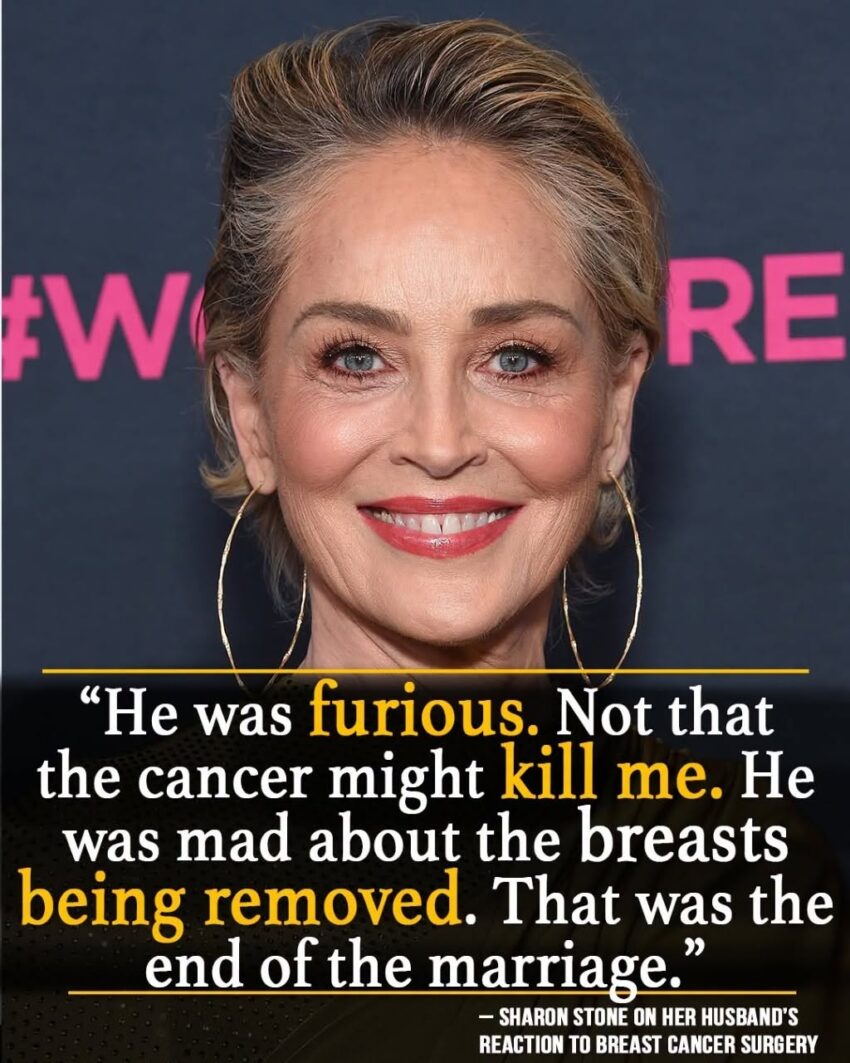
Sharon Stone reflects on her serious health struggles, including her 2001 brain hemorrhage and later breast-tumor scare, and how those experiences affected her marriage and life.
Sharon Stone Opens Up About the Health Scare That Changed Her Life—and the Marriage That Didn’t Survive It
Sharon Stone has spent decades in the public eye, but some of the most difficult chapters of her life happened far away from movie premieres and Hollywood headlines.
In recent interviews, the actress has spoken candidly about the medical emergencies and personal struggles that dramatically changed the course of her life. Her story is not simply about illness. It is also about recovery, independence, relationships, and learning how to rebuild after experiencing circumstances that could have ended very differently.
The Medical Emergency That Changed Everything
In 2001, when Stone was 43, she suffered a serious subarachnoid hemorrhage, a type of bleeding around the brain. She had experienced an extremely severe headache and was taken to hospital, where doctors discovered the bleeding. Contemporary reports described her condition as life-threatening.
Stone has since described the experience as a defining turning point in her life.
Her recovery was not immediate. She has spoken about struggling with walking and speech afterward and about the long-term effects the event had on her health, career, finances, and personal life.
What had once seemed like a successful and predictable Hollywood life suddenly became a fight to regain basic abilities and rebuild her future.
Recovery Took Years
Stone has said that recovering from the brain hemorrhage was a long process.
She has described difficulties with speech, mobility, reading, and other aspects of everyday life. Rather than returning immediately to the career she had before the medical crisis, she had to spend years rebuilding herself.
That experience also changed the way she viewed her own life.
Instead of simply trying to return to the person she had been before the hemorrhage, Stone began thinking about what she wanted her life to become afterward.
Another Health Scare
Years later, Stone experienced another frightening medical situation.
In a 2026 podcast interview, she recalled doctors discovering breast tumors during a period when she was already dealing with significant health concerns. She said one tumor was extremely large and that doctors recommended a bilateral mastectomy because they were concerned about the possibility of cancer.
Stone has emphasized that she wanted to take control of the situation and make decisions about her own medical care.
It’s important to distinguish a cancer scare from a confirmed cancer diagnosis. Reports about her interview describe doctors’ concerns and the recommendation for surgery, rather than establishing that Stone had a confirmed breast-cancer diagnosis.
When a Health Crisis Affects a Marriage
Perhaps the most painful part of Stone’s recent story is the way she says the health scare affected her marriage to journalist Phil Bronstein.
Stone recalled expecting support during the frightening period. Instead, she described a moment when Bronstein reacted negatively to her decision regarding surgery.
According to Stone’s account, that interaction made her realize that something fundamental had changed in their relationship.
The couple had already faced difficult circumstances during Stone’s earlier health crisis. Her 2001 hemorrhage had profound consequences for her personal life, and the marriage eventually ended in divorce.
The Importance of Having a Voice in Your Own Healthcare
One of the strongest themes in Stone’s story is her determination to participate actively in decisions about her own body and medical treatment.
Serious illness can make people feel as though control has suddenly been taken away from them. Medical tests, uncertain diagnoses, frightening conversations, and difficult treatment decisions can all be overwhelming.
Stone’s experience highlights why patients may want to ask questions, understand their options, seek appropriate medical opinions, and participate in decisions about their care.
At the same time, medical decisions should be made with qualified healthcare professionals who understand the individual’s specific circumstances.
Life After the Crisis
Stone’s life after her health struggles has not simply been about returning to Hollywood.
She has spoken about rebuilding her career, dealing with the lasting effects of her stroke, painting, writing, humanitarian work, and developing a stronger sense of independence.
Her story demonstrates that recovery doesn’t always mean returning to exactly the life you had before.
Sometimes, recovery means creating an entirely different life.
A Story of Survival and Reinvention
Sharon Stone’s health journey is a reminder that a serious medical crisis can affect far more than the body.
It can influence relationships, careers, finances, confidence, identity, and the way a person sees the future.
Yet Stone has continued to speak publicly about what happened to her rather than allowing those experiences to remain hidden.
Her willingness to discuss difficult moments has given audiences a different perspective on the woman behind the Hollywood image.
Final Thoughts
Sharon Stone’s story is ultimately about much more than celebrity.
It is about surviving a life-threatening medical emergency, facing another frightening health scare, navigating the breakdown of a marriage, and finding the strength to rebuild.
Her experiences show how quickly life can change—and how much courage it can take to start again.
Today, Stone continues to work, paint, speak openly about her experiences, and shape her life on her own terms. Her journey serves as a powerful reminder that surviving a crisis is sometimes only the beginning of the real work: learning how to live again, in a new way.