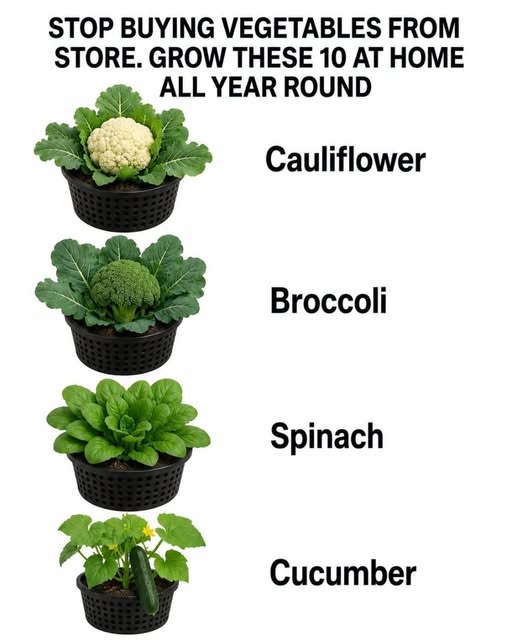
Discover 10 vegetables you can grow at home throughout the year, even in small spaces. Learn simple growing tips for containers, balconies, kitchens, patios, and backyard gardens.
Growing your own vegetables doesn’t always require a large backyard or a professional garden. Many useful vegetables can be grown in containers, raised beds, balconies, patios, or even sunny windowsills.
With the right conditions and a little regular care, you can harvest fresh produce repeatedly instead of buying it every time you cook.
While no vegetable grows continuously in every climate, these 10 are particularly useful for succession planting, repeated harvesting, or regrowing, making them excellent choices for a year-round home garden.
1. Green Onions
Green onions are one of the easiest vegetables for beginners.
You can grow them in a small pot, container, or garden bed. They don’t require a lot of space, and their leaves can be harvested repeatedly.
When harvesting, avoid removing the entire plant. Cut the green leaves above the base and allow the plant to continue producing.
You can also replant healthy onion bottoms in soil and encourage new green growth.
Growing tip:
Keep the soil lightly moist and place the container somewhere with plenty of sunlight.
2. Lettuce
Lettuce grows relatively quickly and is ideal for containers.
Instead of harvesting the entire plant at once, pick the outer leaves and leave the center growing. This allows you to enjoy multiple harvests from the same plant.
For a steady supply, plant a small batch every couple of weeks rather than planting everything on one day.
Growing tip:
Lettuce generally prefers cooler conditions and may struggle during extremely hot weather.
3. Spinach
Spinach is another excellent vegetable for home gardens, particularly during cooler weather.
You can grow it in containers or directly in the soil. Harvest the larger outer leaves while allowing the younger leaves in the center to continue developing.
Growing tip:
Provide fertile, well-drained soil and consistent moisture. In very hot conditions, spinach may bolt quickly, so choose a season appropriate to your local climate.
4. Kale
Kale is a productive leafy vegetable that can provide repeated harvests.
Instead of pulling up the whole plant, remove the larger outer leaves and leave the growing center intact.
With good care, a single plant can continue producing leaves for an extended period.
Growing tip:
Give kale plenty of sunlight and keep the soil consistently moist without leaving it waterlogged.
5. Swiss Chard
Swiss chard is especially useful for gardeners who want a vegetable that can be harvested repeatedly.
The colorful stems and large leaves can be harvested individually, allowing the plant to continue producing new growth.
It can also tolerate a wider range of conditions than some delicate leafy greens.
Growing tip:
Harvest the outer leaves first and avoid damaging the central growing point.
6. Radishes
Radishes are popular because they grow relatively quickly.
They’re also suitable for containers, making them a practical choice for balconies and small gardens.
For a continuous supply, practice succession planting. Sow a small number of seeds every couple of weeks when growing conditions are suitable.
Growing tip:
Loose soil helps the roots develop properly. Crowded plants may produce smaller or misshapen radishes.
7. Carrots
Carrots are another excellent container crop as long as you choose a container deep enough for the variety you’re growing.
Short or miniature carrot varieties are particularly convenient for pots.
Planting small batches at different times can give you a more continuous harvest.
Growing tip:
Use loose, stone-free soil. Hard or compacted soil can cause roots to become twisted or poorly formed.
8. Herbs Such as Parsley
Although herbs aren’t technically vegetables, they’re some of the most useful plants to grow at home.
Parsley can be grown in containers and harvested gradually. Other herbs such as mint, basil, chives, and cilantro can also provide a steady supply when planted according to their preferred growing seasons.
Growing tip:
Harvest only what you need and avoid removing too much of the plant at once.
9. Cherry Tomatoes
Cherry tomatoes can be surprisingly productive when grown in containers.
With adequate sunlight, water, nutrients, and support, one healthy plant can produce a substantial number of tomatoes over its growing season.
Choose a container large enough for the plant and provide a cage, stake, or trellis if the variety requires support.
Growing tip:
Tomatoes need plenty of sunlight. Water consistently, especially during hot weather, but avoid keeping the soil constantly saturated.
10. Green Beans
Bush beans and some climbing varieties can be productive home-garden vegetables.
Bush varieties are particularly convenient for containers because they don’t require as much vertical support. Pole beans can produce heavily when given a suitable trellis.
Growing tip:
Pick beans regularly while they’re still young and tender. Frequent harvesting can encourage continued production.
The Secret to Having Vegetables All Year
The biggest mistake many new gardeners make is planting everything at once.
If you want a more continuous supply, use succession planting.
Instead of planting 30 lettuce seeds on one day, for example, plant a smaller batch every couple of weeks when the weather is suitable.
As one group approaches harvest, another group is still growing.
This simple technique can dramatically extend your harvest window.
You Don’t Need a Huge Garden
Even a small balcony can produce useful amounts of food.
Try growing:
- Green onions in small pots
- Lettuce in shallow containers
- Radishes in window boxes
- Herbs on a sunny windowsill
- Cherry tomatoes in large containers
- Kale or chard in pots
The most important factors are adequate sunlight, appropriate containers, good-quality growing medium, proper drainage, and regular watering.
Save Seeds From Suitable Crops
Some vegetables can also be grown from seeds saved from mature plants, although not every store-bought vegetable is equally suitable for seed saving.
For reliable results, use seeds from varieties that are known to grow well in your climate.
You can also save money by collecting seeds from mature garden plants at the end of the growing season and storing them properly for future planting.
Don’t Expect Every Vegetable to Grow Everywhere
The phrase “all year round” depends heavily on your climate and growing conditions.
A vegetable that thrives outdoors throughout winter in one region may struggle with freezing temperatures elsewhere. Similarly, a cool-season crop such as lettuce may perform poorly during a very hot summer.
For the best results, divide your year into growing seasons and choose vegetables suited to each one.
A Simple Year-Round Strategy
For a steady home harvest, consider growing:
Cool seasons: lettuce, spinach, kale, radishes, carrots, and chard.
Warm seasons: tomatoes, beans, basil, and other heat-loving crops.
Between seasons: use containers and succession planting to bridge the transition between crops.
This approach is usually more realistic than expecting every vegetable to grow continuously throughout all four seasons.
Final Thoughts
You don’t need acres of land to grow some of your own food.
Start with just two or three easy crops—such as green onions, lettuce, radishes, or herbs—and learn how they respond to your local weather.
Once you become comfortable, add tomatoes, beans, carrots, kale, spinach, and other vegetables.
With succession planting and the right crops for each season, your garden can provide fresh produce for much more of the year and reduce how often you need to buy certain vegetables from the store.