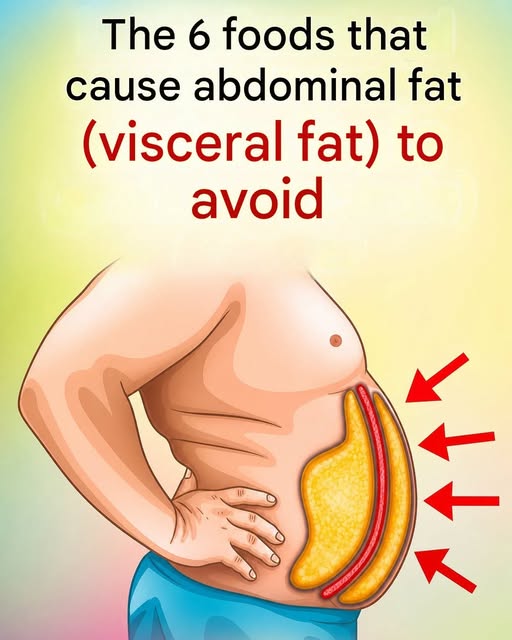
Discover 6 common foods that may contribute to excess abdominal and visceral fat when eaten frequently, plus healthier choices to support a balanced diet.
Abdominal fat is more than a cosmetic concern. A type of fat called visceral fat is stored deep inside the abdomen around internal organs. Having too much visceral fat is associated with a higher risk of metabolic and cardiovascular problems.
The good news is that you don’t have to completely eliminate every food you enjoy. Instead, reducing highly processed, calorie-dense foods and replacing them with more nutritious choices can make your overall diet healthier.
Here are six foods worth limiting if you’re trying to manage abdominal fat.
1. Sugary Drinks
Sodas, sweetened juices, energy drinks, sweet tea, and other sugary beverages can provide a large amount of added sugar without making you feel particularly full.
Because drinks are easy to consume quickly, it can be surprisingly easy to take in excess calories.
Try instead: Water, sparkling water, unsweetened tea, or water flavored with lemon or fresh fruit.
2. Doughnuts, Pastries, and Sweet Baked Goods
Doughnuts, cakes, cookies, pastries, and similar foods can contain a combination of refined flour, added sugar, and fats.
Eating these foods frequently can make it harder to maintain a healthy calorie balance.
You don’t necessarily need to avoid them forever. Keeping portions moderate and treating them as occasional foods is a more sustainable approach.
3. French Fries and Other Deep-Fried Foods
Deep-fried foods can be very calorie-dense because they absorb oil during cooking. Fries, fried chicken, fried snacks, and similar foods can therefore contribute substantial calories to a meal.
Try instead: Baked, roasted, grilled, or air-fried versions.
4. Processed Meats
Bacon, sausages, hot dogs, and other processed meats can be high in calories and saturated fat, depending on the product.
Eating them frequently isn’t ideal for an overall healthy eating pattern.
Try instead: Fish, eggs, beans, lentils, skinless poultry, or other minimally processed protein sources.
5. Refined-Grain Fast Foods
Pizza, burgers, sandwiches made with refined bread, and other fast-food meals can combine refined carbohydrates, fats, cheese, sauces, and large portions.
The problem isn’t necessarily one ingredient. It’s the overall combination and portion size.
A healthier homemade version can include whole-grain bread, lean protein, vegetables, and a moderate amount of cheese or sauce.
6. Candy and Other Highly Sugary Snacks
Candy, chocolate bars, sweetened cereals, and similar snacks can provide considerable added sugar and calories in relatively small portions.
Eating them occasionally is different from consuming them throughout the day.
For a more filling snack, consider fruit, plain yogurt, nuts in a moderate portion, or a combination of protein and fiber.
What Should You Eat Instead?
If your goal is to reduce excess abdominal fat, focus less on finding a “magic” fat-burning food and more on building balanced meals.
A simple plate can include:
- Plenty of vegetables
- A source of protein
- Whole grains or another high-fiber carbohydrate
- A moderate amount of healthy fat
- Water or an unsweetened beverage
Foods such as vegetables, fruits, beans, lentils, whole grains, nuts, seeds, fish, eggs, and minimally processed proteins can fit into a healthy eating pattern.
Don’t Forget Exercise and Sleep
Diet is only one part of the picture. Regular physical activity, adequate sleep, stress management, and maintaining an appropriate overall calorie intake can all support healthier body composition.
You also cannot specifically “spot reduce” visceral fat by doing abdominal exercises. Your body loses fat according to overall energy balance and individual biology.
The Bottom Line
There is no single food that automatically creates belly fat. However, regularly consuming large amounts of sugary drinks, highly processed snacks, fried foods, refined baked goods, processed meats, and calorie-dense fast foods can make maintaining a healthy weight more difficult.
Instead of completely banning your favorite foods, focus on portion control, nutritious everyday meals, regular movement, and consistency.
Small changes practiced consistently are much more sustainable than extreme diets.