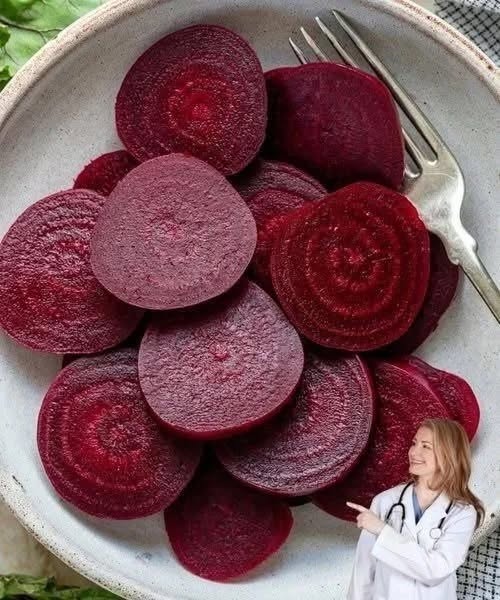
Beetroot may look like an ordinary root vegetable, but it contains naturally occurring compounds that have attracted considerable attention from nutrition and cardiovascular researchers.
One of its most interesting components is dietary nitrate. Inside the body, nitrate can contribute to the production of nitric oxide, a molecule involved in blood-vessel relaxation and blood flow.
Research suggests that regularly consuming beetroot—particularly nitrate-rich beetroot juice—may have measurable effects on blood pressure and cardiovascular function. But that does not mean beets can replace medication or medical treatment.
Here is what may happen when you make beetroot a regular part of your diet.
1. Your Blood Vessels May Relax
One of the best-studied effects of beetroot is related to its nitrate content.
Dietary nitrate can be converted through several steps into nitric oxide. Nitric oxide helps blood vessels relax and widen, potentially allowing blood to flow more easily.
This is one reason researchers have investigated beetroot juice as a possible dietary strategy for people with elevated blood pressure.
A systematic review and meta-analysis of randomized trials found that beetroot juice supplementation was associated with an average reduction of about 3.55 mmHg in systolic blood pressure and 1.32 mmHg in diastolic blood pressure.
2. It May Help Lower Systolic Blood Pressure
The evidence is particularly interesting for systolic blood pressure—the upper number in a blood-pressure reading.
A 2024 systematic review and meta-analysis involving 11 randomized trials and 349 people with hypertension found that beetroot juice was associated with an average reduction of approximately 5.31 mmHg in clinical systolic blood pressure compared with controls.
However, the researchers rated the certainty of evidence as low and found no significant overall effect on clinical diastolic blood pressure.
In other words, beetroot may help, but the response can vary from person to person.
3. Your Circulation May Benefit
Because nitric oxide plays an important role in blood-vessel function, researchers have also studied beetroot nitrate in relation to vascular health.
A systematic review of randomized trials found that beetroot inorganic nitrate supplementation may improve measures of endothelial function and arterial stiffness, although the researchers emphasized that more high-quality evidence is still needed.
This is important because healthy blood vessels are an essential part of cardiovascular health.
4. It May Support Exercise Performance
Beetroot has also become popular among athletes because nitrate may influence how efficiently the body uses oxygen during exercise.
Research on beetroot juice has investigated its potential effects on exercise efficiency, endurance and physical performance.
That does not mean drinking beetroot juice will suddenly make someone an athlete. Rather, its nitrate content may provide a small physiological advantage in certain types of exercise.
5. Beetroot Contains Powerful Plant Compounds
Nitrate is not the only reason beetroot is nutritionally interesting.
Beetroot also contains pigments called betalains, along with other plant compounds. These substances contribute to the vegetable’s deep red-purple color and have antioxidant properties.
Eating whole beetroot also provides fiber and other nutrients, making it different from simply taking an isolated nitrate supplement.
6. Whole Beetroot and Beetroot Juice Are Not Exactly the Same
This is an important distinction.
Most blood-pressure studies have specifically examined beetroot juice or standardized nitrate-containing preparations, rather than simply asking people to eat a serving of cooked beetroot.
For example, clinical trials have used different amounts of beetroot juice and different nitrate concentrations, so the results cannot automatically be translated into a precise number of whole beets that everyone should eat.
Whole beetroot, however, has the advantage of providing fiber and a broader range of nutrients.
7. It May Be Especially Interesting for People With High Blood Pressure
For people with hypertension, beetroot may be a useful addition to an overall heart-healthy eating pattern.
A meta-analysis specifically examining people with hypertension found that nitrate from beetroot juice significantly reduced systolic blood pressure, while the effect on diastolic pressure was not statistically significant.
But beetroot should be considered a complement, not a replacement, for prescribed blood-pressure treatment.
If a doctor has prescribed medication, stopping or reducing it because beetroot appears to lower blood pressure can be dangerous.
8. Don’t Be Alarmed by Red Urine
There is one harmless effect that sometimes surprises people.
After eating a substantial amount of beetroot, some people notice that their urine or stool becomes pink, red or reddish-purple.
This can happen because of beetroot pigments and is commonly known as beeturia. It is not necessarily a sign of bleeding.
However, unexplained blood in the urine should always be discussed with a healthcare professional rather than automatically being blamed on beetroot.
How Can You Add Beetroot to Your Diet?
You don’t necessarily need a concentrated beetroot drink.
You can try:
- Cooked beetroot as a side dish
- Beetroot added to salads
- Grated raw beetroot
- Beetroot blended into a smoothie
- Homemade beetroot soup
- Small amounts of beetroot juice
If choosing juice, remember that it generally contains less fiber than whole beetroot.
How Much Should You Eat?
There is no universally established daily amount of whole beetroot that guarantees a particular health benefit.
Clinical studies have used different amounts and preparations of beetroot juice. A 2024 meta-analysis reported studies providing approximately 200–800 mg of nitrate per day from beetroot juice, but this should not be interpreted as a universal dose recommendation.
For everyday nutrition, simply including beetroot as one of several vegetables in a balanced diet is a reasonable approach.
Who Should Be Careful?
People who already have low blood pressure or who take blood-pressure-lowering medication should be cautious with large amounts of concentrated beetroot juice because beetroot may contribute to lowering blood pressure.
Anyone with kidney-related dietary restrictions should also ask their healthcare professional whether beetroot fits their individual diet.
And if you are pregnant, breastfeeding, taking medication or managing a medical condition, it is better to discuss concentrated beetroot supplements or large amounts of beetroot juice with your healthcare professional rather than treating it as a medical therapy.
The Bottom Line
Beetroot is much more than a colorful vegetable.
Its naturally occurring nitrates can contribute to nitric oxide production, which may help blood vessels relax and improve blood flow. Clinical research suggests beetroot juice can produce a modest reduction in systolic blood pressure, particularly in people with hypertension.
But the biggest lesson is simple: beetroot can be part of a heart-healthy diet, not a replacement for medical care.
Eating it regularly alongside vegetables, fruits, whole grains, legumes, healthy proteins and other nutrient-rich foods is a much more realistic strategy than expecting one food to transform your health overnight.