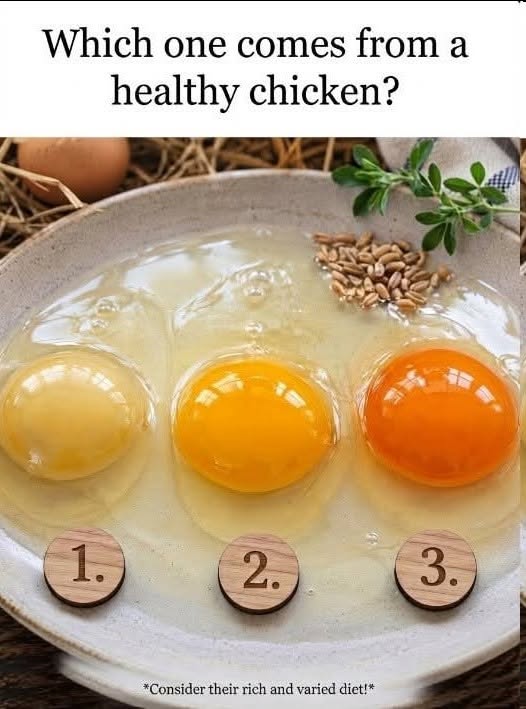
Ever cracked an egg and found a yolk with an unusual color? Learn what different egg yolk colors can mean, what affects them, and when an egg should be discarded.
There is something strangely satisfying about cracking a fresh egg and seeing a deep golden yolk sitting perfectly in the center. But every now and then, you may open an egg and notice that the yolk looks unusually pale, intensely orange, or slightly different from the eggs you’re used to buying.
That moment can make you stop and look twice.
The good news is that yolk color alone usually isn’t a reliable indicator of whether an egg is healthier, fresher, or more nutritious. Much of the difference comes from what the hen ate.
Why Are Some Egg Yolks Bright Yellow?
The color of an egg yolk is strongly influenced by the hen’s diet.
Feed containing more yellow or orange plant pigments, such as corn and certain leafy plants, can contribute to a deeper-colored yolk. Other natural pigments in the hen’s diet can also affect the final shade.
This means two perfectly normal eggs can have noticeably different yolk colors.
Does a Dark Orange Yolk Mean a Healthier Egg?
Not necessarily.
A darker yolk may look richer and more appealing, but color by itself does not prove that an egg contains significantly more nutrients.
Eggs are naturally nutritious foods, providing high-quality protein along with nutrients such as choline, vitamin B12, selenium, and other vitamins and minerals.
The overall nutritional value depends on several factors, including the hen’s diet and how the egg was produced.
What About a Very Pale Yolk?
A pale yellow yolk isn’t automatically a sign that an egg has gone bad.
It can simply reflect the hen’s feed. If the egg has been properly stored and there are no other signs of spoilage, the yolk color alone isn’t a reason to throw it away.
When Should You Avoid Eating an Egg?
Instead of judging an egg solely by its yolk color, pay attention to signs that may indicate spoilage.
Discard an egg if it has an unpleasant sulfur-like or rotten smell, an unusual appearance, a cracked shell that has allowed contamination, or has been stored improperly for an unsafe length of time.
When in doubt, it’s better to be cautious rather than risk eating a spoiled egg.
The Interesting Truth About Egg Yolk Color
The next time you crack an egg and discover a surprisingly orange or pale yolk, don’t immediately assume something is wrong.
That unexpected color may simply be telling you something about the hen’s diet.
So while a dramatic golden-orange yolk can certainly make you stop and look twice, egg yolk color isn’t a simple scorecard for freshness or healthiness.
Sometimes, the most surprising-looking egg is simply a perfectly ordinary egg with a different nutritional background.