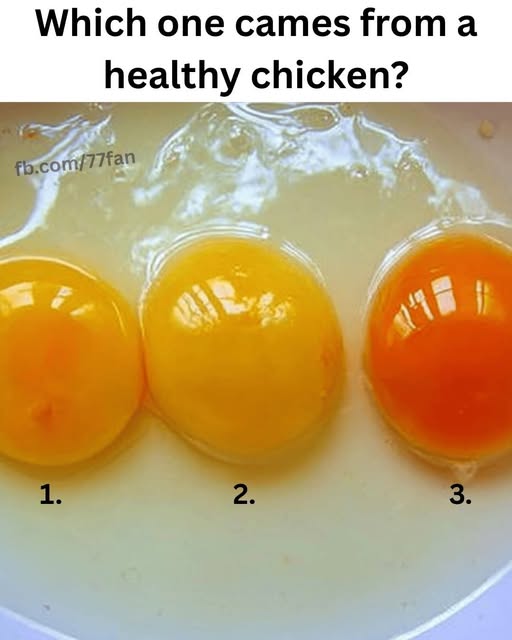
There are some everyday sights that are so unusual they make you stop and take a second look. An egg with a perfectly normal white and a yolk that looks dramatically different can be one of them.
Most of us expect an egg yolk to be somewhere between pale yellow and deep golden orange. So when someone cracks an egg and discovers a yolk that is unusually bright, dark, orange, or even slightly unusual in tone, it can immediately raise questions.
Is the egg safe? Does the color mean it is healthier? Could something be wrong with the chicken?
The good news is that yolk color is usually much less mysterious than it appears.
Why Are Egg Yolks Yellow?
The color of an egg yolk is influenced primarily by what the hen eats.
Certain natural plant pigments called carotenoids can accumulate in the yolk. These pigments are found in foods such as corn, leafy plants, marigold petals, and other plant ingredients.
When a hen consumes more pigment-rich feed, the yolk can become deeper yellow or orange.
This means two perfectly fresh eggs can have noticeably different yolk colors simply because the hens were fed different diets.
Does a Dark Orange Yolk Mean a Healthier Egg?
Not necessarily.
A darker yolk can indicate a greater concentration of certain pigments, but yolk color by itself isn’t a reliable measure of an egg’s overall nutritional quality.
The nutritional composition of an egg depends on many factors, including the hen’s diet, breed, age, living conditions, and other aspects of production.
So while an intensely orange yolk may look especially appetizing, color alone doesn’t prove that one egg is dramatically healthier than another.
What Makes Some Yolks Almost Orange?
Feed containing more carotenoid-rich ingredients can produce more intensely colored yolks.
This is one reason eggs from different farms, brands, or regions may look surprisingly different when cracked open.
Some hens may also have access to grass, plants, insects, or other foods that contribute pigments to their diet.
Interestingly, this means the appearance of an egg can provide a small clue about the hen’s nutritional environment—but it cannot tell you everything about how the egg was produced.
What If the Yolk Is Pale?
A pale yellow yolk isn’t automatically a sign that an egg is bad.
If the hen’s diet contains fewer yellow or orange pigments, the yolk may naturally be lighter.
Consumers sometimes assume that a deep orange yolk must always be superior, but that conclusion isn’t scientifically justified from color alone.
Freshness is better assessed using proper food-safety practices rather than relying on yolk color.
What About a Red or Pinkish Yolk?
This is where things can become more interesting.
An unusual reddish or pink appearance can sometimes be caused by factors unrelated to ordinary yolk pigmentation. The surrounding egg contents may also affect how the yolk appears.
If an egg has an unusual odor, abnormal appearance, damaged shell, or signs of spoilage, it is better to discard it rather than take chances.
A strange-looking egg doesn’t automatically mean it is dangerous, but there is also no reason to eat an egg that appears spoiled simply because someone says an unusual color is harmless.
Can the Hen’s Breed Affect the Yolk?
The hen’s breed can influence egg characteristics, but diet is a particularly important factor in yolk pigmentation.
Different breeds also produce eggs with different shell colors, sizes, and other characteristics.
However, the color of the eggshell should not be confused with the color of the yolk. Brown, white, blue, or greenish eggshells don’t automatically indicate a corresponding difference in yolk color.
Why Do People Find Orange Yolks So Appealing?
There is also a psychological side to the story.
A deep golden-orange yolk often looks rich and appealing, especially when the egg is served sunny-side up or used in photographs.
Restaurants and food photographers frequently appreciate strongly colored yolks because they create an attractive contrast against egg whites, toast, vegetables, and other foods.
But visual appeal and nutritional superiority are two different things.
The Most Important Question: Is the Egg Fresh?
Instead of judging an egg solely by the yolk’s color, pay attention to food safety.
Keep eggs refrigerated when required by local food-safety guidance, check packaging dates and storage instructions, and avoid eggs with cracked or contaminated shells.
When cooking eggs, use appropriate cooking temperatures and hygiene practices, particularly when serving young children, older adults, pregnant people, or anyone with a weakened immune system.
The Fascinating Truth About the Yolk
That surprising yolk isn’t necessarily a sign of anything strange at all.
In many cases, it is simply a visible reflection of what the hen ate.
The next time you crack an egg and see a brilliantly golden or orange yolk, you may be looking at the result of naturally occurring pigments in the hen’s diet.
And that’s what makes the humble egg so fascinating: something as simple as breakfast can contain clues about biology, nutrition, farming, and food chemistry.
Final Takeaway
A yolk that suddenly makes you stop and stare may look unusual, but yolk color is primarily influenced by the hen’s diet and pigment intake.
A darker yolk doesn’t automatically mean a healthier egg, and a pale yolk doesn’t automatically mean a poor-quality one.
What matters most is the egg’s overall freshness, proper storage, and safe preparation.
So the next time you crack an egg and discover a yolk that looks completely different from what you’re used to, don’t panic. Sometimes the explanation is simply hiding in the hen’s dinner.