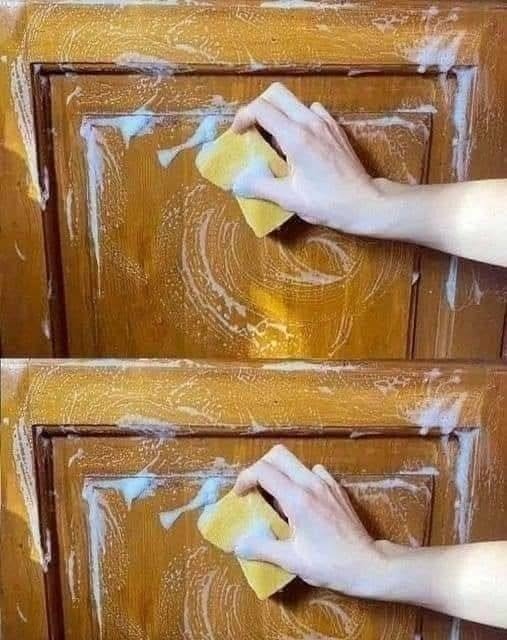
Discover a simple way to remove sticky grease from kitchen cabinets using everyday household ingredients, plus helpful tips for cleaning wood, painted, laminate, and other cabinet surfaces safely.
Kitchen cabinets have a way of collecting grease without us noticing. A little cooking oil vapor here, a splash from the frying pan there, and eventually the cabinet doors develop a sticky, dull film that ordinary wiping doesn’t remove.
Fortunately, you don’t necessarily need an expensive degreaser. A simple cleaning routine can make greasy cabinets look fresh again.
The Simple Grease-Cutting Method
For many washable cabinet surfaces, start with:
- Warm water
- A small amount of dishwashing liquid
- A soft microfiber cloth
- A second clean, damp cloth
- A dry towel
Dishwashing liquid is particularly useful because it is designed to break down grease.
Step 1: Mix the Cleaning Solution
Add a small amount of dish soap to warm water.
You don’t need a highly concentrated mixture. Too much soap can leave a residue that makes cabinets feel sticky again.
Step 2: Test a Hidden Area
Before cleaning the entire cabinet, test the solution on a small, inconspicuous section.
This is especially important for:
- Painted cabinets
- Natural wood
- Veneer
- Older finishes
- High-gloss surfaces
If the finish changes, becomes cloudy, or starts peeling, stop using the solution.
Step 3: Wipe Away the Grease
Dip a microfiber cloth into the solution and wring it out well.
The cloth should be damp, not dripping wet.
Gently wipe the greasy surface, paying particular attention to:
- Handles
- Areas around handles
- Cabinet edges
- The area above the stove
- Lower cabinets near the cooking area
For thick, sticky buildup, allow the damp soapy cloth to sit against the residue briefly before wiping. Don’t aggressively scrub delicate finishes.
Step 4: Rinse the Surface
Use a separate cloth lightly dampened with clean water to remove remaining soap.
This step matters because leftover detergent can attract dust and leave a dull film.
Step 5: Dry Immediately
Finish with a clean, dry towel.
Avoid leaving moisture sitting on wood, veneer, seams, or cabinet edges.
What About Baking Soda?
Baking soda is sometimes recommended as a homemade cabinet degreaser.
It can provide mild abrasive cleaning, but don’t assume it’s safe for every cabinet finish.
If you’re using it on a suitable, durable surface, mix a small amount with water to create a soft paste and test it first.
Never scrub aggressively, particularly on glossy or delicate finishes.
What You Should Avoid
Some popular DIY cleaning combinations can cause more harm than good.
Avoid using harsh chemicals or abrasive powders on surfaces unless the cabinet manufacturer specifically recommends them.
Also, never mix bleach with ammonia, acids, or other household cleaners, because dangerous gases can be produced.
Vinegar is also not automatically suitable for every cabinet material or finish.
A Simple Trick for Heavy Grease
If grease has accumulated around the stove, don’t try to remove everything in one aggressive scrubbing session.
Instead:
- Apply warm soapy water with a soft cloth.
- Let it loosen the residue briefly.
- Wipe gently.
- Repeat if necessary.
- Rinse with a clean damp cloth.
- Dry thoroughly.
Several gentle passes are usually safer for the finish than one vigorous scrub.
Keep Cabinets From Becoming Greasy Again
Once your cabinets are clean, prevention makes the next cleaning much easier.
Use Your Range Hood
A properly functioning range hood can help remove airborne grease and cooking vapors.
Wipe Splashes Quickly
Fresh grease is much easier to remove than old, hardened buildup.
Clean Handles Regularly
Cabinet handles can accumulate grease and fingerprints particularly quickly.
Don’t Forget the Tops
The tops of cabinets can collect a surprising amount of dust mixed with cooking grease. If they’re accessible, include them in your regular cleaning routine.
The Bottom Line
The simplest “genius” trick is often warm water plus a little dish soap and gentle wiping.
Dish soap is designed to cut through grease, while a microfiber cloth helps lift the residue without unnecessarily scratching the surface.
The most important rule is to match the cleaning method to the cabinet finish. Always test first, avoid excessive moisture, and never mix household cleaning chemicals.
A few minutes of gentle cleaning regularly can prevent a thick layer of sticky grease from building up in the first place.