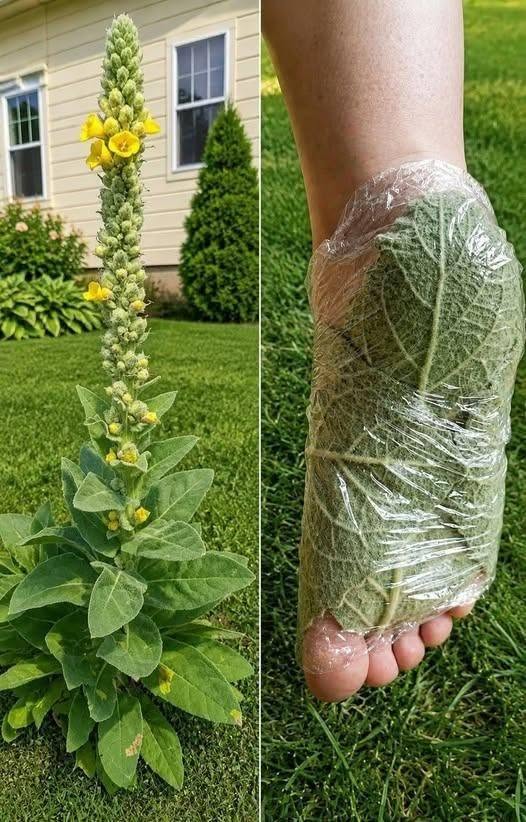
Discover the common yard plant that has been used in traditional remedies for generations. Learn about its history, traditional uses, possible benefits, and important safety considerations.
The Plant Growing in Many Yards That People Have Used for Generations
Walk through almost any neighborhood and you may notice plants growing along fences, sidewalks, gardens, or even between cracks in the pavement that most people simply consider weeds.
But some of these plants have a surprisingly long history of traditional use.
For generations, people have collected certain common yard plants for teas, poultices, cooking, and other traditional preparations. One familiar example is plantain (Plantago major), a hardy leafy plant that often grows in lawns, paths, gardens, and disturbed soil.
Despite its name, this plant has nothing to do with the banana-like fruit called a plantain.
What Is Plantain?
Plantain, particularly Plantago major, is a low-growing plant with broad, oval-shaped leaves and prominent veins.
It can thrive in places where many garden plants struggle, including compacted soil and frequently walked-on areas.
That’s one reason it is so commonly found around homes and yards.
For centuries, plantain has appeared in traditional herbal practices in different parts of the world.
A Long History of Traditional Use
Plantain has been used traditionally in herbal preparations for generations.
Historically, leaves have been used in various ways, including as teas or topical preparations.
Traditional herbal use is not the same thing as modern medical evidence, however. The fact that a plant has been used for centuries doesn’t automatically prove that it can treat a particular disease.
Still, researchers have studied plantain because it contains naturally occurring compounds such as flavonoids and other plant chemicals.
Why Did People Traditionally Use It?
Traditional uses have included preparations intended to soothe minor skin irritation and support comfort after small everyday irritations.
Some people have also used plantain leaves in traditional teas.
The leaves contain fiber and various plant compounds, but the amount and composition can vary depending on the plant, growing conditions, and preparation.
Don’t Confuse Plantain With Another Plant
Identification matters.
Several plants can look similar to one another, and some wild plants can be harmful if incorrectly identified.
If you’re considering harvesting a wild plant, don’t rely solely on a photograph or social-media post.
Make sure the plant has been correctly identified by a reliable botanical source or knowledgeable expert.
It’s also important to avoid collecting plants from roadsides, areas treated with pesticides or herbicides, or places where animals may have contaminated the soil.
Is Plantain a Medicine?
It’s better to think of plantain as a traditional herb rather than a proven cure.
Although laboratory and preliminary research has investigated compounds found in plantain, evidence from human clinical studies is limited for many of the health claims commonly made online.
It should not be used instead of prescribed treatment for infections, serious wounds, chronic diseases, or other medical conditions.
A Natural Plant Still Requires Caution
“Natural” doesn’t automatically mean “safe for everyone.”
Some people can develop allergic reactions to plants or herbal preparations.
If you are pregnant or breastfeeding, take prescription medications, have a chronic medical condition, or are considering concentrated herbal products, speak with a qualified healthcare professional before using them medicinally.
Never apply an unknown plant to a deep wound or serious skin injury.
What Makes This Plant So Interesting?
Perhaps the most fascinating thing about plantain is how ordinary it looks.
It isn’t an exotic herb that requires a special garden.
It can appear quietly in lawns and along pathways, often surviving mowing, foot traffic, and poor soil.
That resilience may help explain why humans have encountered and used the plant for such a long time.
The Bigger Lesson
The story of plantain is a reminder that many plants growing around us have histories that stretch back generations.
But traditional knowledge and modern medical evidence are two different things.
A plant can have an interesting history of traditional use without being scientifically proven to cure a particular illness.
So the next time you notice broad green leaves growing in your yard, you may be looking at more than an ordinary weed—but proper identification and safety should always come before harvesting or consuming any wild plant.
Final Thought
Nature is full of plants with fascinating histories, and plantain is one of the most widespread examples.
Its traditional uses make it worth learning about, but responsible use means respecting the difference between traditional herbal practice and scientifically established medical treatment