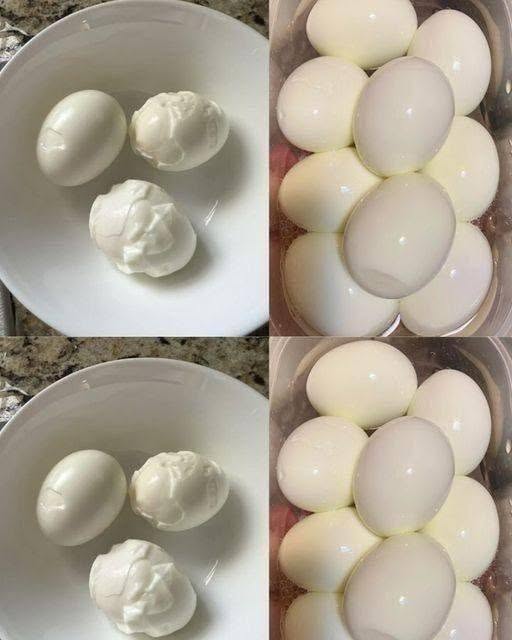
Struggling with hard-boiled eggs that stick to the shell? Discover simple cooking and cooling tricks that make eggs easier to peel, smooth, and perfectly ready for salads, sandwiches, and snacks.
The Secret to Perfectly Peeled Hard-Boiled Eggs
Few things are more frustrating than making a batch of hard-boiled eggs only to discover that the shells refuse to come off cleanly. Instead of getting a smooth, beautiful egg, you end up pulling away chunks of the white along with the shell.
The good news is that perfectly peeled hard-boiled eggs don’t require a complicated trick. A few simple changes to the cooking and cooling process can make a noticeable difference.
Start With the Right Eggs
One of the simplest secrets is surprisingly easy to overlook: the age of the eggs matters.
Very fresh eggs tend to be harder to peel because the egg white can cling more tightly to the inner membrane. Eggs that have been in the refrigerator for several days are often easier to peel.
If you’re planning to make deviled eggs, egg salad, or another recipe where appearance matters, avoid using eggs that were just purchased or laid if you have older eggs available.
Don’t Put Cold Eggs Straight Into Hot Water
Place your eggs carefully into a pot and add enough water to cover them.
For more consistent cooking, bring the water to a boil and then carefully lower the eggs into the hot water using a spoon or slotted utensil.
This approach can also make the cooking time easier to control.
Once the eggs are cooking, maintain a gentle boil rather than allowing the water to violently bubble.
Cook Them Long Enough
For firm hard-boiled eggs, cooking time is important.
After the eggs are added to boiling water, cook them for roughly 10–12 minutes, depending on their size and your preferred texture.
When the cooking time is finished, don’t leave them sitting in the hot water. That’s when the next important step comes in.
The Secret: An Ice Bath
Immediately transfer the cooked eggs into a bowl filled with ice and cold water.
Let them sit for approximately 5–10 minutes.
This rapid cooling does several things. It stops the cooking process, helps prevent an overly dry or rubbery texture, and makes the eggs easier to handle.
The sudden temperature change can also help separate the egg from its shell and membrane.
How to Peel Eggs Without Destroying Them
Once the eggs have cooled, gently tap one against a hard surface.
Instead of making only one crack, create small cracks across the entire shell.
Then roll the egg gently under your palm to loosen the shell.
Start peeling from the larger, rounded end of the egg. There is often a small air pocket there, which can give you a convenient place to get underneath the membrane.
If the shell is stubborn, peel the egg under a thin stream of cool water. Water can work its way underneath the shell and membrane, making stubborn pieces easier to remove.
Don’t Rush the Peeling Process
Trying to remove a large piece of shell by force can take part of the egg white with it.
Instead, gently work your fingers underneath the membrane and lift the shell away in small sections.
If you’ve cooked several eggs at once, place the peeled eggs in a bowl of cold water as you work. This keeps them cool and helps wash away tiny pieces of shell.
The Best Method at a Glance
For consistently easy-to-peel hard-boiled eggs, remember this simple routine:
- Use eggs that aren’t extremely fresh.
- Bring water to a boil.
- Carefully add the eggs.
- Cook for about 10–12 minutes.
- Immediately transfer them to an ice bath.
- Cool for 5–10 minutes.
- Crack the shell all over.
- Begin peeling from the larger end.
- Use cool running water if necessary.
A Few Mistakes to Avoid
Even a good method can fail if a few common mistakes are made.
Don’t overcook the eggs. Excessive cooking can produce a dry, rubbery white and a greenish ring around the yolk.
Don’t skip the cooling step. Leaving eggs in hot water after cooking allows them to continue cooking.
Don’t peel aggressively. Patience usually produces a much cleaner result.
Don’t assume every egg will peel identically. Egg age, storage, cooking method and individual egg characteristics can all influence how easily the shell separates.
How to Store Hard-Boiled Eggs
If you’re preparing eggs ahead of time, keep them refrigerated in a covered container.
For best quality, keep the shells on until you’re ready to use the eggs whenever possible. Peeled eggs can also be refrigerated, but they should be stored properly in a sealed container and used promptly.
Hard-boiled eggs are perfect for quick breakfasts, salads, sandwiches, lunch boxes and snacks.
Final Thoughts
Perfectly peeled hard-boiled eggs aren’t really about one magical ingredient. The biggest difference comes from using suitable eggs, controlling the cooking time and cooling them quickly in an ice bath.
Once you’ve mastered those steps, peeling a batch of eggs becomes much easier—and you can finally get those smooth, attractive egg whites without losing half the egg to the shell.