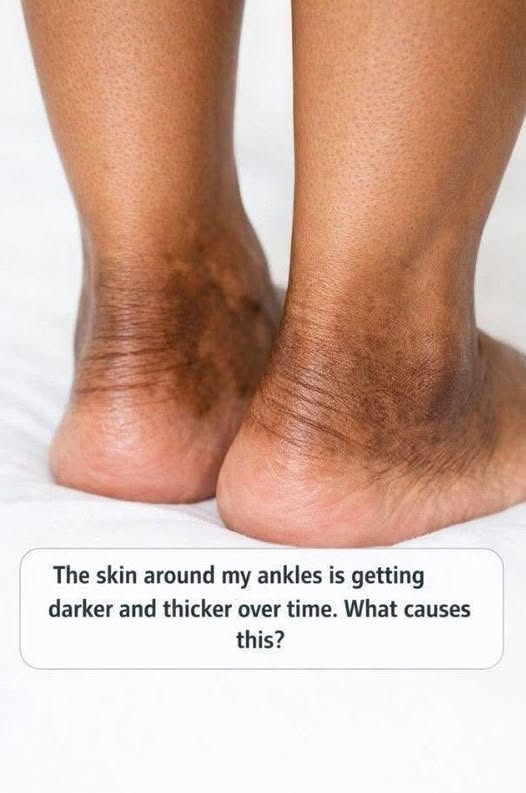
Dark, thick skin around the ankles can have several causes, including poor circulation, swelling, eczema, irritation, fungal infections, and other skin conditions. Learn what may be causing it and when to see a doctor.
Have you noticed that the skin around your ankles is gradually becoming darker, rougher, or thicker than the surrounding skin?
This change is relatively common, but it should not always be dismissed as simple tanning or dryness. The skin around the ankles can become darker and thicker for several different reasons, ranging from repeated irritation to circulation problems.
Understanding the pattern of the discoloration—and whether there are other symptoms such as swelling, itching, pain, or scaling—can provide important clues about the underlying cause.
1. Poor Venous Circulation
One of the more important causes of darkening around the ankles is chronic venous insufficiency.
Normally, veins in the legs carry blood back toward the heart. Small valves inside the veins help prevent blood from flowing backward. When these valves do not work efficiently, blood can pool in the lower legs and ankles.
Over time, this can cause:
- Brown, reddish, or dark pigmentation around the ankles
- Swelling, particularly toward the end of the day
- A feeling of heaviness or aching in the legs
- Itchy or dry skin
- Thickening or hardening of the skin
- Varicose or prominent veins
The discoloration may become more noticeable around the lower legs and ankles as the condition progresses.
2. Repeated Swelling of the Ankles
Frequent swelling can also contribute to changes in skin color and texture.
When fluid repeatedly accumulates in the tissues around the ankles, the skin can become stretched and irritated. Persistent swelling may eventually contribute to inflammation and pigmentation.
Swelling can have many causes, including prolonged standing or sitting, certain medications, vein problems, and other medical conditions.
If one ankle suddenly becomes much more swollen than the other—especially if it is painful, warm, or red—it should be medically assessed promptly.
3. Eczema and Chronic Skin Irritation
Another possibility is eczema or chronic dermatitis.
Repeated inflammation can stimulate increased production of melanin, causing the affected skin to become darker. Constant scratching or rubbing can also make the skin thicker. This process is sometimes called lichenification.
You may notice:
- Itching
- Dryness
- Scaling
- Rough or thickened skin
- Darker pigmentation
- Small cracks
Footwear, socks, soaps, detergents, sweating, and repeated friction can sometimes aggravate the area.
4. Fungal Infection
A fungal infection can cause discoloration around the feet and ankles, particularly when there is also itching or scaling.
Typical signs may include:
- Itching
- Peeling or scaling
- Cracked skin
- Redness
- Burning
- A spreading rash
Fungal infections often affect the spaces between the toes, but the surrounding skin can also become irritated.
Using steroid creams without knowing the cause can sometimes make fungal infections worse or harder to recognize.
5. Friction From Shoes or Socks
Repeated rubbing from shoes, sandals, tight socks, or ankle straps can cause chronic irritation.
When the skin is repeatedly irritated, it may respond by becoming:
- Thicker
- Rougher
- Darker
This is especially likely if the discoloration appears exactly where footwear repeatedly touches the skin.
Changing to comfortable footwear and reducing friction may help prevent further irritation.
6. Post-Inflammatory Hyperpigmentation
Sometimes the original skin problem has already disappeared, but the dark mark remains.
For example, an old rash, insect bite, injury, scratch, eczema flare, or infection can leave behind post-inflammatory hyperpigmentation.
The skin may look completely healed but remain darker for weeks or months.
This type of pigmentation can gradually fade, although the process can be slow.
7. Dry Skin and Excessive Scratching
Very dry skin can become rough and itchy. Repeated scratching then causes further irritation and thickening.
This can create a cycle:
Dryness → itching → scratching → inflammation → thicker skin → darker pigmentation.
Using a gentle, fragrance-free moisturizer regularly can help break this cycle when dryness is the main problem.
8. Could It Be Insulin Resistance?
Insulin resistance is another condition associated with darker, thicker skin, particularly in areas such as the neck, armpits, and groin.
The classic appearance is called acanthosis nigricans.
Although ankle discoloration alone is not the typical presentation, widespread or unusual darkening—especially when accompanied by similar changes elsewhere—may warrant discussion with a healthcare professional.
Why Does the Skin Become Thick?
Darkening and thickening often happen for different but related reasons.
Long-term inflammation, swelling, scratching, and friction can stimulate changes in the skin’s structure. As the irritation continues, the skin may become tougher, rougher, and more pronounced.
This is why simply trying to lighten the pigmentation may not solve the underlying problem.
The cause needs to be addressed first.
What Can You Do at Home?
If the area is simply dry or irritated and there are no concerning symptoms, some basic skin-care measures may help:
Keep the Skin Moisturized
Use a gentle, fragrance-free moisturizer regularly, particularly after bathing.
Avoid Scrubbing
Do not aggressively scrub the dark area with a pumice stone, brush, lemon, baking soda, or harsh exfoliating products. This can increase irritation and pigmentation.
Reduce Friction
Check whether shoes, sandals, socks, or ankle straps repeatedly rub against the affected area.
Avoid Random Steroid or Whitening Creams
Strong steroid combinations and unregulated whitening products can cause skin thinning, irritation, worsening infections, or other complications when used incorrectly.
Pay Attention to Swelling
Notice whether your ankles become more swollen after standing or sitting for long periods and whether the swelling improves after resting.
When Should You See a Doctor?
Make an appointment with a doctor or dermatologist if the skin is progressively becoming darker or thicker, particularly if you don’t know why it is happening.
Medical evaluation is especially important if you also have:
- Persistent ankle or leg swelling
- Varicose veins
- Leg aching or heaviness
- Persistent itching
- Pain or tenderness
- Warmth or redness
- Skin ulcers or wounds
- Cracks that do not heal
- Rapidly changing discoloration
- One-sided swelling or sudden changes
A healthcare professional can examine the skin and, when necessary, evaluate circulation or look for other underlying conditions.
The Bottom Line
Dark, thick skin around the ankles is not always simply a cosmetic issue. Chronic irritation, eczema, fungal infections, repeated swelling, and problems with the veins of the legs are among the possible causes.
The appearance of the skin alone cannot reliably determine the cause. The pattern, associated symptoms, duration, and whether there is swelling or circulation trouble all matter.
If the change is gradually worsening rather than improving, it is worth having it examined instead of repeatedly trying home remedies or skin-lightening products.