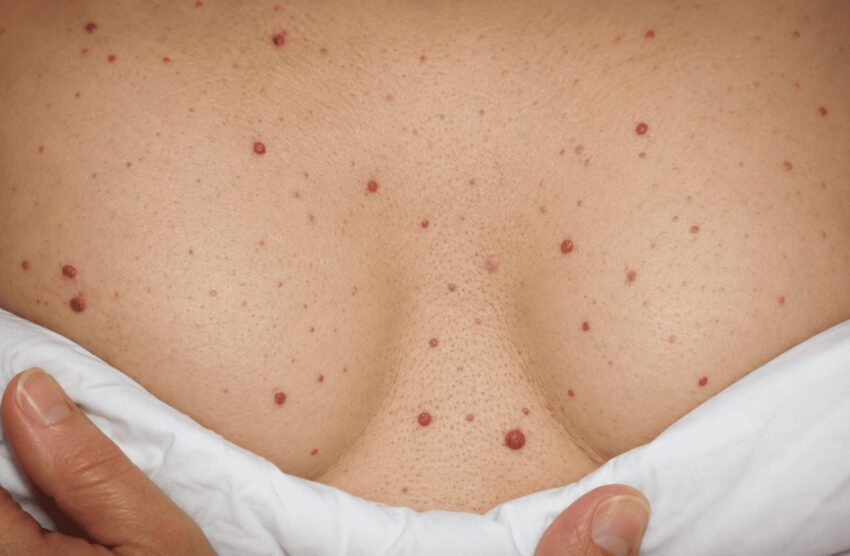
Wondering what those mysterious red spots on your skin mean? Learn about common causes, harmless cherry angiomas, warning signs, and when you should see a doctor.
Have you ever noticed tiny red spots appearing on your arms, chest, back, or legs and wondered, “Where did those come from?” You’re not alone.
Red spots on the skin are extremely common, and most are harmless. However, the appearance of a red spot can have many different causes—from a harmless collection of tiny blood vessels to irritation, allergies, infection, or bleeding under the skin.
The important thing is learning how to recognize the difference.
1. Cherry Angiomas: A Common Cause
One of the most common explanations for small, bright-red spots is a cherry angioma.
Cherry angiomas are small growths made up of clusters of blood vessels near the surface of the skin. They can appear anywhere, although they are especially common on the torso, arms, and shoulders.
They often:
- Look bright red, reddish-purple, or dark red
- Are round or oval
- Range from tiny dots to several millimeters across
- May become more noticeable with age
- Usually don’t hurt or itch
Cherry angiomas are generally benign and don’t usually require treatment.
They can sometimes bleed if scratched, shaved, or irritated by clothing.
2. Petechiae Are Different
Not every tiny red dot is a cherry angioma.
Petechiae are tiny spots caused by small amounts of bleeding beneath the skin. Unlike many rashes, they typically don’t fade when you press on them.
Petechiae can occur after minor physical strain, but they can also be associated with infections, certain medications, platelet problems, or other medical conditions.
If numerous tiny red or purple spots suddenly appear—particularly together with fever, unusual bruising, weakness, or feeling very unwell—medical evaluation is important.
3. Allergies and Skin Irritation
Red spots can also develop when the skin reacts to something.
Possible triggers include:
- New soaps or detergents
- Cosmetics or skincare products
- Certain medications
- Insect bites
- Plants
- Foods or other allergens
Allergic rashes may be itchy, raised, swollen, or spread to other areas.
If a rash is accompanied by difficulty breathing, swelling of the lips or tongue, faintness, or severe throat tightness, seek emergency medical care immediately.
4. Heat Rash Can Cause Tiny Red Bumps
Hot, humid weather and sweating can block sweat ducts and produce small red bumps known as heat rash.
It commonly develops in areas where sweat becomes trapped, such as the neck, upper chest, back, or skin folds.
Keeping the affected area cool and dry can often help.
5. When a Red Spot Deserves Attention
A single stable red spot that has been present for a long time is often less concerning than a lesion that is rapidly changing.
Make an appointment with a healthcare professional if a spot:
- Grows quickly
- Changes significantly in color or shape
- Repeatedly bleeds
- Develops an ulcer or persistent crust
- Becomes painful without an obvious reason
- Looks significantly different from your other skin spots
- Appears suddenly in large numbers
A dermatologist can examine suspicious lesions and determine whether further testing is necessary.
Don’t Automatically Blame a Vitamin Deficiency
You may see claims online that unexplained red spots automatically mean you are deficient in a particular vitamin.
That’s not necessarily true.
Skin changes can have many causes, and taking supplements without knowing the cause may not solve the problem. If your doctor suspects a nutritional deficiency, appropriate blood tests can help determine whether supplementation is actually needed.
What You Should Do
If you’ve discovered a new red spot, don’t panic. Take a clear photo and monitor it for changes in size, shape, color, or symptoms.
Most red spots are not dangerous, but persistent or changing skin lesions deserve professional evaluation rather than diagnosis from a photograph or social-media post.
The Bottom Line
Those mysterious red dots on your skin can come from many different causes. Cherry angiomas are a common and usually harmless explanation, while petechiae, allergic reactions, infections, and other conditions can require a different approach.
The key isn’t simply asking, “What vitamin am I missing?” It’s looking at the spot’s appearance, how long it has been there, whether it changes, and whether you have other symptoms.
When in doubt—especially if a spot is new, changing, bleeding, or accompanied by other symptoms—have it checked by a healthcare professional.