Common Skin Spots That May Look Concerning but Are Often Benign
Meta Description: Learn about common non-cancerous skin spots, including freckles, age spots, seborrheic keratoses, and cherry angiomas, and discover when a changing skin spot should be checked by a dermatologist.
Skin spots can sometimes look alarming, especially when they are dark, raised, red, or appear suddenly. However, many types of skin marks are common and harmless. Their appearance can vary depending on age, sun exposure, genetics, and previous skin irritation.
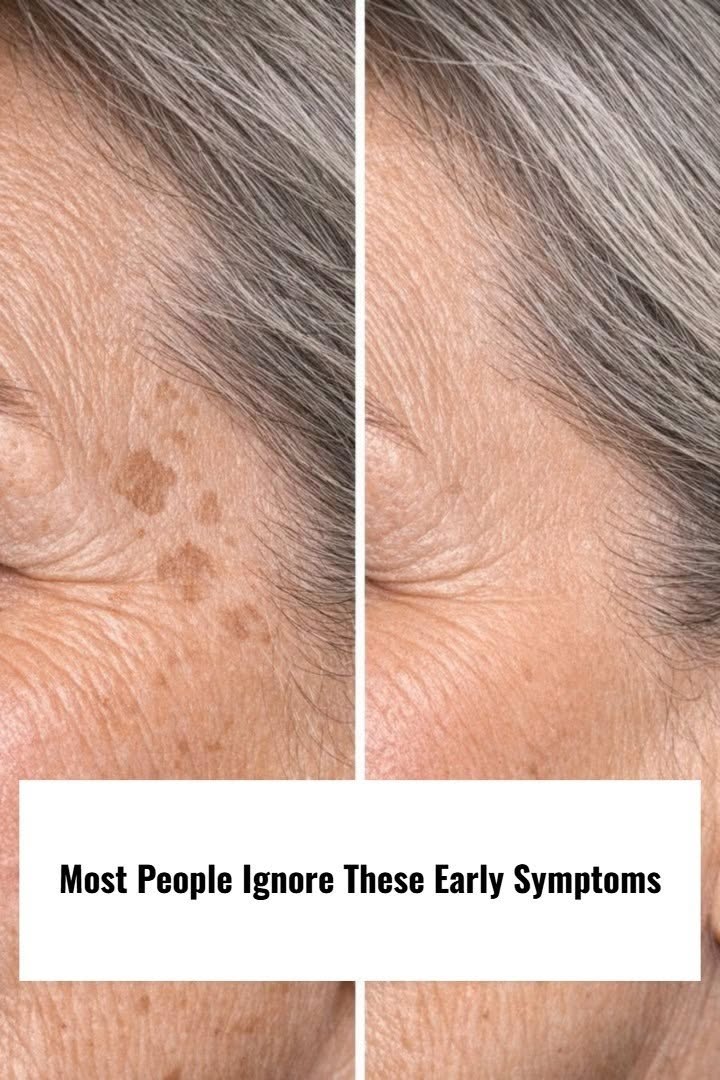
The spots shown in an image may resemble several common, non-cancerous skin changes, but a photograph alone cannot reliably diagnose a skin lesion or rule out skin cancer. A dermatologist should examine any suspicious or changing spot.
1. Freckles
Freckles are small, flat brown or tan spots that commonly develop after exposure to sunlight. They are particularly common on areas that receive frequent sun exposure, such as the face, shoulders, arms, and upper chest.
Freckles may become darker during sunny months and fade during periods of reduced sun exposure. They are usually harmless.
2. Age Spots
Age spots, also called solar lentigines, are flat brown, grayish, or tan patches associated with cumulative sun exposure. They become increasingly common with age and are frequently seen on the hands, face, shoulders, and arms.
Unlike freckles, age spots often remain visible throughout the year.
3. Seborrheic Keratoses
Seborrheic keratoses are very common benign skin growths. They can appear brown, black, tan, or even slightly waxy and may have a raised or “stuck-on” appearance.
They can occur on the chest, back, face, scalp, and other areas of the body. Although they are generally harmless, some can look similar to other skin lesions, so an unusual or newly changing growth should be professionally evaluated.
4. Cherry Angiomas
Cherry angiomas are small collections of blood vessels that commonly appear as bright-red or dark-red spots. They may be flat or slightly raised.
They are usually harmless and become more common with age. Occasionally, they can bleed if scratched or irritated.
5. Post-Inflammatory Dark Spots
A dark mark can remain after acne, an insect bite, a cut, rash, or other skin irritation has healed. This is known as post-inflammatory hyperpigmentation.
These marks are not necessarily moles or tumors and may gradually become lighter over time.
When Should You Have a Skin Spot Checked?
Even though many skin spots are harmless, it is important to pay attention to changes. Consider seeing a dermatologist if a spot:
- Changes noticeably in size, shape, or color
- Develops an irregular or uneven border
- Has several different colors
- Starts bleeding without an obvious reason
- Repeatedly crusts or becomes an open sore
- Itches or hurts persistently
- Grows rapidly
- Looks significantly different from your other spots
A useful reminder is the ABCDE approach: Asymmetry, Border irregularity, Color variation, Diameter, and Evolution (change over time).
Don’t Try to Diagnose a Spot From a Photo Alone
Online images can be useful for general education, but they cannot replace an examination by a qualified healthcare professional. Different skin conditions can look remarkably similar, and sometimes a dermatologist needs dermoscopy or another examination to determine what a lesion represents.
If a spot is new or changing, particularly if it is dark, irregular, bleeding, or rapidly growing, professional evaluation is the safest approach.
Final Thoughts
Most people develop various freckles, pigmentation marks, angiomas, and other benign skin changes during their lifetime. Seeing a new spot does not automatically mean skin cancer.
At the same time, it is better not to dismiss a suspicious lesion simply because similar spots are usually harmless. Keep an eye on changes and seek professional advice when something looks unusual or continues to evolve.