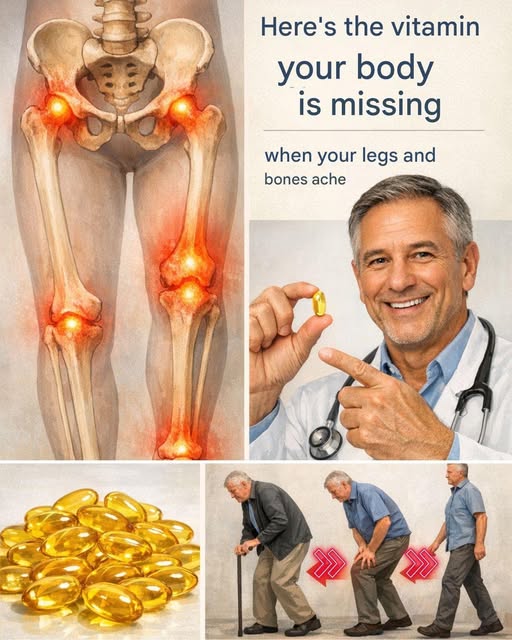
Aching legs and bones can have many causes. Learn which vitamin deficiencies are commonly associated with bone and muscle discomfort and what signs to watch for.
This Is the Vitamin Your Body May Be Missing When Your Legs and Bones Ache
When your legs, muscles, or bones seem to ache for no obvious reason, it can be tempting to assume you simply need more rest. But persistent aches can sometimes be associated with nutritional deficiencies, among many other possible causes.
One nutrient that often gets attention in connection with bone health and muscle discomfort is vitamin D.
☀️ Vitamin D: An Important Nutrient for Bones and Muscles
Vitamin D helps your body absorb calcium, which is essential for maintaining strong bones. It also plays an important role in normal muscle function.
When vitamin D levels are too low, some people may experience symptoms such as:
- Muscle aches or weakness
- General body discomfort
- Bone pain or tenderness
- Fatigue
- Difficulty climbing stairs or getting up from a chair
Severe or prolonged deficiency can contribute to weakened bones and conditions such as osteomalacia in adults.
Why Can Vitamin D Become Low?
Vitamin D comes from several sources, including sunlight and certain foods. Levels can become low when someone gets limited sun exposure or doesn’t consume enough vitamin-D-rich foods.
Foods that can provide vitamin D include fatty fish, egg yolks, and fortified milk or other fortified foods.
However, aching legs or bones doesn’t automatically mean you have a vitamin D deficiency. Similar symptoms can occur with muscle overuse, injuries, arthritis, anemia, electrolyte problems, thyroid disorders, and other conditions.
Should You Take a Vitamin D Supplement?
It’s better not to assume you need a high-dose supplement based only on aches.
If the discomfort is persistent, severe, or unexplained, a healthcare professional can evaluate your symptoms and may recommend a 25-hydroxyvitamin D blood test if appropriate.
Taking excessive amounts of vitamin D can also be harmful, so more isn’t necessarily better.
When to Get Medical Help
Seek medical attention promptly if leg pain is sudden or severe, follows an injury, is accompanied by significant swelling or redness, or occurs with symptoms such as chest pain or difficulty breathing.
Bottom line: Vitamin D is important for healthy bones and muscles, and deficiency can contribute to aches and weakness—but leg or bone pain has many possible causes. A proper evaluation is the safest way to determine what’s behind persistent symptoms.