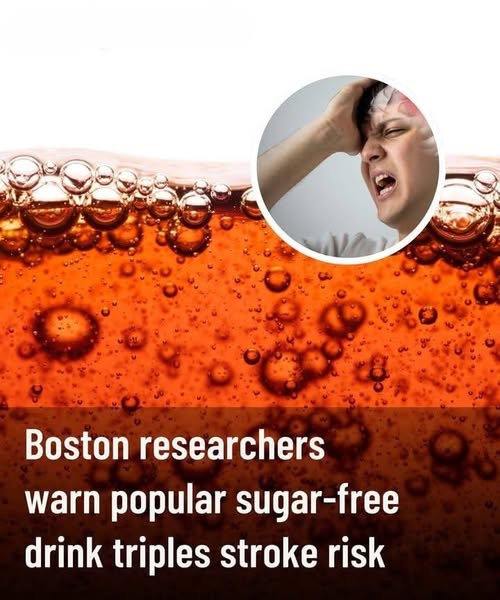
Some studies have linked frequent consumption of artificially sweetened, sugar-free drinks with a higher risk of stroke. Learn what the research actually found, why the “triple your risk” claim needs context, and what healthier drink choices may help.
This Sugar-Free Drink Can Triple Your Stroke Risk
“Sugar-free” often sounds like the healthier choice. After all, removing added sugar can reduce calories and help limit sugar intake. But some research has raised questions about the long-term health effects of artificially sweetened beverages, including diet sodas and other low-calorie drinks.
One widely reported study found that people who consumed an artificially sweetened soft drink every day had an approximately threefold higher relative risk of ischemic stroke compared with people who consumed them less than once a week. However, that does not mean that drinking one sugar-free beverage automatically causes a stroke or that your personal risk literally triples.
What Did the Study Actually Find?
The study, published in Stroke in 2017, followed participants from the Framingham Heart Study. Among the stroke analysis group, researchers examined 2,888 adults over age 45 and recorded 97 incident strokes during follow-up.
When researchers compared people who consumed artificially sweetened soft drinks daily with those who consumed them less than once a week, the adjusted hazard ratio for ischemic stroke was 2.96.
This is where the “triple your stroke risk” headline comes from.
But there is an important qualification: the research was observational. It found an association, not proof that artificial sweeteners caused the strokes. The researchers themselves noted that the findings could be influenced by other factors and that further research was needed.
What Counts as a Sugar-Free Drink?
Sugar-free or artificially sweetened beverages can include:
- Diet soda
- Zero-sugar soft drinks
- Some low-calorie flavored drinks
- Certain artificially sweetened powdered beverages
- Some “light” or “diet” beverages
These products may contain high-intensity sweeteners instead of ordinary added sugar.
The American Heart Association notes that low-calorie sweetened beverages include drinks marketed as “diet” or “sugar-free,” but also emphasizes that observational research has limitations.
Does Sugar-Free Soda Cause Stroke?
It would be misleading to say that it does.
The strongest wording supported by the study is that higher consumption was associated with a higher risk of ischemic stroke.
People who regularly choose diet beverages may already differ from people who rarely drink them in ways that affect health—for example, weight, existing metabolic problems, diet, or other lifestyle factors. Researchers attempt to account for some of these differences statistically, but observational studies cannot eliminate every possible source of confounding.
Other research has also reported associations between artificially sweetened beverage consumption and cardiovascular outcomes. For example, a large Women’s Health Initiative analysis found higher stroke risk among women consuming the highest amounts of artificially sweetened beverages, although the researchers likewise described the findings as associations requiring further investigation.
What About Regular Sugary Drinks?
Regular sugary beverages aren’t necessarily a better long-term choice simply because some studies have raised questions about artificial sweeteners.
Research has also associated higher consumption of sugar-sweetened beverages with cardiovascular risk. A large Swedish cohort study found that higher sweetened-beverage consumption was associated with increased risk of total stroke and cerebral infarction.
The American Heart Association also recommends limiting added sugar and suggests choosing water or unsweetened alternatives instead of sugar-sweetened beverages.
So What Should You Drink?
For everyday hydration, plain water is a simple choice.
Other options can include:
- Unsweetened sparkling water
- Plain or unsweetened tea
- Unsweetened coffee
- Water infused with fruit or herbs
- Milk or an appropriate unsweetened milk alternative
If you enjoy a diet or sugar-free drink occasionally, the available evidence does not establish that a single drink will cause a stroke.
The bigger picture is your overall dietary pattern and cardiovascular health, including blood pressure, cholesterol, smoking status, physical activity, diabetes risk, and diet.
The Bottom Line
The claim that a sugar-free drink “can triple your stroke risk” comes from a real observational study, but the headline leaves out important context.
Daily artificially sweetened soft-drink consumption was associated with nearly three times the risk of ischemic stroke in one study, but researchers did not prove that artificial sweeteners caused the strokes.
Rather than fearing one particular ingredient, a sensible approach is to make water and other unsweetened beverages your usual choices and keep both sugary and artificially sweetened drinks moderate.