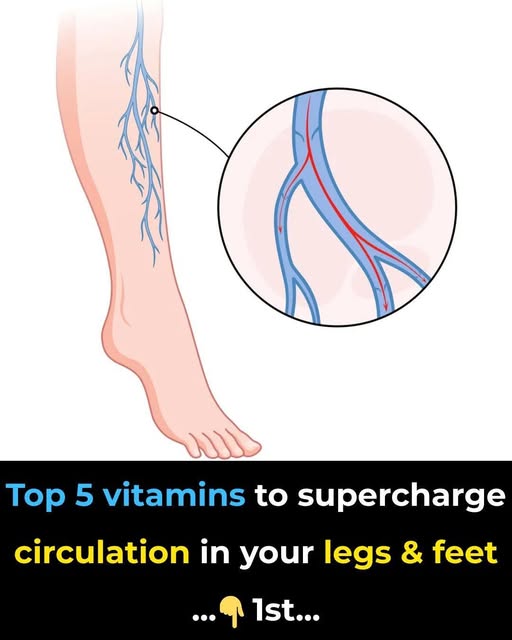
Learn how vitamins B12, B6, folate, C, and D support healthy nerves, blood vessels, and overall circulation—and why correcting a deficiency may matter more than taking high-dose supplements.
Poor circulation in the legs and feet can have many causes, including peripheral artery disease (PAD), diabetes, smoking, high cholesterol, and other vascular conditions. PAD occurs when arteries supplying the legs become narrowed or blocked. (www.heart.org)
Vitamins are important for normal blood vessels, nerves, and overall health, but no vitamin supplement has been proven to “clear blocked arteries” or directly treat PAD. Current PAD guidelines specifically find no cardiovascular benefit from routine B-complex or vitamin D supplementation for people with PAD. (AHA Journals)
1. Vitamin B12
Vitamin B12 is essential for healthy red blood cells and nerves. A deficiency can contribute to numbness, tingling, weakness, and other neurological symptoms, which can sometimes be mistaken for poor circulation.
Good food sources include eggs, fish, meat, dairy products, and fortified foods.
If you have persistent tingling or numbness in your feet, ask your healthcare professional whether checking your B12 level would be appropriate.
2. Folate (Vitamin B9)
Folate helps the body make DNA and healthy red blood cells. It is found naturally in leafy green vegetables, beans, peas, oranges, and other foods.
Although B vitamins can affect homocysteine levels, taking B-complex supplements has not been shown to improve cardiovascular outcomes in people with PAD. (PubMed Central (PMC))
3. Vitamin B6
Vitamin B6 participates in numerous metabolic processes, including normal nervous-system function.
Foods containing B6 include poultry, fish, potatoes, chickpeas, bananas, and fortified cereals.
Important: More is not better. Excessive B6 supplementation can itself cause nerve damage, so avoid taking high-dose B6 unless recommended by a healthcare professional.
4. Vitamin C
Vitamin C is an antioxidant and is necessary for collagen production, which helps maintain connective tissues and blood-vessel structures.
Citrus fruits, strawberries, tomatoes, bell peppers, broccoli, and other fruits and vegetables are good sources.
Rather than relying on large-dose supplements, getting vitamin C from a varied diet is generally preferable.
5. Vitamin D
Vitamin D is important for bones, muscles, and many other body functions. Some observational studies have found associations between low vitamin D levels and PAD, but the evidence is inconsistent. Importantly, clinical guidelines do not recommend vitamin D supplementation specifically to prevent cardiovascular events in people with PAD. (AHA Journals)
If you suspect a vitamin D deficiency, a blood test and individualized medical advice are more useful than automatically taking high doses.
What Actually Helps Leg Circulation?
If reduced circulation is caused by PAD, treating the underlying cardiovascular risk factors is much more important than taking a vitamin supplement. Evidence-based management includes regular physical activity, cholesterol management, blood-pressure control, diabetes management, and smoking cessation when applicable. (professional.heart.org)
Don’t Ignore These Warning Signs
Talk to a healthcare professional if you develop:
- Leg pain or cramping when walking that improves with rest
- Persistent numbness or weakness
- Feet that are unusually cold
- Slow-healing sores on the feet or legs
- Skin color changes
- Unexplained pain in the feet or legs
PAD can be serious and is associated with increased risks of heart attack, stroke, and limb complications. (www.heart.org)
Bottom line: Vitamins can support normal body functions, especially when a deficiency exists, but they shouldn’t be presented as a cure for poor circulation or blocked arteries. If someone has genuine circulation problems in the legs or feet, finding and treating the underlying cause is far more important than simply taking supplements.