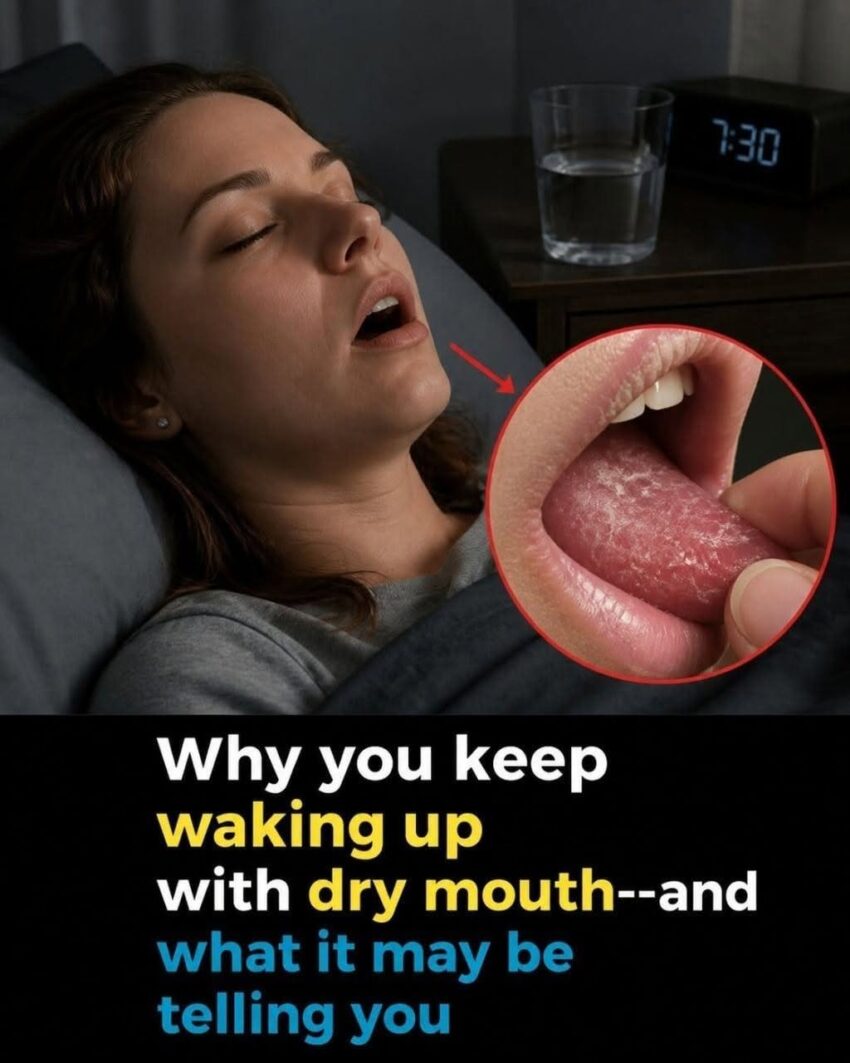
Waking up with a dry mouth is common, but frequent morning dryness can sometimes be linked to dehydration, mouth breathing, medications, sleep problems, or other health conditions.
Waking up with a dry, sticky mouth every morning can be uncomfortable. You may notice that your tongue feels rough, your throat is dry, or you immediately need a glass of water after getting out of bed.
Occasional dry mouth is usually nothing to worry about. But if it happens regularly, your body may be giving you a clue about your hydration, breathing habits, medications, oral health, or sleep.
What Causes Dry Mouth at Night?
Dry mouth, medically known as xerostomia, happens when your mouth doesn’t produce enough saliva.
Saliva does much more than keep your mouth moist. It helps wash away food particles, protects teeth, makes swallowing easier, and supports the normal environment inside your mouth.
During sleep, saliva production naturally decreases. If something else is reducing saliva or causing you to breathe through your mouth, the dryness can become much more noticeable.
1. You May Not Be Drinking Enough Fluids
Mild dehydration can contribute to a dry mouth.
This can happen after a hot day, exercise, sweating, vomiting, diarrhea, or simply not drinking enough fluids throughout the day.
Instead of drinking a huge amount of water immediately before bed, aim to stay adequately hydrated throughout the day.
2. You May Be Sleeping With Your Mouth Open
One of the most common reasons for waking up with a dry mouth is mouth breathing.
If your nose is congested or blocked, you may naturally start breathing through your mouth while sleeping. Air passing continuously over the mouth can leave it feeling extremely dry by morning.
You may also notice:
- A dry throat
- Morning bad breath
- Snoring
- A sticky tongue
- Sleeping with your mouth open
If nasal congestion happens frequently, addressing the underlying cause may help.
3. Snoring or Sleep Apnea May Be Involved
Persistent snoring and mouth breathing can sometimes occur alongside obstructive sleep apnea, a condition in which breathing repeatedly becomes restricted during sleep.
Dry mouth alone does not mean that you have sleep apnea.
However, if you also have loud habitual snoring, pauses in breathing noticed by another person, gasping during sleep, morning headaches, or significant daytime sleepiness, discuss these symptoms with a healthcare professional.
4. Certain Medicines Can Cause Dry Mouth
A surprisingly large number of medications can reduce saliva production or contribute to dry mouth.
These can include some medicines used for allergies, depression, blood pressure, pain, and other conditions.
If your dry mouth began after starting a new medication, don’t stop taking it on your own. Ask your doctor or pharmacist whether the medicine could be contributing to the problem.
5. Alcohol and Tobacco Can Make It Worse
Alcohol can contribute to dehydration, while tobacco use can affect the mouth in several ways.
Using these substances, particularly in the evening, may make morning mouth dryness more noticeable.
Reducing or avoiding them can benefit overall oral health as well.
6. Your Bedroom Environment May Be Dry
A dry indoor environment can make mouth and throat dryness more noticeable, particularly if you already breathe through your mouth.
Heating or air conditioning can reduce indoor humidity.
If your room feels unusually dry, maintaining comfortable humidity and keeping the room well ventilated may help.
7. Stress and Anxiety Can Affect Your Mouth
Stress can sometimes alter normal saliva production.
People who are anxious may also breathe differently, clench their jaw, or breathe through their mouth more often.
If you notice that your mouth becomes particularly dry during stressful periods, relaxation techniques and addressing the underlying stress may help.
Can Dry Mouth Affect Your Teeth?
Yes.
Saliva helps protect the teeth and mouth. When there isn’t enough saliva, bacteria and food particles may remain in the mouth more easily.
Persistent dry mouth can increase the risk of:
- Tooth decay
- Gum problems
- Bad breath
- Mouth irritation
- Difficulty swallowing or speaking
That’s one reason chronic dry mouth shouldn’t simply be ignored.
Simple Ways to Reduce Morning Dryness
Try these practical habits:
Drink Fluids Throughout the Day
Don’t wait until bedtime to catch up on hydration. Regular fluid intake during the day is generally more comfortable and practical.
Treat Nasal Congestion
If a blocked nose is forcing you to breathe through your mouth, addressing the congestion may reduce nighttime dryness.
Avoid using medicated nasal sprays for prolonged periods unless advised by a healthcare professional.
Maintain Good Oral Hygiene
Brush your teeth twice daily with fluoride toothpaste and clean between your teeth regularly.
Regular dental checkups are particularly important if you frequently experience dry mouth.
Limit Excess Caffeine and Alcohol
Large amounts of caffeine or alcohol may make dryness worse for some people.
Consider Sugar-Free Gum During the Day
Chewing sugar-free gum can stimulate saliva production. Choose products containing xylitol if appropriate for you, but remember that xylitol can be dangerous to dogs if accidentally consumed.
Keep Water Nearby
If you wake up thirsty, having water available can make it easier to relieve the immediate discomfort.
When Should You Talk to a Doctor?
Occasional morning dryness is usually not concerning.
However, talk with a healthcare professional if dry mouth is persistent, severe, or accompanied by other symptoms.
You should particularly seek medical advice if you experience:
- Difficulty swallowing
- Persistent mouth sores
- Significant dental problems
- Extreme thirst and frequent urination
- Unexplained weight changes
- Persistent fatigue
- Very dry eyes along with dry mouth
- Symptoms that began after starting a medication
Persistent dry mouth can sometimes be associated with medical conditions, so the underlying cause is more important than simply treating the dryness.
Don’t Assume Dry Mouth Means Diabetes
Frequent thirst and dry mouth can occur for many different reasons.
Diabetes can cause increased thirst and urination, but dry mouth by itself does not diagnose diabetes.
If you are experiencing persistent excessive thirst, frequent urination, unexplained weight loss, or other concerning symptoms, speak with a healthcare professional and ask whether blood-glucose testing is appropriate.
The Bottom Line
Waking up with a dry mouth doesn’t necessarily mean something is wrong with your body. Sleeping with your mouth open, nasal congestion, dehydration, medications, snoring, and a dry environment are all possible explanations.
The key is to pay attention to the pattern.
If the problem happens occasionally, simple measures such as staying hydrated, maintaining good oral hygiene, and addressing nasal congestion may help.
But if you wake up with a very dry mouth almost every morning—especially if you also snore loudly, experience breathing interruptions during sleep, have excessive thirst, or develop dental problems—it’s worth discussing the symptoms with a healthcare professional.