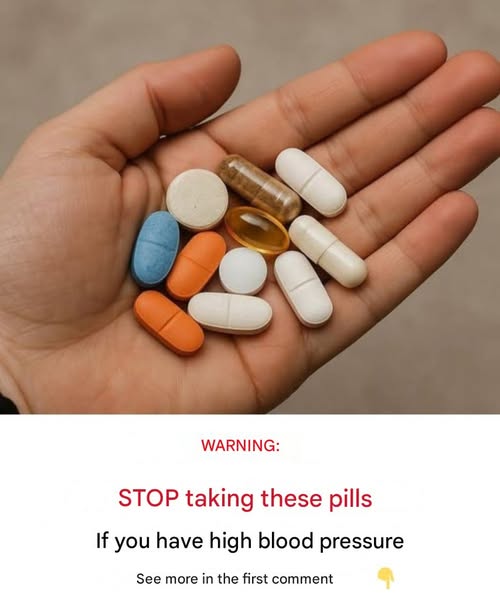
Some common pain relievers, decongestants, steroids, and other medicines can raise blood pressure or interfere with treatment. Learn which medications deserve caution if you have hypertension.
High blood pressure can be affected by more than just salt, stress, and lifestyle. Certain prescription medicines, over-the-counter drugs, supplements, and other substances can raise blood pressure or make it harder to control.
But there is one important warning before looking at the list: don’t suddenly stop a prescribed medication just because you have high blood pressure. Some medicines need to be tapered or replaced under medical supervision.
The American Heart Association specifically recommends talking with a healthcare professional before starting, stopping, or changing medicines that may affect blood pressure.
1. NSAID Painkillers
Some commonly used pain relievers belong to a group called nonsteroidal anti-inflammatory drugs (NSAIDs).
Examples include:
- Ibuprofen
- Naproxen
- Some other prescription-strength NSAIDs
These medicines can raise blood pressure in some people and may also reduce the effectiveness of certain blood-pressure medications. The American Heart Association identifies NSAIDs as an important medication category to discuss with a healthcare professional if you have hypertension.
This doesn’t mean everyone with high blood pressure must completely avoid every NSAID. Your doctor or pharmacist can help determine whether a particular medicine is appropriate for you.
2. Decongestants in Cold and Sinus Medicines
Cold medicines can be surprisingly important for people with hypertension.
Some nasal and oral decongestants can increase blood pressure because they constrict blood vessels.
The FDA advises people taking prescription medication for high blood pressure to consult a healthcare professional before using certain nasal decongestants.
Before buying a cold remedy, check the active ingredients rather than relying only on the brand name.
3. Corticosteroids
Corticosteroids such as prednisone can affect blood pressure.
These medications can be extremely useful for treating certain inflammatory and autoimmune conditions, so the answer isn’t simply to stop taking them.
If you’ve been prescribed a steroid and notice your blood pressure becoming difficult to control, contact the clinician who prescribed it rather than stopping it yourself.
The American Heart Association lists corticosteroids among medications that can potentially raise blood pressure.
4. Certain Antidepressants and Mental-Health Medicines
Some medications used for depression and other mental-health conditions can affect blood pressure.
The effect varies considerably depending on the particular medication, dose, and individual.
That’s why it is important to tell your doctor about your blood-pressure readings before changing psychiatric medication.
The AHA includes certain antidepressants and other mental-health medicines among substances that may affect blood-pressure control.
5. Oral Birth-Control Pills
Some hormonal contraceptives can contribute to increased blood pressure in certain people.
This doesn’t mean that everyone with hypertension needs to stop taking birth control.
Instead, discuss your blood-pressure readings and contraceptive options with your healthcare professional. The AHA specifically lists oral birth control among medications that should be discussed in the context of hypertension.
6. Some Immunosuppressant Medicines
Medications used to suppress the immune system—including drugs such as cyclosporine and tacrolimus—can contribute to elevated blood pressure.
These medicines are often prescribed for important medical reasons, so they should never be stopped without medical supervision.
If your blood pressure becomes difficult to control while taking one of these medicines, your healthcare team can determine whether the dose or treatment needs adjustment.
7. Certain Cancer Treatments
Some cancer medications, including certain angiogenesis or tyrosine-kinase inhibitors, can affect blood pressure.
For someone receiving cancer treatment, blood-pressure monitoring is particularly important.
Never discontinue cancer treatment because of a blood-pressure reading without speaking with the oncology team.
8. Stimulant Medicines
Certain stimulant medications, including amphetamine-type medicines, can increase blood pressure or heart rate.
Whether a particular stimulant is appropriate depends on why it was prescribed, the dose, and your cardiovascular health.
If you take a stimulant and have hypertension, make sure your prescribing clinician knows about your blood-pressure readings.
What About Acetaminophen?
People sometimes assume that every over-the-counter painkiller is equally safe for blood pressure.
That’s not necessarily the case.
The AHA has noted that some pain relievers may increase blood pressure and recommends discussing appropriate pain-relief choices with a healthcare professional or pharmacist.
Even alternatives such as acetaminophen should be used according to the label and your healthcare professional’s advice, particularly if you have other medical conditions or take multiple medications.
Don’t Forget Supplements and “Natural” Products
“Natural” doesn’t automatically mean blood-pressure friendly.
The AHA lists certain herbal supplements, including St. John’s wort, among substances that can affect blood pressure or interact with medicines.
Always tell your doctor or pharmacist about supplements, herbal products, energy products, and vitamins you’re taking.
The Biggest Mistake to Avoid
The headline “Stop taking these pills” can be dangerous if interpreted literally.
If a medicine is raising your blood pressure, the safest approach is usually:
- Don’t stop a prescribed medicine suddenly.
- Write down the medication’s name and dose.
- Check the active ingredients in over-the-counter products.
- Monitor your blood pressure as recommended.
- Ask your doctor or pharmacist whether the medicine can affect BP.
- Ask whether a safer alternative exists.
- Follow the replacement or tapering instructions you are given.
Medication decisions should be individualized because a medicine that is problematic for one person may be appropriate for another.
When Is Blood Pressure an Emergency?
According to the 2025 AHA/ACC guideline, severe hypertension is above 180/120 mm Hg. If a reading is this high, it deserves prompt medical evaluation, particularly if it remains high when rechecked.
If very high blood pressure occurs together with symptoms such as chest pain, severe shortness of breath, weakness or numbness, difficulty speaking, confusion, or vision changes, seek emergency medical care immediately.
The Bottom Line
Having high blood pressure doesn’t mean you need to avoid every medication.
However, NSAIDs, certain decongestants, corticosteroids, some antidepressants and mental-health medicines, hormonal contraceptives, immunosuppressants, stimulants, and certain cancer treatments can affect blood pressure.
The safest rule is simple: don’t stop prescribed medication on your own. Instead, review your complete medication and supplement list with your doctor or pharmacist and ask which products could be affecting your blood pressure.
A few minutes of medication review can sometimes uncover a surprisingly simple reason why blood pressure has become harder to control.