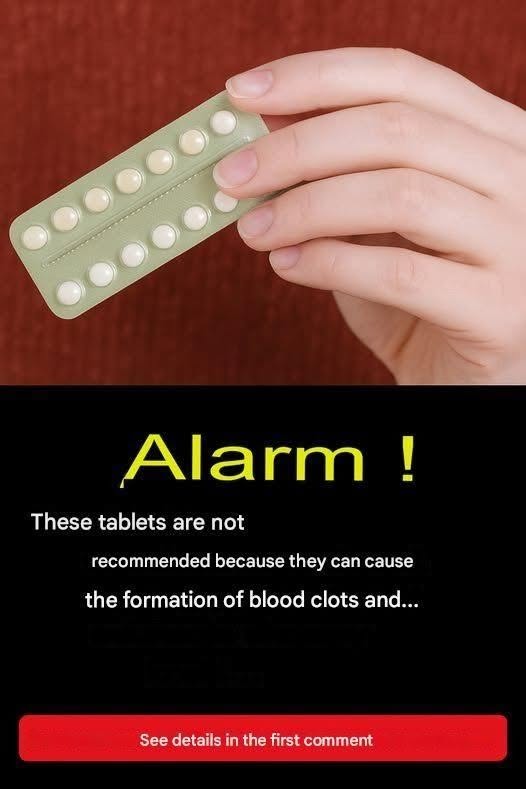
Learn which types of medicines may increase the risk of blood clots, who may be more vulnerable, and why you should never stop a prescribed medication without medical advice.
WARNING! These Tablets May Increase the Risk of Blood Clots — Here’s What You Should Know
Some medicines can increase the risk of developing blood clots in certain people. However, the risk depends on the specific medication, dose, personal health history, and other risk factors.
This is why it’s important not to stop taking a prescribed medicine simply because you’ve seen a warning online. Instead, speak with a doctor or pharmacist if you’re concerned.
1. Some Hormonal Contraceptive Pills
Certain birth-control tablets containing estrogen can increase the risk of blood clots. The overall risk is still relatively low for many users, but it can be higher in people who smoke, have certain medical conditions, have a history of blood clots, or have other risk factors.
Your healthcare professional can help determine which contraceptive option is appropriate for you.
2. Hormone Replacement Therapy
Some forms of hormone replacement therapy (HRT), particularly certain oral estrogen-containing treatments, can increase blood-clot risk.
The risk varies depending on the type and route of treatment. Anyone considering or currently taking HRT should discuss individual risks and benefits with their healthcare provider.
3. Some Cancer Treatments
Certain cancer medicines and hormone-related treatments can increase the risk of blood clots. However, the risk also depends heavily on the type of cancer and the individual treatment plan.
Cancer patients should follow their medical team’s instructions and report unusual symptoms promptly.
4. Some Medicines Can Increase Risk Indirectly
Certain medications may contribute to factors associated with clotting, such as reduced mobility, dehydration, or changes in blood composition.
This doesn’t mean these medicines are automatically dangerous. Doctors prescribe medications because their benefits can outweigh potential risks for a particular patient.
Who May Have a Higher Risk?
Blood-clot risk can be affected by several factors, including:
- Previous blood clots
- Certain inherited clotting disorders
- Smoking
- Obesity
- Prolonged immobility
- Major surgery
- Pregnancy and the postpartum period
- Certain cancers
- Increasing age
- Some hormonal treatments
Having one of these factors doesn’t mean a person will develop a clot, but it may influence medical decisions.
Know the Warning Signs
A blood clot can sometimes cause leg swelling, pain, tenderness, warmth, or redness, particularly when a clot develops in a deep vein.
If a clot travels to the lungs, it can cause sudden shortness of breath, chest pain, rapid heartbeat, coughing, or coughing up blood.
These symptoms can indicate a medical emergency and require immediate medical attention.
Never Stop Medication Without Advice
If you believe one of your medicines could increase your risk of blood clots, don’t suddenly stop taking it on your own. Some medications need to be stopped gradually or replaced with another treatment.
Instead, contact your doctor or pharmacist and ask whether the medication is appropriate for you.
Final Thoughts
There isn’t one universal list of “dangerous tablets” that everyone should avoid. Some medicines can increase blood-clot risk, but the actual risk varies greatly from person to person.
The safest approach is to know the risks associated with your own medications, understand the warning signs of a blood clot, and discuss any concerns with a qualified healthcare professional.