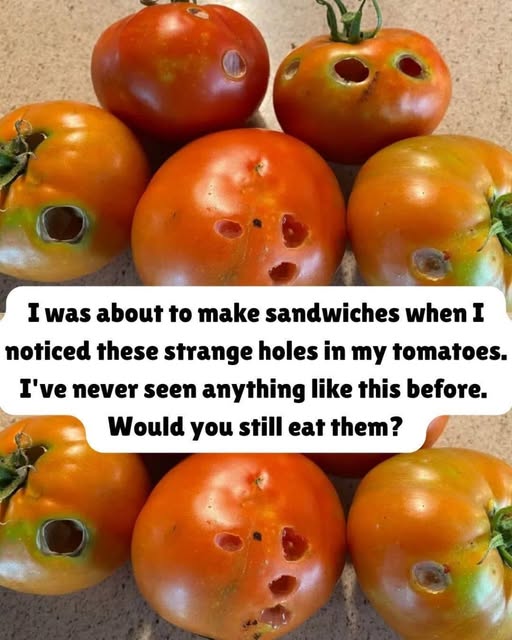
Not every unusual-looking tomato is automatically unsafe, but certain signs—such as mold, extensive decay, leaking, or a foul smell—mean it should be discarded. Learn what to check before eating a tomato.
Whenever You See a Tomato With This Specific Appearance, Refrain From Eating It
Tomatoes are a nutritious and versatile food, but sometimes a tomato can look noticeably different from what you’d expect. A soft spot, unusual discoloration, wrinkled skin, or strange texture may leave you wondering: Is it still safe to eat?
The good news is that not every imperfection means a tomato is dangerous. However, some visible signs are clear reasons to throw the tomato away rather than trying to salvage it.
🍅 1. Visible Mold
If you see fuzzy mold growing on the tomato—especially white, green, black, or blue patches—it’s safest to discard the entire tomato.
Tomatoes contain a lot of moisture, so mold can potentially extend beneath the surface even when only a small area is visible. Simply cutting away the moldy section isn’t a reliable way to make a moldy tomato safe.
🍅 2. Large Areas of Rot
A tomato with extensive soft, collapsed, or rotten areas should not be eaten.
Rot can cause the tomato to develop an unpleasant smell, watery texture, and significant discoloration. When deterioration is widespread, throwing it away is the safest option.
🍅 3. A Strong, Unpleasant Smell
Fresh tomatoes have a characteristic earthy, slightly sweet smell.
If a tomato smells sour, fermented, rotten, or otherwise unpleasant, don’t taste it to determine whether it’s safe. A strong off-odor is a good reason to discard it.
🍅 4. Leaking or Oozing
Be particularly cautious if the tomato has begun leaking liquid from cracks or damaged areas and is also soft, discolored, or foul-smelling.
A little moisture around a naturally cracked tomato isn’t necessarily dangerous, but leaking combined with signs of spoilage indicates that the tomato should be discarded.
🍅 5. Extremely Soft or Collapsed Texture
Tomatoes naturally become softer as they ripen. A ripe tomato can therefore be soft without being spoiled.
The concern is when the tomato becomes mushy, slimy, collapsed, or watery, particularly when these changes occur together with discoloration or an unpleasant odor.
🍅 6. Major Discoloration Along With Other Spoilage Signs
A greenish or yellowish tomato isn’t necessarily spoiled—it may simply be underripe.
Likewise, minor blemishes don’t automatically make a tomato unsafe.
But if unusual discoloration appears together with mold, sliminess, foul odor, or extensive decay, don’t eat it.
🍅 What About a Wrinkled Tomato?
Wrinkled skin alone doesn’t necessarily mean a tomato is unsafe.
A tomato can lose water and become wrinkled as it ages. If it has no mold, no unpleasant odor, and no significant decay, quality may simply have declined.
However, if you’re uncertain about its condition, especially if multiple spoilage signs are present, it’s better to discard it.
🍅 What About Black Spots?
Black spots deserve a closer look.
A small bruise or damaged area may not necessarily mean the entire tomato is spoiled. But black, sunken, spreading, or moldy areas, especially when accompanied by softness or an unpleasant smell, are reasons to throw the tomato away.
Don’t assume every black spot represents the same problem—the cause can range from physical damage to disease or decay.
Can You Just Cut Away the Bad Part?
This depends on what you’re seeing.
For a firm fruit with a small area of physical damage, trimming away the damaged portion may sometimes be reasonable.
Mold is different. Because tomatoes are soft and moist, visible mold may extend below the surface. For a moldy tomato, discarding the whole tomato is the safer choice.
How to Keep Tomatoes Fresh Longer
Proper storage can help reduce premature spoilage.
- Inspect tomatoes when you bring them home.
- Don’t store damaged tomatoes together with perfectly good ones.
- Keep them clean and dry.
- Avoid crushing or stacking them under heavy produce.
- Use ripe tomatoes promptly.
- Refrigeration can affect the flavor and texture of tomatoes, so whole ripe tomatoes are often best kept according to their condition and intended use rather than automatically refrigerated.
The Bottom Line
A tomato doesn’t have to look perfectly smooth and beautiful to be safe. Wrinkles, minor blemishes, and some color variation can occur naturally.
But if you notice visible mold, extensive rot, sliminess, a foul odor, significant decay, or a combination of these warning signs, don’t eat the tomato.
When in doubt, it’s better to throw away one questionable tomato than risk eating spoiled food.
Important: Never taste a visibly spoiled or moldy tomato just to test whether it’s safe.