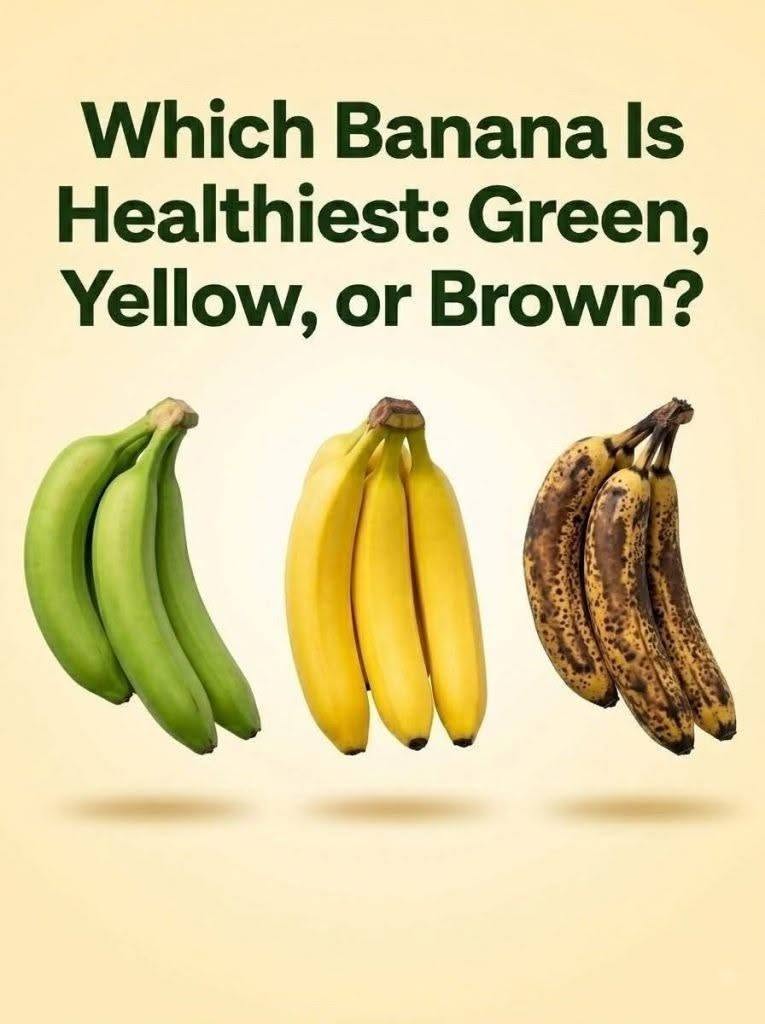
Green, yellow, or brown bananas—which is healthiest? Learn how banana ripeness changes resistant starch, natural sugars, digestion, texture, and nutritional benefits.
Have you ever stood in the kitchen staring at a bunch of bananas and wondered whether the green, yellow, or brown ones are healthiest?
Bananas don’t suddenly become unhealthy as they ripen. Instead, their nutritional characteristics and texture change as the fruit matures. The biggest difference is how much of the banana’s starch has converted into simpler sugars.
So, which banana should you choose?
The answer depends on what you’re looking for.
Green Bananas: Best for Resistant Starch
Green bananas are less ripe and contain more resistant starch than yellow bananas.
Resistant starch isn’t digested in the small intestine in the same way as ordinary starch. Some reaches the large intestine, where it can be fermented by gut bacteria.
This makes green bananas particularly interesting if you’re looking to increase your intake of resistant starch.
Green bananas also tend to be:
- Firmer and less sweet
- Higher in resistant starch
- Lower in readily available sugars than ripe bananas
- More filling for some people
- Slightly harder to digest for some individuals
Because they’re less sweet and have a firmer texture, green bananas can be useful in savory dishes or cooked recipes.
Are Green Bananas Better for Blood Sugar?
Ripeness can affect how quickly the carbohydrates in a banana are digested, but it’s important not to oversimplify this into “green bananas are good and ripe bananas are bad.”
Your overall meal, portion size, activity level, and individual metabolism all influence blood-glucose response.
If blood-sugar management is important to you, consider pairing a banana with a source of protein or healthy fat, such as unsweetened yogurt, nuts, or nut butter.
Yellow Bananas: The Everyday Sweet Spot
For many people, the yellow banana is the easiest all-around choice.
As a banana ripens, some of its starch is converted into sugars. That’s why yellow bananas taste sweeter and become softer than green bananas.
They’re also convenient, naturally sweet, and provide nutrients such as:
- Potassium
- Vitamin B6
- Vitamin C
- Carbohydrates for energy
- Fiber
A yellow banana works well as a quick snack, breakfast addition, smoothie ingredient, or pre-workout food.
If you want a banana that’s sweet without being extremely soft, a yellow banana with a few green edges may be a great middle ground.
Brown-Spotted Bananas: Sweeter and Softer
Those brown spots don’t automatically mean your banana has gone bad.
As bananas continue to ripen, the peel develops brown spots and the flesh becomes softer and sweeter.
Brown-spotted bananas are especially useful for baking because their natural sweetness can reduce the need for additional sugar in recipes.
They’re excellent for:
- Banana bread
- Smoothies
- Oatmeal
- Pancakes
- Muffins
- Homemade banana desserts
However, heavily overripe bananas contain less resistant starch than greener bananas because more of the starch has been converted into simpler sugars.
So, Which Banana Is Healthiest?
There isn’t one universal winner.
Choose Green If:
You want more resistant starch and prefer a firmer, less-sweet banana.
Choose Yellow If:
You want a balanced everyday banana with a pleasant texture and moderate sweetness.
Choose Brown-Spotted If:
You want a very sweet, soft banana, particularly for baking or smoothies.
The important point is that ripeness changes the banana—it doesn’t make one stage universally “healthy” and another “unhealthy.”
What Happens to a Banana as It Ripens?
Banana ripening is a fascinating natural process.
When a banana is green, much of its carbohydrate content is present as starch. As ripening progresses, enzymes break down some of that starch into simpler sugars.
That’s why the banana gradually changes from:
Green → firm and starchy → yellow and sweet → brown-spotted and very sweet
The texture changes too. Pectin and other components of the fruit’s structure break down, making the flesh softer.
This explains why a green banana can feel quite different from a ripe one even though they’re the same fruit.
Do Brown Bananas Have More Antioxidants?
Bananas contain various plant compounds, and ripening can change their antioxidant profile. However, it’s misleading to claim that brown bananas are simply “the healthiest” because they contain more antioxidants.
Nutrition is more complicated than one nutrient.
A banana’s overall nutritional value includes carbohydrates, fiber, vitamins, minerals, and plant compounds—and the best choice depends on your dietary needs and preferences.
What About Bananas and Weight Loss?
No stage of banana ripeness is a magic weight-loss food.
Bananas can absolutely fit into a healthy weight-management diet. They’re naturally sweet and can be more satisfying than many highly processed snack foods.
The key is your overall calorie intake, dietary pattern, activity level, and portion sizes.
If you’re trying to stay fuller for longer, pairing a banana with protein or healthy fat can make it a more substantial snack.
Try:
Banana + peanut butter
Banana + Greek yogurt
Banana + a handful of nuts
Banana + oatmeal
Which Banana Is Best Before Exercise?
A ripe yellow banana is a convenient source of carbohydrates, making it popular as a pre-workout snack.
Because it is generally softer and sweeter than a green banana, it may also be easier and more enjoyable to eat before physical activity.
For a quick snack before exercise, try a banana with a little peanut butter or yogurt if your stomach tolerates it.
Can You Eat a Banana With Brown Spots?
Absolutely—brown spots alone don’t mean a banana is spoiled.
A ripe banana can be perfectly safe and delicious even when the peel has become heavily speckled.
However, discard bananas if you notice signs of actual spoilage, such as:
- Mold
- A strong fermented or rotten smell
- Significant leaking
- Unusual discoloration of the flesh
- A slimy or obviously decomposing texture
When in doubt, use your senses and avoid fruit that appears spoiled.
A Simple Banana Ripeness Guide
| Banana Stage | Texture | Taste | Notable Feature | Best Uses |
|---|---|---|---|---|
| 🟢 Green | Firm | Less sweet | More resistant starch | Cooking, savory recipes |
| 🟡 Yellow | Soft-firm | Naturally sweet | Balanced option | Snacking, breakfast |
| 🟤 Brown-spotted | Very soft | Very sweet | Less resistant starch | Baking, smoothies |
The Bottom Line
So, which banana is actually the healthiest?
There isn’t a single winner.
Green bananas stand out for their higher resistant-starch content. Yellow bananas offer a convenient, balanced everyday option. Brown-spotted bananas are naturally sweeter and excellent for recipes where you want extra sweetness and softness.
Instead of worrying about finding the “perfect” banana, choose the ripeness that matches your needs.
If you want more resistant starch, reach for a greener banana. If you want an easy everyday snack, choose yellow. And when your bananas develop brown spots, don’t throw them away—turn them into delicious banana bread, smoothies, or oatmeal.
Every stage has its place. The healthiest banana is often simply the one that helps you enjoy more whole fruit as part of an overall balanced diet.
Quick Tip
If your bananas are ripening faster than you can eat them, peel and freeze them once they’re ripe. Frozen bananas are excellent for smoothies and can create a creamy texture without needing ice cream.
SEO Meta Title: Green, Yellow, or Brown Banana: Which Is Healthiest?
Meta Description: Which banana is healthiest—green, yellow, or brown? Discover how ripeness affects resistant starch, natural sugars, digestion, and the best ways to enjoy each stage.