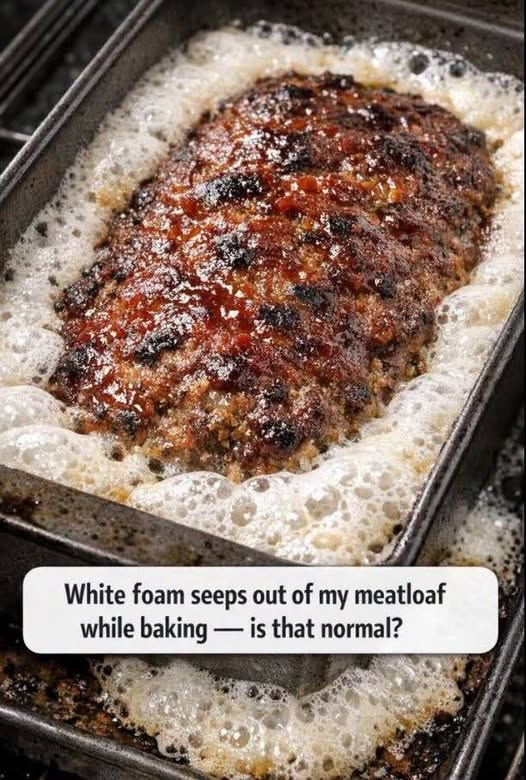
Wondering about white foam or liquid coming out of your meatloaf while it bakes? Learn what causes it, whether it’s safe, and how to make a juicier, better-looking meatloaf.
If you’ve ever put a homemade meatloaf in the oven and noticed white foam, bubbles, or pale liquid collecting around the edges, you may have wondered whether something has gone wrong.
The good news is that this is often completely normal.
That white material usually comes from proteins, water, and fat naturally present in the ground meat. As the meat heats, proteins change structure and can mix with moisture and rendered fat. Some of this mixture can work its way out of the meatloaf and appear as a white or grayish foam.
Why Does White Foam Come Out?
Ground meat contains water-soluble proteins as well as fat and moisture.
As your meatloaf heats in the oven, several things happen at once:
- The proteins begin to firm up.
- Fat starts to melt.
- Water is released.
- Air pockets inside the mixture expand.
- Juices move toward the outside.
The released proteins can combine with liquid and fat, producing a white, foamy-looking substance.
It’s similar to the light-colored material you may sometimes see around cooking meat in a pan.
Does White Foam Mean the Meat Is Bad?
Not necessarily.
The appearance of white foam by itself doesn’t mean the meat was spoiled.
Fresh ground meat can release proteins and juices during cooking. The more important factors are how the meat was stored before cooking, whether it was within its recommended use period, and whether it reaches a safe internal temperature.
If raw meat had an unusual odor, sticky or slimy texture, or other obvious signs of spoilage before cooking, don’t rely on cooking to make it safe.
How Do You Know When Meatloaf Is Safe?
The safest way to check meatloaf is with a food thermometer rather than judging it by color alone.
For meatloaf made with ground beef, pork, lamb, or veal, the center should reach 160°F (71°C).
If your meatloaf contains ground poultry such as turkey or chicken, the recommended safe internal temperature is 165°F (74°C).
Insert the thermometer into the thickest part of the meatloaf and avoid touching the pan.
Why Does My Meatloaf Release So Much Liquid?
Several factors can contribute.
High-Fat Ground Meat
Ground meat with a higher fat content will naturally release more fat during baking.
Extra Moist Ingredients
Milk, eggs, vegetables, sauces, and other ingredients add moisture to the mixture.
These aren’t necessarily bad. In fact, many of them help create a tender meatloaf.
Overmixing
Mixing the meat mixture too aggressively can produce a denser texture and may affect how moisture behaves during cooking.
Mix the ingredients until they are combined rather than working the mixture excessively.
Cooking at Very High Heat
A very hot oven can cause the outside of the meatloaf to cook quickly while encouraging moisture and fat to escape.
Following a reliable recipe and using the recommended temperature can help.
Can You Prevent the White Foam?
You may not be able to prevent it completely, but you can reduce excess liquid and improve the final texture.
Try:
- Using ground meat with a moderate fat content.
- Draining excess liquid from very wet vegetables.
- Avoiding too much added milk or sauce.
- Mixing the ingredients gently.
- Using a loaf pan or baking dish that allows excess fat to drain if your recipe calls for it.
- Letting the meatloaf rest before slicing.
Don’t Judge Meatloaf by Appearance Alone
A meatloaf can look surprisingly messy while it’s cooking.
You may see bubbling fat, pale proteins, brown juices, or liquid collecting around the edges. None of these appearances alone tells you whether the meatloaf is safe.
Temperature and proper food handling are much better indicators than appearance.
The Bottom Line
If white foam or pale liquid seeps from your meatloaf while it bakes, it’s usually a normal result of cooking ground meat. Proteins, water, and fat can combine and escape as the meat heats.
As long as the meat was handled and stored properly and the meatloaf reaches the appropriate safe internal temperature, the foam itself usually isn’t something to worry about.
So don’t panic when you see that strange white foam bubbling around your meatloaf. It may look unpleasant, but it can simply be part of the cooking process.