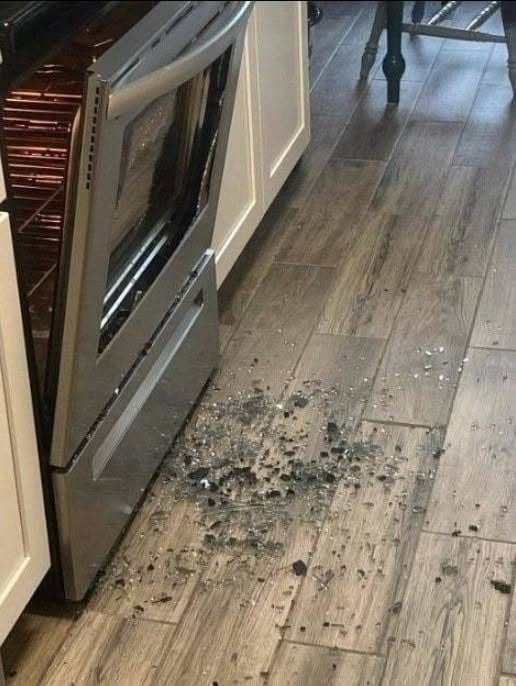
Oven doors can unexpectedly crack or shatter because of impact, thermal stress, scratches, or manufacturing defects. Learn why it happens and how to reduce the risk.
An oven door is designed to withstand high temperatures, but that doesn’t make the glass completely indestructible.
When oven-door glass suddenly cracks or shatters, it can be alarming. In many cases, the glass isn’t breaking simply because the oven is hot. Tiny damage, sudden temperature changes, improper cleaning, or stress around the glass can contribute to failure.
Understanding the common causes can help you reduce the risk.
1. Sudden Temperature Changes
One of the most important factors is thermal shock.
Oven glass expands as it heats and contracts as it cools. A sudden and extreme temperature change can place stress on the glass.
For example, pouring cold water onto a very hot oven door can create a rapid temperature difference across the glass.
Avoid this:
- Pouring water directly onto a hot oven door
- Wiping very hot glass with a cold, wet cloth
- Placing ice or frozen items against hot glass
- Splashing cold liquids onto the door
Allow the oven and its glass to cool naturally before cleaning.
2. Small Scratches Can Become a Problem
Glass can be weakened by scratches, chips, or tiny impact marks.
A small defect may not cause an immediate problem, but repeated heating and cooling can place additional stress on the damaged area.
Avoid using abrasive scouring pads, harsh scraping tools, or anything that can scratch the glass.
3. Slamming the Oven Door
Repeatedly dropping or slamming the door can put unnecessary stress on the glass and its surrounding components.
Even if the glass doesn’t break immediately, repeated impacts may contribute to damage over time.
Close the oven door gently rather than letting it fall shut.
4. Hitting the Glass With Cookware
A baking tray, roasting pan, or other heavy object can accidentally strike the inside or outside of the door.
This is particularly important because impact damage may be difficult to see.
Always handle cookware carefully around the oven door and avoid leaning heavy objects against it.
5. Using the Door as a Shelf
Oven doors aren’t designed to support people or heavy objects.
Don’t sit, stand, or lean heavily on an open oven door, and don’t use it as a convenient shelf for cookware.
Excessive weight can stress the hinges, frame, and glass.
6. Cleaning the Glass Incorrectly
Oven doors can accumulate grease and baked-on residue, but aggressive cleaning can damage the glass.
Avoid abrasive powders, metal scrapers, and rough scouring pads unless your manufacturer’s instructions specifically permit them.
Use a cleaning method recommended in the oven’s manual.
7. Problems With the Door Frame or Hinges
The glass doesn’t work independently. It’s held within a frame and supported by hinges and other components.
If the door is misaligned, a hinge is damaged, or the frame is under unusual tension, the glass may experience additional stress.
If the door suddenly becomes difficult to open, close, or align, have it inspected rather than forcing it.
8. Manufacturing Defects Are Possible
Sometimes glass can fail because of a defect that isn’t obvious to the owner.
Tempered glass is designed to break into many smaller pieces when it fails, but it can occasionally shatter unexpectedly.
If your oven door breaks without any obvious impact or misuse, contact the manufacturer or an authorized service provider. Depending on the age and model of the oven, there may be a warranty or service remedy.
What Should You Do If the Door Glass Cracks?
If you notice a crack, chip, or damaged area:
Stop using the oven until the door has been properly inspected or repaired.
Don’t attempt to glue cracked oven glass or continue heating it in the hope that the damage won’t worsen.
If the glass has shattered, keep children and pets away from the area and wear appropriate protective footwear when dealing with the surrounding debris. Follow the manufacturer’s instructions for cleanup and replacement.
How to Prevent Oven-Door Glass From Breaking
A few simple habits can reduce unnecessary stress:
- Let hot glass cool before cleaning.
- Never pour cold water onto a hot oven door.
- Don’t slam the door.
- Keep cookware from striking the glass.
- Don’t place heavy objects on an open door.
- Avoid abrasive cleaning tools.
- Inspect the glass periodically for chips or cracks.
- Make sure the door closes and aligns normally.
- Follow the oven manufacturer’s cleaning instructions.
One More Important Tip
If you use the oven’s self-cleaning cycle, follow the manufacturer’s instructions carefully.
Self-cleaning can expose the oven to extremely high temperatures. If the door glass already has damage or the oven has a mechanical problem, additional heat may increase stress on compromised components.
If you notice any existing crack or chip, have the oven checked before using a high-temperature cleaning cycle.
Final Takeaway
An oven door doesn’t usually shatter simply because it is hot. Thermal shock, impact, scratches, mechanical stress, and defects can all play a role.
Treat the glass gently, avoid sudden temperature changes, never slam or overload the door, and don’t ignore even small cracks or chips.
A little care can help keep your oven door intact—and prevent a frightening surprise in the kitchen.