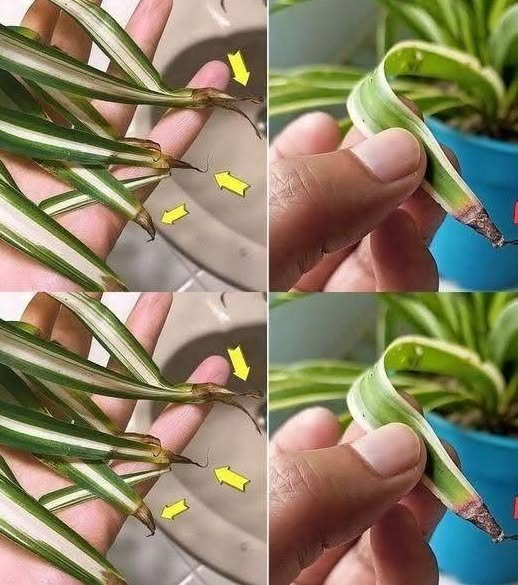
Spider plants are among the easiest houseplants to grow, but even a healthy plant can suddenly develop brown, crispy tips.
If the leaves are mostly green and healthy but their ends are turning brown, don’t panic. Brown tips usually mean the plant is reacting to growing conditions rather than dying.
The good news is that once you identify the cause, the problem is often easy to correct.
1. Too Much Fertilizer
One of the most common reasons spider plant tips turn brown is a buildup of fertilizer salts in the soil.
Spider plants don’t need heavy feeding. When too much fertilizer is applied, salts can accumulate around the roots and make it difficult for the plant to absorb water properly.
What to do
Reduce the amount of fertilizer you’re using and avoid feeding the plant more frequently than recommended.
You can also flush the soil occasionally by slowly running plenty of water through the pot and allowing the excess to drain completely.
Make sure the pot has drainage holes.
2. Tap Water Can Sometimes Cause Brown Tips
Spider plants can be sensitive to certain minerals and chemicals found in tap water.
Depending on your local water supply, substances such as fluoride and dissolved salts may accumulate in the soil over time and contribute to brown leaf tips.
Try this
If your plant repeatedly develops brown tips despite otherwise good care, try using:
- Filtered water
- Rainwater
- Distilled water
If you switch water sources and the new growth looks healthier, your tap water may have been contributing to the problem.
3. Inconsistent Watering
Spider plants prefer consistent moisture rather than dramatic cycles of being completely dry and then heavily watered.
Allowing the soil to become extremely dry can cause stress, and the oldest or most exposed parts of the leaves may turn brown.
At the same time, constantly wet soil can damage roots and eventually cause similar-looking problems.
The best approach
Check the soil with your finger before watering.
If the upper portion of the soil feels dry, water thoroughly until a little water drains from the bottom of the pot.
Then empty any water sitting in the saucer.
Don’t water according to a rigid calendar. Your plant may need water more frequently in warm weather and less frequently during cooler periods.
4. Low Humidity
Spider plants can tolerate average indoor conditions, but very dry air can contribute to brown leaf tips.
This is especially common during periods when indoor heating or air conditioning is running frequently.
How to improve humidity
You can:
- Place the plant near other houseplants.
- Use a humidifier if the room is extremely dry.
- Keep the plant away from direct blasts of heaters or air conditioners.
A pebble tray may help somewhat, although it usually has a smaller effect than a proper humidifier.
5. Too Much Direct Sunlight
Spider plants generally prefer bright, indirect light.
Strong direct sunlight, particularly through a hot window, can scorch the leaves.
Sunburn may appear as brown or bleached patches, not just brown tips.
Where should you put a spider plant?
A bright room with filtered or indirect light is usually ideal.
If the plant sits directly beside a very sunny window and its leaves are becoming pale, scorched, or brown, move it slightly farther away.
6. Root Problems
Sometimes brown tips aren’t caused by the leaves themselves.
If a spider plant is repeatedly overwatered, the roots can become stressed or damaged. Damaged roots cannot absorb water and nutrients efficiently, which can eventually cause leaf discoloration and browning.
Signs of a possible root problem include:
- Soil staying wet for a very long time
- Yellowing leaves
- A soft or declining plant
- A musty smell from the soil
- Roots that appear dark and mushy
If you suspect root problems, check whether the pot drains properly and whether the plant is sitting in water.
7. Natural Aging
Not every brown leaf tip is a sign of a serious problem.
Older leaves naturally deteriorate as the plant produces new growth. A few brown tips here and there can simply be part of normal aging.
If the plant is otherwise producing healthy new leaves and growing normally, there’s usually no reason to panic.
Should You Cut Off the Brown Tips?
Yes.
Brown tissue won’t turn green again, so you can trim it for appearance.
Use clean, sharp scissors and follow the natural shape of the leaf. Don’t cut into healthy green tissue unnecessarily.
If only the very tip is brown, remove just the damaged portion.
How to Prevent Brown Tips
A simple care routine can make a big difference:
Water consistently: Don’t allow the plant to remain bone-dry for extended periods, but don’t keep the soil permanently saturated.
Provide bright indirect light: Avoid intense direct afternoon sunlight.
Don’t overfertilize: Spider plants generally don’t need large amounts of fertilizer.
Check your water: If brown tips continue despite good care, filtered or low-mineral water may be worth trying.
Provide reasonable humidity: Keep the plant away from very dry heat or strong air-conditioning drafts.
Use a pot with drainage: Excess water needs somewhere to escape.
A Quick Troubleshooting Guide
Brown tips + dry soil
The plant may need more consistent watering.
Brown tips + frequent fertilizing
Fertilizer salt buildup could be the problem.
Brown tips + strong direct sunlight
The leaves may be experiencing sun stress.
Brown tips + constantly wet soil
Check drainage and the roots for possible damage.
Brown tips + very dry indoor air
Low humidity may be contributing.
Only a few older leaves affected
It may simply be normal leaf aging.
Final Thoughts
Brown tips on spider plants are usually a care issue rather than an emergency.
Start by checking the simplest things: soil moisture, drainage, light, fertilizer, and water quality. Avoid changing everything at once. Make one or two adjustments and watch the plant’s new growth.
Most importantly, remember that existing brown tissue won’t turn green again. The real sign that your treatment is working is healthy new growth.
With consistent care, a spider plant with a few brown tips can continue growing vigorously and producing its characteristic long leaves and baby plantlets.
Meta Description: Find out why spider plant tips turn brown and learn how watering, fertilizer, tap water, humidity, sunlight, and root problems can affect your plant. Discover simple ways to prevent and fix brown tips.