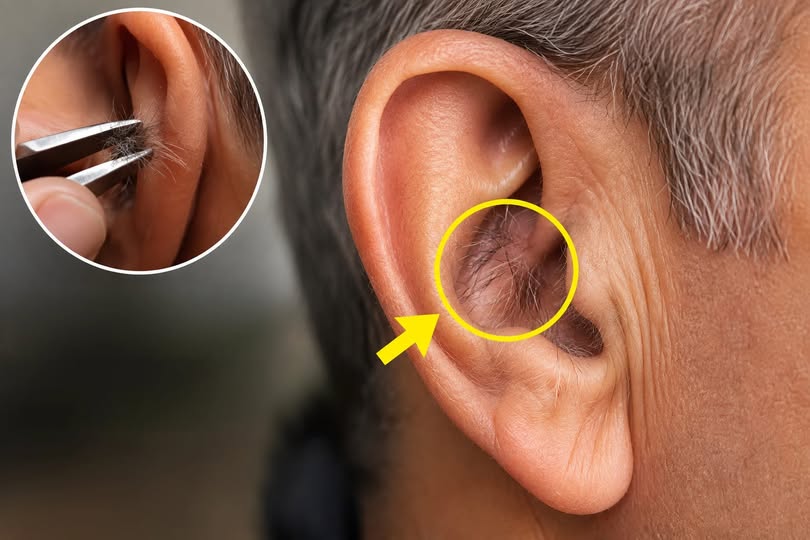
Why does ear hair seem to increase with age? Learn what causes extra ear hair, the role of hormones and genetics, and safe ways to manage it as you get older.
Why Does Ear Hair Start Growing as You Get Older? The Real Reason May Surprise You
If you’ve noticed more hair appearing around your ears as you’ve gotten older, you’re definitely not imagining it. Ear hair can become more noticeable with age, particularly in men, although women can experience it too.
It may seem like one of those random changes that comes with getting older, but there is actually a biological explanation.
Hormones Play a Major Role
One of the biggest factors is androgen sensitivity.
Hair follicles throughout the body respond differently to hormones. As we age, changes in hormone levels and in the way individual hair follicles respond to hormones can alter hair growth patterns.
Some follicles may produce thicker, darker, or longer hairs than they did when we were younger.
This is why hair that was once barely noticeable can become much more obvious around the outer ear or inside the ear opening.
Genetics Matter Too
Your genes also influence how much body hair you develop and where it appears.
If men in your family tend to develop prominent ear, nose, eyebrow, or other facial hair as they age, you may be more likely to experience something similar.
So there isn’t one specific age when ear hair suddenly begins growing.
For some people, it becomes noticeable in middle age. For others, it may happen much later—or hardly at all.
Why Does It Seem So Much Thicker?
As we age, many of the hairs on our scalp gradually become thinner or less dense.
At the same time, certain facial and body hairs may become coarser.
That contrast can make ear hair appear even more prominent than it actually is.
Lighting, mirrors, and simply paying more attention to changes in appearance can also make the difference seem dramatic.
Is Ear Hair a Sign of Poor Health?
Usually, no.
Having more ear hair as you age is generally a normal variation in hair growth and isn’t, by itself, a sign that something is wrong.
However, if you experience sudden or unusually rapid changes in body hair, particularly alongside other unexplained physical changes, it’s reasonable to mention it to a healthcare professional.
Should You Remove Ear Hair?
If the hair bothers you cosmetically, there are several options.
For hair on the outer ear, careful trimming with an appropriate grooming tool is generally preferable to aggressive plucking or cutting with sharp objects.
Avoid pushing anything deep into the ear canal. The hairs inside the ear have a protective role, and the skin in the ear canal is delicate.
If you’re unsure how to manage it safely, a professional barber, stylist, or healthcare provider can offer guidance.
The Bottom Line
That unexpected ear hair isn’t necessarily a sign that something strange is happening.
Aging changes the way many hair follicles respond to hormones, while genetics help determine where those changes appear.
So if you find yourself reaching for the trimmer more often than you used to, you’re not alone. It’s simply one of the less glamorous—and completely normal—parts of getting older.