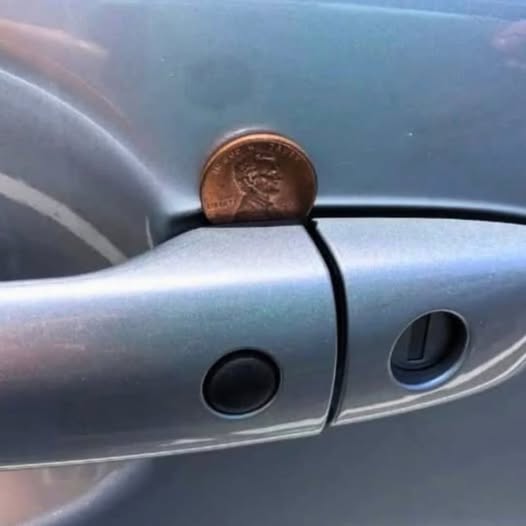
A penny stuck in your car door handle may look harmless, but it can interfere with the locking mechanism on some vehicles. Learn how this trick works, what it may mean, and what you should do if you discover a coin in your door handle.
Why You Should Never Ignore a Penny Stuck in Your Car Door Handle
Finding a penny—or another small coin—wedged into your car door handle can be unsettling. While there are legitimate reasons a coin might end up there, a deliberately placed object deserves attention because it can potentially interfere with the door’s locking mechanism.
The popular warning about a penny in a car door handle is based on a simple idea: a coin can sometimes prevent a door from locking properly, depending on the vehicle and where it is placed.
How Could a Coin Affect Your Car?
Many modern vehicles use electronic key fobs and central locking systems. However, the physical door mechanism still has to move correctly.
If an object is wedged into the handle or surrounding mechanism, it may:
- Prevent the latch or locking mechanism from fully engaging
- Keep a door from closing properly
- Cause unusual resistance when operating the handle
- Leave a door improperly secured
Importantly, this does not work on every vehicle. Car-door designs vary considerably, and some vehicles won’t be affected at all.
Why Would Someone Put a Coin There?
There are several possible explanations.
The coin could simply have been accidentally dropped or become lodged in the handle. However, if you find an object deliberately wedged into a vulnerable part of your vehicle—particularly when you don’t know how it got there—it’s reasonable to treat the situation cautiously.
Don’t assume that a coin automatically means someone is attempting to break into your vehicle.
What Should You Do?
If you discover a penny or another object stuck in your door handle:
1. Don’t force the handle.
Trying to pull or twist something stuck in the mechanism could damage the vehicle.
2. Check that every door is properly closed.
Look at the doors and trunk and make sure they are securely latched.
3. Test the locks from a safe location.
If your vehicle has a lock indicator, key fob, or dashboard warning, verify that the vehicle actually locked.
4. Look for anything else unusual.
Check for scratches, damage, or other signs that someone may have interfered with the vehicle.
5. Move the car if you feel uncomfortable.
If you’re in an isolated location and something about the situation seems suspicious, move to a safer, well-lit place.
6. Contact the appropriate authorities if there are signs of attempted theft.
If you see clear evidence of tampering or feel you’re in immediate danger, prioritize your safety rather than investigating the vehicle yourself.
Don’t Rely Only on Your Key Fob
One important lesson is that hearing your car lock—or seeing the lights flash—doesn’t necessarily mean you should ignore a physical problem with a door.
If something is obstructing the door or latch, inspect it and make sure the door is actually secured.
The Bottom Line
A penny in a car door handle isn’t automatically proof of a carjacking or attempted theft, and the viral claim that this trick works universally is exaggerated.
Nevertheless, an unfamiliar object deliberately wedged into your vehicle is worth checking. Make sure the door closes and locks properly, avoid forcing anything, and take sensible precautions if you notice other signs of tampering.
A few seconds of checking your vehicle could prevent a much bigger problem later.